
Catalogue Search | MBRL


Are you sure you want to remove the book from the shelf?

{{itemTitle}}
9,566
result(s) for
"Vargas, M"
Sort by:


Enhancement of carotenoids biosynthesis in Chlamydomonas reinhardtii by nuclear transformation using a phytoene synthase gene isolated from Chlorella zofingiensis
The isolation and characterization of the phytoene synthase gene from the green microalga Chlorella zofingiensis (CzPSY), involved in the first step of the carotenoids biosynthetic pathway, have been performed. CzPSY gene encodes a polypeptide of 420 amino acids. A single copy of CzPSY has been found in C. zofingiensis by Southern blot analysis. Heterologous genetic complementation in Escherichia coli showed the ability of the predicted protein to catalyze the condensation of two molecules of geranylgeranyl pyrophosphate (GGPP) to form phytoene. Phylogenetic analysis has shown that the deduced protein forms a cluster with the rest of the phytoene synthases (PSY) of the chlorophycean microalgae studied, being very closely related to PSY of plants. This new isolated gene has been adequately inserted in a vector and expressed in Chlamydomonas reinhardtii. The overexpression of CzPSY in C. reinhardtii, by nuclear transformation, has led to an increase in the corresponding CzPSY transcript level as well as in the content of the carotenoids violaxanthin and lutein which were 2.0- and 2.2-fold higher than in untransformed cells. This is an example of manipulation of the carotenogenic pathway in eukaryotic microalgae, which can open up the possibility of enhancing the productivity of commercial carotenoids by molecular engineering.[PUBLICATION ABSTRACT]
Journal Article
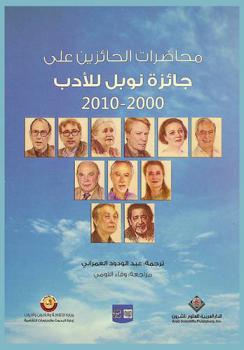
محاضرات الحائزين على جائزة نوبل للأدب، 2000-2010
يبدأ الكتاب بتقديم للدكتور \"مرزوق بشير مرزوق\" مدير إدارة البحوث والدراسات الثقافية في الدوحة ثم يتناول الكتاب عدة محاضرات وهي محاضرة ماريو برغاس يوسا 2010 بعنوان \"مديح القراءة والرواية\" ومحاضرة هرتا مولر 2009 بعنوان \"كل كلمة لديها ما تقوله حول الحلقة المفرغة\" ومحاضرة جان ماري لوكليزيو 7 ديسمبر 2008 بعنوان \"في غابة المفارقات\" ومحاضرة دوريس ليسنغ 2007 بعنوان \"حول عدم الفوز بجائزة نوبل\" ومحاضرة ارهان باموك 2006 بعنوان \"حقيبة أبي\" ومحاضرة هارولد بنتر 2005 بعنوان \"الفن والحقيقة والسياسة\" ومحاضرة ألفريدا ياليناك 2004 بعنوان \"في التماس\" ومحاضرات أخري وهذا الكتاب وثيقة أدبية فائقة الأهمية هي محاضرات تغوص في أزمنة مختلفة وتقدم أدباء ينتمون إلى لغات وثقافات مختلفة.
BOOK

Subthreshold firing in Mott nanodevices
Resistive switching, a phenomenon in which the resistance of a device can be modified by applying an electric field
1
–
5
, is at the core of emerging technologies such as neuromorphic computing and resistive memories
6
–
9
. Among the different types of resistive switching, threshold firing
10
–
14
is one of the most promising, as it may enable the implementation of artificial spiking neurons
7
,
13
,
14
. Threshold firing is observed in Mott insulators featuring an insulator-to-metal transition
15
,
16
, which can be triggered by applying an external voltage: the material becomes conducting (‘fires’) if a threshold voltage is exceeded
7
,
10
–
12
. The dynamics of this induced transition have been thoroughly studied, and its underlying mechanism and characteristic time are well documented
10
,
12
,
17
,
18
. By contrast, there is little knowledge regarding the opposite transition: the process by which the system returns to the insulating state after the voltage is removed. Here we show that Mott nanodevices retain a memory of previous resistive switching events long after the insulating resistance has recovered. We demonstrate that, although the device returns to its insulating state within 50 to 150 nanoseconds, it is possible to re-trigger the insulator-to-metal transition by using subthreshold voltages for a much longer time (up to several milliseconds). We find that the intrinsic metastability of first-order phase transitions is the origin of this phenomenon, and so it is potentially present in all Mott systems. This effect constitutes a new type of volatile memory in Mott-based devices, with potential applications in resistive memories, solid-state frequency discriminators and neuromorphic circuits.
Mott materials feature scale-less relaxation dynamics after the insulator-to-metal transition that make its electric triggering dependent on recent switching events.
Journal Article

The biogeography and filtering of woody plant functional diversity in North and South America
Aim: In recent years evidence has accumulated that plant species are differentially sorted from regional assemblages into local assemblages along local-scale environmental gradients on the basis of their function and abiotic filtering. The favour-ability hypothesis in biogeography proposes that in climatically difficult regions abiotic filtering should produce a regional assemblage that is less functionally diverse than that expected given the species richness and the global pool of traits. Thus it seems likely that differential filtering of plant traits along local-scale gradients may scale up to explain the distribution, diversity and filtering of plant traits in regional-scale assemblages across continents. The present work aims to address this prediction. Location: North and South America. Methods: We combine a dataset comprising over 5.5 million georeferenced plant occurrence records with several large plant functional trait databases in order to: (1) quantify how several critical traits associated with plant performance and ecology vary across environmental gradients; and (2) provide the first test of whether the woody plants found within 1° and 5° map grid cells are more or less functionally diverse than expected, given their species richness, across broad gradients. Results: The results show that, for many of the traits studied, the overall distribution of functional traits in tropical regions often exceeds the expectations of random sampling given the species richness. Conversely, temperate regions often had narrower functional trait distributions than their smaller species pools would suggest. Main conclusion: The results show that the overall distribution of function does increase towards the equator, but the functional diversity within regional-scale tropical assemblages is higher than that expected given their species richness. These results are consistent with the hypothesis that abiotic filtering constrains the overall distribution of function in temperate assemblages, but tropical assemblages are not as tightly constrained.
Journal Article

Smart facemask for wireless CO2 monitoring
The use of facemasks by the general population is recommended worldwide to prevent the spread of SARS-CoV-2. Despite the evidence in favour of facemasks to reduce community transmission, there is also agreement on the potential adverse effects of their prolonged usage, mainly caused by CO
2
rebreathing. Herein we report the development of a sensing platform for gaseous CO
2
real-time determination inside FFP2 facemasks. The system consists of an opto-chemical sensor combined with a flexible, battery-less, near-field-enabled tag with resolution and limit of detection of 103 and 140 ppm respectively, and sensor lifetime of 8 h, which is comparable with recommended FFP2 facemask usage times. We include a custom smartphone application for wireless powering, data processing, alert management, results displaying and sharing. Through performance tests during daily activity and exercise monitoring, we demonstrate its utility for non-invasive, wearable health assessment and its potential applicability for preclinical research and diagnostics.
While facemasks are recommended to prevent the spread of SARS-CoV-2, potential adverse effects may occur upon prolonged usage. Here the authors develop and evaluate an opto-chemical sensor incorporated into a smart FFP2-type facemask for wireless, real-time CO2 monitoring.
Journal Article

Conflicting phylogenomic signals reveal a pattern of reticulate evolution in a recent high-Andean diversification (Asteraceae: Astereae: Diplostephium)
High-throughput sequencing is helping biologists to overcome the difficulties of inferring the phylogenies of recently diverged taxa. The present study analyzes the phylogenetic signal of genomic regions with different inheritance patterns using genome skimming and ddRAD-seq in a species-rich Andean genus (Diplostephium) and its allies.
We analyzed the complete nuclear ribosomal cistron, the complete chloroplast genome, a partial mitochondrial genome, and a nuclear-ddRAD matrix separately with phylogenetic methods. We applied several approaches to understand the causes of incongruence among datasets, including simulations and the detection of introgression using the D-statistic (ABBA-BABA test).
We found significant incongruence among the nuclear, chloroplast, and mitochondrial phylogenies. The strong signal of hybridization found by simulations and the D-statistic among genera and inside the main clades of Diplostephium indicate reticulate evolution as a main cause of phylogenetic incongruence.
Our results add evidence for a major role of reticulate evolution in events of rapid diversification. Hybridization and introgression confound chloroplast and mitochondrial phylogenies in relation to the species tree as a result of the uniparental inheritance of these genomic regions. Practical implications regarding the prevalence of hybridization are discussed in relation to the phylogenetic method.
Journal Article

Rhizosphere community selection reveals bacteria associated with reduced root disease
Background
Microbes benefit plants by increasing nutrient availability, producing plant growth hormones, and protecting against pathogens. However, it is largely unknown how plants change root microbial communities.
Results
In this study, we used a multi-cycle selection system and infection by the soilborne fungal pathogen
Rhizoctonia solani
AG8 (hereafter AG8) to examine how plants impact the rhizosphere bacterial community and recruit beneficial microorganisms to suppress soilborne fungal pathogens and promote plant growth. Successive plantings dramatically enhanced disease suppression on susceptible wheat cultivars to AG8 in the greenhouse. Accordingly, analysis of the rhizosphere soil microbial community using deep sequencing of 16S rRNA genes revealed distinct bacterial community profiles assembled over successive wheat plantings. Moreover, the cluster of bacterial communities formed from the AG8-infected rhizosphere was distinct from those without AG8 infection. Interestingly, the bacterial communities from the rhizosphere with the lowest wheat root disease gradually separated from those with the worst wheat root disease over planting cycles. Successive monocultures and application of AG8 increased the abundance of some bacterial genera which have potential antagonistic activities, such as
Chitinophaga
,
Pseudomonas
,
Chryseobacterium
, and
Flavobacterium
, and a group of plant growth-promoting (PGP) and nitrogen-fixing microbes, including
Pedobacter
,
Variovorax
, and
Rhizobium
. Furthermore, 47 bacteria isolates belong to 35 species were isolated. Among them, eleven and five exhibited antagonistic activities to AG8 and
Rhizoctonia oryzae in vitro
, respectively. Notably,
Janthinobacterium
displayed broad antagonism against the soilborne pathogens
Pythium ultimum
, AG8, and
R. oryzae in vitro
, and disease suppressive activity to AG8 in soil.
Conclusions
Our results demonstrated that successive wheat plantings and pathogen infection can shape the rhizosphere microbial communities and specifically accumulate a group of beneficial microbes. Our findings suggest that soil community selection may offer the potential for addressing agronomic concerns associated with plant diseases and crop productivity.
3FhJ1hdeeZhKLKmh2i-2hc
Video Abstract
Journal Article

Biotic Interactions in the Rhizosphere: A Diverse Cooperative Enterprise for Plant Productivity
Microbes and plants have evolved biochemical mechanisms to communicate with each other. The molecules responsible for such communication are secreted during beneficial or harmful interactions. Hundreds of these molecules secreted into the rhizosphere have been identified, and their functions are being studied in order to understand the mechanisms of interaction and communication among the different members of the rhizosphere community. The importance of root and microbe secretion to the underground habitat in improving crop productivity is increasingly recognized, with the discovery and characterization of new secreting compounds found in the rhizosphere. Different omic approaches, such as genomics, transcriptomics, proteomics, and metabolomics, have expanded our understanding of the first signals between microbes and plants. In this review, we highlight the more recent discoveries related to molecules secreted into the rhizosphere and how they affect plant productivity, either negatively or positively. In addition, we include a survey of novel approaches to studying the rhizosphere and emerging opportunities to direct future studies.
Journal Article

Enhanced genome assembly and a new official gene set for Tribolium castaneum
Background
The red flour beetle
Tribolium castaneum
has emerged as an important model organism for the study of gene function in development and physiology, for ecological and evolutionary genomics, for pest control and a plethora of other topics. RNA interference (RNAi), transgenesis and genome editing are well established and the resources for genome-wide RNAi screening have become available in this model. All these techniques depend on a high quality genome assembly and precise gene models. However, the first version of the genome assembly was generated by Sanger sequencing, and with a small set of RNA sequence data limiting annotation quality.
Results
Here, we present an improved genome assembly (Tcas5.2) and an enhanced genome annotation resulting in a new official gene set (OGS3) for
Tribolium castaneum
, which significantly increase the quality of the genomic resources. By adding large-distance jumping library DNA sequencing to join scaffolds and fill small gaps, the gaps in the genome assembly were reduced and the N50 increased to 4753kbp. The precision of the gene models was enhanced by the use of a large body of RNA-Seq reads of different life history stages and tissue types, leading to the discovery of 1452 novel gene sequences. We also added new features such as alternative splicing, well defined UTRs and microRNA target predictions. For quality control, 399 gene models were evaluated by manual inspection. The current gene set was submitted to Genbank and accepted as a RefSeq genome by NCBI.
Conclusions
The new genome assembly (Tcas5.2) and the official gene set (OGS3) provide enhanced genomic resources for genetic work in
Tribolium castaneum
. The much improved information on transcription start sites supports transgenic and gene editing approaches. Further, novel types of information such as splice variants and microRNA target genes open additional possibilities for analysis.
Journal Article