
Catalogue Search | MBRL


Are you sure you want to remove the book from the shelf?

{{itemTitle}}
61
result(s) for
"Varty, Anne"
Sort by:

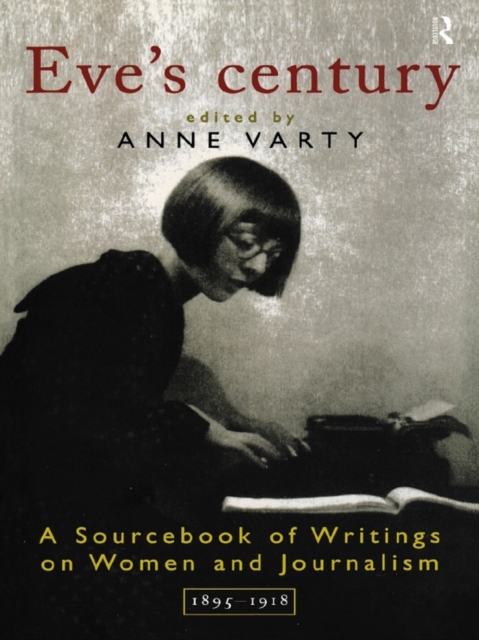
Eve's Century
This unique collection of extracts is taken from women's journals and magazines - both British and American - on the eve of the twentieth century. Arranged by subject, the collection focuses on what this pivotal moment represented for women and includes an introduction to women's journalism of the period. The rapidly changing conditions then surrounding a woman's world are illustrated here by sections on:
monarchy
women and war
colonial women
the politics of emancipation
and girlhood.
eBook

National Poets on Tour in June 2016
In June 2016 Carol Ann Duffy together with Gillian Clarke, Imtiaz Dharker and Jackie Kay undertook a reading tour of the British mainland to celebrate Independent Bookshops Week. The tour, entitled ‘Shore to Shore’, travelled from Falmouth to St Andrews making fifteen stops en route. Although ‘Shore to Shore’ had been planned a year before the referendum on British membership of the European Union, it took place just as United Kingdom citizens were preparing to vote and then acclimatizing to the outcome. As a result, the touring national poets encountered audiences who were at a pitch of anxiety, giving their work and their roles amplified significance. In two parts, this essay offers first an account of the tour, and then reflects on three salient metaphors which emerge from ‘Shore to Shore’: the island, the road trip, and the border. It does this in order to advance understanding of the cultural significance of the confluence between the tour and the political moment of its delivery, and to demonstrate how political division exposed by the vote was already long established in cultural articulations of British self-understanding.
Journal Article


Pantomime Transformations: Genre, Gender and Charley's Aunt
It was by chance rather than by design that the London premiere of Charley's Aunt coincided with the pantomime season when it opened at the tiny Royalty Theatre in Soho on 21 December 1892. Yet in the central character of the cross-dressed male, Lord Fancourt Babberly disguised as Charley's aunt, the play shares its most salient feature of performance with pantomime. During the latter years of the nineteenth century, conservative critics lamented the annual corruption of pantomime. Elements deemed offensive, introduced most notably in houses with a reputation for lavish production, such as Drury Lane, were the bawdy music hall turns taken by star performers and excessive theatrical display in lengthy processions and ballets. This essay sets out to trace relations between the traditional pantomime Dame and his farcical double in Brandon Thomas's Charley's Aunt, through the use of meta-theatrical elements, and the remnants of the pantomime harlequinade.
Journal Article

Locating Never Land: Peter Pan and Parlour Games
John Doyle's centennial adaptation and direction of Peter Pan for the Oxford Playhouse in December 2004 provides the starting point for a fresh investigation of the play. As Clive Barker has placed the playing of games as central to the training of actors, so Doyle's setting for this production, which never departs from the Darling nursery, places games at the heart of his interpretation of this play about learning to act an adult part. The adult roles in Doyle's production all display a small element of Peter Pan, as their acting style requires them to step in and out of role, to demonstrate the playfulness of their actions, and so to resist growing up. These observations invite a backward glance at the ideological significance of play for late nineteenth-century thinkers about childhood. An exploration of playground and parlour games that formed a common currency of childhood experience during the late Victorian era is set against the documentary evidence of games which Barrie played with the Llewellyn Davies boys, and these in turn are shown to be not just manifest within Peter Pan itself, but also to afford the play a structural and ideological cohesion. Anne Varty is a Senior Lecturer in the English Department at Royal Holloway, University of London, and her monograph Children and Theatre in Victorian Britain will be published later this year.
Journal Article

Poets in the Theatre
This chapter concerns the work of an eclectic group of playwrights recognised not simply for their work as dramatists but also as poets. The theatre of Joan Ure, Jackie Kay, Stewart Conn and Edwin Morgan is often eclipsed by their contributions to poetry, partly because performance’s ephemeral nature contrasts with a published collection of verse’s durability and partly because, for some, the weight of their corpus is on verse. None writes the kind of poetic drama associated with T. S. Eliot and others during the brief 1930s and 1940s English stage trend. At the same time their craft as poets
Book Chapter
The Rise and Fall of the Victorian Stage Baby
Real or imaginary, babies provided the Victorian public with a favourite spectacle, featuring in sensational, domestic, and farcical plays, often at the centre of the plot. Impossible to train, their deployment was not without hazard. Under scrutiny here are the range of their manifestations and the effects they could generate. Warren's baby farce Nita's First (1884) emerges as a precursor to The Importance of Being Earnest; Morton's nameless Children in the Wood (1793) swell into music-hall stars by the time of the Drury Lane pantomime of 1888. The departure of real babies from the stage was dictated by the Prevention of Cruelty to Children Act of 1889—legislation which had in turn been influenced by the rhetoric of moral reformers which constructed all theatre children as vulnerable, exploited ‘babies’ in need of protection, not applause. The author, Anne Varty, is a Senior Lecturer in the English Department at Royal Holloway, University of London.
Journal Article

Eve's century : a sourcebook of writings on women and journalism 1895-1918
This unique collection of extracts is taken from women's journals and magazines - both British and American - on the eve of the twentieth century. Arranged by subject, the collection focuses on what this pivotal moment represented for women and includes an introduction to women's journalism of the period. The rapidly changing conditions then surrounding a woman's world are illustrated here by sections on: * monarchy * women and war * colonial women * the politics of emancipation * and girlhood.
eBook