
Catalogue Search | MBRL


Are you sure you want to remove the book from the shelf?

{{itemTitle}}
144
result(s) for
"Vernick, Jon S."
Sort by:

Emergency Legal Authority and the Opioid Crisis
Six U.S. states have declared their opioid-overdose situation an emergency. Though the scope of these declarations has been limited, they could suggest additional responses to multiple facets of the crisis, especially if emergency powers are used in innovative ways.
Journal Article

Tobacco control policies and smoking cessation treatment utilization: A moderated mediation analysis
Tobacco policies, including clean indoor air laws and cigarette taxes, increase smoking cessation in part by stimulating the use of cessation treatments. We explored whether the associations between tobacco policies and treatment use varies across sociodemographic groups.
We used data from 62,165 U.S. adult participants in the 2003 and 2010/11 Tobacco Use Supplement to the Current Population Survey (TUS-CPS) who reported smoking cigarettes during the past-year. We built on prior structural equation models used to quantify the degree to which smoking cessation treatment use (prescription medications, nicotine replacement therapy, counseling/support groups, quitlines, and internet resources) mediated the association between clean indoor air laws, cigarette excise taxes, and recent smoking cessation. In the current study, we added selected moderators to each model to investigate whether associations between tobacco polices and smoking cessation treatment use varied by sex, race/ethnicity, education, income, and health insurance status.
Associations between clean indoor air laws and the use of prescription medication and nicotine replacement therapies varied significantly between racial/ethnic, age, and education groups in 2003. However, none of these moderation effects remained significant in 2010/11. Higher cigarette excise taxes in 2010/2011 were associated with higher odds of using counseling among older adults and higher odds of using prescription medications among younger adults. No other moderator reached statistical significance. Smoking cessation treatments did not mediate the effect of taxes on smoking cessation in 2003 and were not included in these analyses.
Sociodemographic differences in associations between clean indoor air laws and smoking cessation treatment use have decreased from 2003 to 2010/11. In most cases, policies appear to stimulate smoking cessation treatment use similarly across varied sociodemographic groups.
Journal Article

United States trends in healthcare charges for pediatric firearm injuries
From 2009 to 2016, >21,000 children died and an estimated 118,000 suffered non-fatal injuries from firearms in the United States. Limited data is available on resource utilization by injury intent. We use hospital charges as a proxy for resource use and sought to: 1) estimate mean charges for initial ED and inpatient care for acute firearm injuries among children in the U.S.; 2) compare differences in charges by firearm injury intent among children; and 3) evaluate trends in charges for pediatric firearm injuries over time, including within intent subgroups.
In this repeated cross-sectional analysis of the 2009–2016 Nationwide Emergency Department Sample, we identified firearm injury cases among children aged ≤19 years using ICD-9-CM and ICD-10-CM external cause of injury codes (e-codes). Injury intent was categorized using e-codes as unintentional, assault-related, self-inflicted, or undetermined. Linear regressions utilizing survey weighting were used to examine associations between injury intent and healthcare charges, and to evaluate trends in mean charges over time.
Among 21,951 unweighted cases representing 102,072 pediatric firearm-related injuries, mean age was 16.6 years, and a majority were male (88.2%) and publicly insured (51.5%). Injuries were 53.9% assault-related, 37.7% unintentional, 1.8% self-inflicted, and 6.7% undetermined. Self-inflicted injuries had higher mean charges ($98,988) than assault-related ($52,496) and unintentional ($28,618) injuries (p < 0.001). Self-inflicted injuries remained associated with higher mean charges relative to unintentional injuries, after adjusting for patient demographics, hospital characteristics, and injury severity (p = 0.015). Mean charges for assault-related injuries also remained significantly higher than charges for unintentional injuries in multivariable models (p < 0.001). After adjusting for inflation, mean charges for pediatric firearm-related injuries increased over time (p-trend = 0.018) and were 23.1% higher in 2016 versus 2009. Mean charges increased over time among unintentional injuries (p-trend = 0.002), but not among cases with assault-related or self-inflicted injuries.
Self-inflicted and assault-related firearm injuries are associated with higher mean healthcare charges than unintentional firearm injuries among children. Mean charges for pediatric firearm injuries have also increased over time. These findings can help guide prevention interventions aimed at reducing the substantial burden of firearm injuries among children.
•From 2009 to 2016, mean charges for pediatric firearm injuries increased in the U.S.•Mean charges for unintentional pediatric firearm injuries increased from 2009 to 2016.•Self-inflicted firearm injuries associated with highest mean healthcare charges.•Assault-related firearm injuries had higher charges than unintentional injuries.
Journal Article

A synthetic control study of the effects of comprehensive background check policies on non-fatal firearm crime in five states
Background
Research on the effectiveness of comprehensive background check requirements for firearm purchases often finds individual-level associations that do not translate to the population level. However, few studies assess the effects of these policies on nonfatal firearm violence.
Methods
First, several imputation strategies were compared to mitigate the effects of systematic missingness of crime data reported to the Federal Bureau of Investigation by law enforcement agencies. Next, the imputed data and the augmented synthetic control method, adapted for multiple treated units, were used to estimate the effects of implementing comprehensive background check policies on nonfatal firearm violence in five states. The study period began 15 years prior to the enactment date for each state and extended through 2020.
Results
The results were largely null across multiple specifications and sensitivity analyses.
Conclusions
Background checks are central to many firearm policies in the United States, yet several studies, including this one, do not detect an association between comprehensive background check policies and state-level firearm violence rates. These findings highlight the need to understand how the design, implementation, and enforcement of these laws can be improved.
Journal Article

Effects of the Repeal of Missouri’s Handgun Purchaser Licensing Law on Homicides
In the USA, homicide is a leading cause of death for young males and a major cause of racial disparities in life expectancy for men. There are intense debate and little rigorous research on the effects of firearm sales regulation on homicides. This study estimates the impact of Missouri’s 2007 repeal of its permit-to-purchase (PTP) handgun law on states’ homicide rates and controls for changes in poverty, unemployment, crime, incarceration, policing levels, and other policies that could potentially affect homicides. Using death certificate data available through 2010, the repeal of Missouri’s PTP law was associated with an increase in annual firearm homicides rates of 1.09 per 100,000 (+23 %) but was unrelated to changes in non-firearm homicide rates. Using Uniform Crime Reporting data from police through 2012, the law’s repeal was associated with increased annual murders rates of 0.93 per 100,000 (+16 %). These estimated effects translate to increases of between 55 and 63 homicides per year in Missouri.
Journal Article

Association Between Connecticut’s Permit-to-Purchase Handgun Law and Homicides
Objectives. We sought to estimate the effect of Connecticut’s implementation of a handgun permit-to-purchase law in October 1995 on subsequent homicides. Methods. Using the synthetic control method, we compared Connecticut’s homicide rates after the law’s implementation to rates we would have expected had the law not been implemented. To estimate the counterfactual, we used longitudinal data from a weighted combination of comparison states identified based on the ability of their prelaw homicide trends and covariates to predict prelaw homicide trends in Connecticut. Results. We estimated that the law was associated with a 40% reduction in Connecticut’s firearm homicide rates during the first 10 years that the law was in place. By contrast, there was no evidence for a reduction in nonfirearm homicides. Conclusions. Consistent with prior research, this study demonstrated that Connecticut’s handgun permit-to-purchase law was associated with a subsequent reduction in homicide rates. As would be expected if the law drove the reduction, the policy’s effects were only evident for homicides committed with firearms.
Journal Article
Public Support for Gun Violence Prevention Policies Among Gun Owners and Non–Gun Owners in 2017
Objectives. To compare public support for 24 different gun policies between gun owners and non–gun owners in 2017. Methods. We fielded a national public opinion survey in January 2017 using an online panel to measure US adults’ support for 24 gun policies. We compared support among gun owners and non–gun owners. Results. For 23 of the 24 policies examined, most respondents supported restricting or regulating gun ownership. Only 8 of 24 policies had greater than a 10-point support gap between gun owners and non–gun owners. Conclusions. Policies with high public support and minimal support gaps by gun ownership status included universal background checks, greater accountability for licensed gun dealers unable to account for their inventory, higher safety training standards for concealed carry permit holders, improved reporting of records related to mental illness for background checks, gun prohibitions for persons subject to temporary domestic violence restraining orders, and gun violence restraining orders. Public Health Implications. Although there are important areas where Americans disagree on guns, large majorities of both gun owners and non–gun owners strongly support measures to strengthen US gun laws.
Journal Article
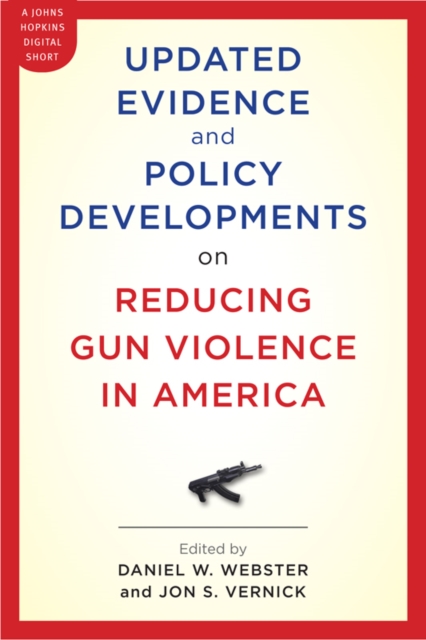
Updated Evidence and Policy Developments on Reducing Gun Violence in America
This digital update to Reducing Gun Violence in America presents new evidence and developments in the effort to address the staggering toll of gun violence in the United States.In 2013—in the wake of the tragic shooting at Sandy Hook Elementary School—Johns Hopkins University Press published Reducing Gun Violence in America, a collection of essays written by the world’s leading experts on gun violence. Updated Evidence and Policy Developments on Reducing Gun Violence in America follows up on the state of American gun violence by analyzing new data, research, and policy developments one year after Sandy Hook. Over the course of ten substantive chapter addendums, contributors bring readers up-to-date on such varied topics as mental illness, domestic violence, background checks, illegal gun sales, and personalized guns. They describe the recent policy measures that have been enacted and suggest additional approaches that may help stem the violence. An essential companion to Reducing Gun Violence in America, the reliable, empirical research and legal analysis in this e-book will help lawmakers, opinion leaders, and concerned citizens identify policy changes to address gun violence, which takes an average of more than 80 lives every day in the United States.
eBook
After Newtown — Public Opinion on Gun Policy and Mental Illness
The loss of life in Newtown, Connecticut, in December 2012 has prompted a national conversation about guns and mental illness. Public opinion surveys can help policymakers understand Americans' attitudes toward both violence-prevention proposals and mental illness.
The horrific loss of life at Sandy Hook Elementary School in Newtown, Connecticut, in December 2012 has prompted a national conversation about guns and mental illness in the United States. This tragedy occurred less than 6 months after 70 people were shot in a movie theater in Colorado and after highly publicized mass shootings in Arizona and at Virginia Tech. These four events share two common characteristics: all four shooters were apparently mentally ill, and all four used guns with large-capacity magazines, allowing them to fire multiple rounds of ammunition without reloading. As policymakers consider options to reduce gun violence, . . .
Journal Article
Local Public Health Policymakers’ Views on State Preemption: Results of a National Survey, 2018
Objectives. To learn about local health policymakers’ experiences and responses to preemption—the ability of a higher level of government to limit policy activity at a lower level. Methods. Between March and June 2018, we conducted an anonymous Web-based survey of mayors and health officials in US cities with populations of 150 000 or more. We used descriptive statistics to analyze multiple-choice responses. We analyzed open text responses qualitatively. Results. Survey response rates were 28% (mayors) and 32% (health officials). Nearly all respondents found preemption to be an obstacle to local policymaking. When faced with preemption, 72% of health officials and 60% of mayors abandoned or delayed local policymaking efforts. Conclusions. Preemption is viewed as an impediment across a range of public health issues and may stifle local policy activity (i.e., have a chilling effect). Those working at the local level should consider the potential for preemption whenever seeking to address public health concerns in their communities. Public Health Implications. Local governments should engage with advocates, practitioners, and public health lawyers to learn about successful and failed efforts to meet public health objectives when faced with preemption.
Journal Article