
Catalogue Search | MBRL


Are you sure you want to remove the book from the shelf?

{{itemTitle}}
202
result(s) for
"Versteegh, M."
Sort by:

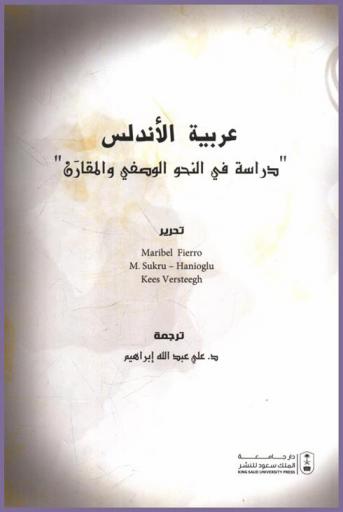
عناصر يونانية في الفكر اللغوي العربي
\"يحاول هذا الكتاب أن يؤكد فرضية على درجة كبيرة من الخطورة وهي أن النحو العربي والفكر اللغوي العربي \"\"مستعار\"\" أو مقترض\"\" من النحو اليوناني والفلسفة والمنطق اليوناني، ولهذا يمكن أن يؤكد المرء أن هذا الكتاب لا يندرج في حقل \"\"علم اللغة العام\"\" الذي يسعى إلى اكتشاف القوانين المشتركة المتحكمة في اللغات المتعددة. كما لا يندرج في إطار \"\"علم اللغة التقابلي\"\" أو \"\"علم اللغة المقارن\"\" وهو العلم الذي يبحث في التأثير والتأثر أو التشابه، أو التفاعل بين الأنظمة اللغوية المتنوعة، بهدف الوصول إلى القاسم أو القواسم المشتركة. ولهذا تبدو محاولة المؤلف هذه غريبة، بل تدعو إلى إثارة الكثير من الأسئلة والتساؤلات المشروعة، ولا سيما إذا عرفنا أنه يرى أن النحو العربي في أصوله ومبادئه ومفاهيمه ومنطلقاته ومصطلحاته وحتى أمثلته التوضيحية مأخوذ أو مقترض من اليونان بشكل مباشر (عن طريق الترجمات التي تكت بدءا من القرن الثالث الهجري) وغير مباشر عن طريق وسائط عديدة من أهمها السريانية والثقافية الهيلينية، التي كانت منتشرة في القرون السابقة على عصر الترجمة من اليونانية\"\"! ويلاحظ أن المؤلف لا يستخدم عبارات: تأثير، تأثر، تفاعل، تمثيل، استلهام، بل نراه يكثر من استخدام عبارات من مثل : اقتراض، تقليد، مستعار، مأخوذ، ترجمة حرفية ل...، وحتى يصل المؤلف إلى هدفه يقوم باستخدام لغة مراوغة أحيانا، وينثر عبارات غامضة أو متناقضة، كما قد يلجأ أحيانا إلى اقتباسات مبتورة وجمل تحتمل أكثر من تأويل !!\".
Book

Observation of strongly entangled photon pairs from a nanowire quantum dot
NRC publication: Yes
Journal Article

علم الدلالة العربي في منظور الاستشراق : نظرية المعنى عند العرب في كتابات المستشرق الهولندي كيس فرستيخ مع ترجمة أربع دراسات له هي (ظهور علم الدلالة في الموروث العربي) ومادة معنى دائرة المعارف الإسلامية لدار بريل ومعاني الكلام فصيلة الوجه الجملي في النحو العربي والبحث عن المعنى التفسيرات المعجمية في التفاسير القرآنية المتقدمة
يؤكد المؤلف في مقدمة الكتاب أنه على أهميته وعظم خطره في المنظومة اللغوية يعد ثمرة سائر فروعها وغايتها النهائية- صدر حديثا كتاب الدكتور كيان أحمد حازم يحيى، تحت عنوان\"علم الدلالة العربي في منظور الاستشراق الغربي\"، في هذا الكتاب يرصد الباحث الدكتور كيان أحمد حازم يحيى دراسة المستشرق الهولندي كيس فرستيخ لنظرية المعنى القديمة عند العرب، وهو بهذه الدراسة يضيف مساهمة هامة في علم الدلالة عربيا. يؤكد المؤلف في مقدمته للكتاب حول أهمية علم الدلالة في المنظومة اللغوية أنه\"على أهميته وعظم خطره في المنظومة اللغوية، يمكن القول إنه ثمرة سائر فروعها وغايتها النهائية، لا تجد في كتابات الباحثين العرب ما يشفي غليل الكشف عن جهود المستشرقين في دراسته في العربية.
Book

Bright nanoscale source of deterministic entangled photon pairs violating Bell’s inequality
Global, secure quantum channels will require efficient distribution of entangled photons. Long distance, low-loss interconnects can only be realized using photons as quantum information carriers. However, a quantum light source combining both high qubit fidelity and on-demand bright emission has proven elusive. Here, we show a bright photonic nanostructure generating polarization-entangled photon pairs that strongly violates Bell’s inequality. A highly symmetric InAsP quantum dot generating entangled photons is encapsulated in a tapered nanowire waveguide to ensure directional emission and efficient light extraction. We collect ~200 kHz entangled photon pairs at the first lens under 80 MHz pulsed excitation, which is a 20 times enhancement as compared to a bare quantum dot without a photonic nanostructure. The performed Bell test using the Clauser-Horne-Shimony-Holt inequality reveals a clear violation (SCHSH > 2) by up to 9.3 standard deviations. By using a novel quasi-resonant excitation scheme at the wurtzite InP nanowire resonance to reduce multi-photon emission, the entanglement fidelity (F = 0.817 ± 0.002) is further enhanced without temporal post-selection, allowing for the violation of Bell’s inequality in the rectilinear-circular basis by 25 standard deviations. Our results on nanowire-based quantum light sources highlight their potential application in secure data communication utilizing measurement-device-independent quantum key distribution and quantum repeater protocols.
Journal Article

Geochemical consequences of oxygen diffusion from the oceanic crust into overlying sediments and its significance for biogeochemical cycles based on sediments of the northeast Pacific
Exchange of dissolved substances at the sediment–water interface provides an important link between the short-term and long-term geochemical cycles in the ocean. A second, as yet poorly understood sediment–water exchange is supported by low-temperature circulation of seawater through the oceanic basement underneath the sediments. From the basement, upwards diffusing oxygen and other dissolved species modify the sediment, whereas reaction products diffuse from the sediment down into the basement where they are transported by the basement fluid and released to the ocean. Here, we investigate the impact of this “second” route with respect to transport, release and consumption of oxygen, nitrate, manganese, nickel and cobalt on the basis of sediment cores retrieved from the Clarion Clipperton Zone (CCZ) in the equatorial Pacific Ocean. We show that in this abyssal ocean region characterised by low organic carbon burial and sedimentation rates vast areas exist where the downward- and upward-directed diffusive fluxes of oxygen meet so that the sediments are oxic throughout. This is especially the case where sediments are thin or in the proximity of faults. Oxygen diffusing upward from the basaltic crust into the sediment contributes to the degradation of sedimentary organic matter. Where the sediments are entirely oxic, nitrate produced in the upper sediment by nitrification is lost both by upward diffusion into the bottom water and by downward diffusion into the fluids circulating within the basement. Where the oxygen profiles do not meet, they are separated by a suboxic sediment interval characterised by Mn2+ in the porewater. Where porewater Mn2+ in the suboxic zones remains low, nitrate consumption is low and the sediment continues to deliver nitrate to the ocean bottom waters and basement fluid. We observe that at elevated porewater manganese concentrations, nitrate consumption exceeds production and nitrate diffuses from the basement fluid into the sediment. Within the suboxic zone, not only manganese but also cobalt and nickel are released into the porewater by reduction of Mn oxides, diffusing towards the oxic–suboxic fronts above and below where they precipitate, effectively removing these metals from the suboxic zone and concentrating them at the two oxic–suboxic redox boundaries. We show that not only do diffusive fluxes in the top part of deep-sea sediments modify the geochemical composition over time but also diffusive fluxes of dissolved constituents from the basement into the bottom layers of the sediment. Hence, the palaeoceanographic interpretation of sedimentary layers should carefully consider such deep secondary modifications in order to prevent the misinterpretation of primary signatures.
Journal Article

In search of a ‘pan-European value set’; application for EQ-5D-3L
Objectives
Country-specific value sets for the EQ-5D are available which reflect preferences for health states elicited from the general population. This allows the transformation of responses on EQ-5D to health state utility values. Only twelve European countries possess country-specific value sets and no value set reflecting the preferences of Europe exists. We aim to estimate a ‘pan-European’ value set for the EQ-5D-3L, reflecting the preferences for health states of the European population that could help to evaluate health care from the perspective of the European decision-maker.
Methods
We systematically assessed and compared the methodologies of available EQ-5D-3L time trade-off (TTO) value sets from twelve European countries: Denmark, France, Germany, Hungary, Italy, Netherlands, Poland, Portugal, Romania, Slovenia, Spain and UK. Using their published coefficients, a dataset with utility values for all 243 health states was simulated. Different modelling techniques and model specifications including interaction terms were tested. Model selection was based on goodness-of-fit criteria. We also explored results with application of population size weights.
Results
Methodological, procedural and analytical characteristics of the included EQ-5D-3L valuation studies were quite comparable. An OLS based model was the preferred model to represent European preferences. Weighting with population size made little difference.
Conclusions
EQ-5D-3L valuation studies were considered of sufficient comparability to form the basis for a new ‘pan-European’ value set. The method used allows for an easy update when new national value sets become available.
Journal Article
Performance of temperature and productivity proxies based on long-chain alkane-1, mid-chain diols at test: a 5-year sediment trap record from the Mauritanian upwelling
Proxies based on long-chain alkane-1, mid-chain diols (diol for short) are obtaining increasing interest to reconstruct past upper ocean temperature and productivity. Here we evaluate performance of the sea surface temperature proxies (long-chain diol index (LDI), diol saturation index (DSI), and diol chain length index (DCI)), productivity and upwelling intensity proxies (two diol indices DIR and DIW and the combined diol index (CDI)), and the nutrient diol index (NDI) as a proxy for phosphate and nitrate levels. This evaluation is based on comparison of the diols in sediment trap samples from the upwelling region off NW Africa collected at 1.28 km water depth with daily satellite-derived sea surface temperatures (SSTs), subsurface temperatures, productivity, the plankton composition from the trap location, monthly phosphate and nitrate concentrations, wind speed, and wind direction from the nearby Nouadhibou airport. The diol-based SST reconstructions are also compared the long-chain-alkenone-based SST reconstructions. The alkenone SSTs correlate best with satellite SST (r2= 0.60). Amplitude and absolute values agree very well as do the flux-corrected time series averages. For the diol proxies the situation is more complicated. Diol proxies including 1,14 diols lag trade wind speed by 30 d. Since wind is nearly always from the NNE to NNW and induces the upwelling, we relate the variability in these proxies to upwelling-induced processes. Correlation with the abundance of upwelling species and wind speed is best for the NDI and the 1,14 diol-based DCI and DSI. The DIR, DIW, and CDI perform comparatively poorly. A negative correlation between DSI and wind speed may suggest that the DSI reflects wind-speed-forced upwelling-related reductions in temperature rather than irradiation-induced temperatures. The nutrient proxy NDI shows no significant correlation to monthly phosphate and nitrate concentrations in the upper waters and a negative correlation with both wind-induced upwelling (r2=0.28 and lagging 32 d) and the abundance of upwelling species (r2=0.38). It is suggested that this proxy reflects upwelling intensity rather than upper ocean nutrient concentrations. At the trap site, satellite SST lags wind-speed-forced upwelling by about 4 months. The 1,13 and 1,15 diol-based LDI-derived SSTs lag satellite SSTs by 41 d but correlate poorly (r2= 0.17). Absolute as well as flux-corrected LDI SSTs are on average 3 ∘C too high and rather reflect values prevailing during the more oligotrophic summer period. We attribute outliers to low LDI SST to 1,13 diols added during short upwelling-related events. The use of the LDI in regions with higher productivity is therefore not recommended. It appears thus that at the trap site the 1,14 diols primarily reflect conditions relating to upwelling whereas the 1,15C30 and to a lesser extent the 1,13 diols seem to reflect the conditions of the more oligotrophic ocean.
Journal Article
Assessment of the Cape Blanc (northwest Africa) upwelling ecosystem response to recent climate change, using wavelet analyses on dinoflagellate cyst export
Accelerated rates of change in recent climate have urged comprehensive investigations of its impact on marine ecosystems, notably those with high bio-, socio-, and economic importance, such as the upwelling ecosystem off Cape Blanc, Northwest Africa. This paper discusses how phyto- and microzooplankton export flux, represented by dinoflagellate cysts (dinocysts), in this ecosystem can be affected by variable climatic conditions prevailing between 2003 and 2020. The study area is characterised by annual permanent upwelling with cyclic intensity and strong inter-annual variability. Thus, we employed Morlet wavelet analyses to detect periodicities and interannual variations on an 18 year high-resolution sediment trap record of organic-walled dinocyst export flux and local environmental steering factors (e.g., wind direction, wind speed, Saharan dust input and sea-surface temperature). A dinocyst is a fossilisable structure produced by dinoflagellates, a plankton group containing both primary and secondary producers. Significant half-year and annual cycles in the time series of dinocyst export fluxes, upwelling winds, and the dust input time series were detected. Those cycles presented variations that were divided into three distinct phases: Phase I (2003–2008), Phase II (2009–2012), and Phase III (2013–2020). We also observed changes in the taxonomic composition of dinocyst assemblages in every phase, demonstrating their potential as bioindicators for environmental changes. The significant variations within each phase were mostly explained by changes in upwelling intensity and dust input into the area. Our results suggest that there is a strong interaction between these two factors (which depend on surface wind dynamics) and the export flux of dinocysts off Cape Blanc, highlighting the ecosystem's sensitivity to local climate variability.
Journal Article

The Mental Health Quality of Life Questionnaire (MHQoL)
Purpose
The purpose of this study was to develop and psychometrically evaluate a new quality of life measure for use in people with mental health problems—the Mental Health Quality of Life questionnaire (MHQoL).
Methods
The MHQoL dimensions were based on prior research by Connell and colleagues, highlighting the seven most important quality of life dimensions in the context of mental health. Items were generated following a systematic review we performed and through inviting expert opinion. A focus group and an online qualitative study (
N
= 120) were carried out to assess the face and content validity of the MHQoL. The MHQoL was further tested for its internal consistency, convergent validity, known-group validity and test–retest reliability among mental healthcare service users (N = 479) and members of the general population (
N
= 110).
Results
The MHQoL consists of a descriptive system (MHQoL-7D), including s items covering seven dimensions (self-image, independence, mood, relationships, daily activities, physical health, future) and a visual analogue scale of general psychological well-being (MHQoL-VAS). Internal consistency was high (Cronbach's
∝
= 0.85) and correlations between MHQoL-7D scores and related measures (EQ-5D-5L, MANSA, ICECAP-A, and BSI) supported convergent validity. The intraclass correlation coefficient of the MHQoL-7D sum score for test–retest reliability was 0.85. Known-group validity was supported by the ability to detect significant differences in MHQoL-7D levels between service users and the general population, and between groups with different levels of psychological distress.
Conclusion
The MHQoL demonstrated favourable psychometric properties and showed promise as a simple and effective measure to assess quality of life in people with mental health problems.
Journal Article