
Catalogue Search | MBRL


Are you sure you want to remove the book from the shelf?

{{itemTitle}}
53
result(s) for
"Vicki Ohl"
Sort by:
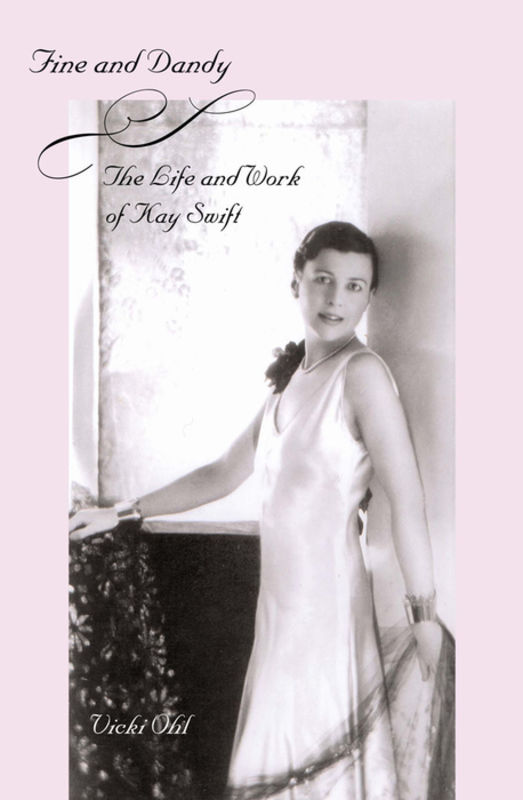
Fine and Dandy
Kay Swift (1897-1993) was one of the few women composers active on Broadway in the first half of the twentieth century. Best known as George Gershwin's assistant, musical adviser, and intimate friend, Swift was in fact an accomplished musician herself, a pianist and composer whoseFine and Dandy(1930) was the first complete Broadway musical written by a woman. This fascinating book-the first biography of Swift-discusses her music and her extraordinary life.Vicki Ohl describes Swift's work for musical theater, the ballet, Radio City Music Hall's Rockettes, and commercial shows. She also tells how Swift served as director of light music for the 1939 World's Fair, eloped with a cowboy from the rodeo at the fair, and abandoned her native New York for Oregon, later fashioning her experiences into an autobiographical novel,Who Could Ask for Anything More?Informed by rich material, including Swift's unpublished memoirs and extensive interviews with her family members and friends, this book captures the essence and spirit of a remarkable woman.
eBook
Gershwin Obsession
One of Kay Swift’s granddaughters, the writer Katharine Weber, had a special bond with her grandmother. With Nicholas Fox Weber, her husband, she is the co-trustee of the Kay Swift Memorial Trust, dedicated to preserving and promoting Swift’s memory and music. One of her earliest childhood memories is of a time when she was still small enough to fit into the mesh seat of a grocery cart in the local supermarket. The music on the store intercom had stopped and a new melody had begun. Weber writes in an essay, “The Memory of All That,”
My mother, whose shopping list
Book Chapter
Highbrow/Lowbrow in New York City
Paul M. Warburg’s reputation as the father of the Federal Reserve System and his position on the Federal Reserve Board underscored his financial expertise and commitment to his adopted nation. Given these credentials, it is not surprising that three years after Katharine and James married, the federal government sought to use James’s talent as well. In 1921, during Warren G. Harding’s presidency, the new commerce secretary, Herbert Hoover, offered James the position of assistant secretary of commerce. This was a rare opportunity for a twenty-five-year-old, but James, exhibiting his strong spirit of independence, rejected the offer. He claims to have
Book Chapter
Professional and Personal Choices
Katharine’s father died prematurely and unexpectedly on July 21, 1914, from complications after two gall bladder surgeries. Although he had seemed to recover from his first surgery in November 1913, he never fully regained his strength. Without benefit of antibiotics, minor complications apparently led to his death. After visiting his parents in Wilmington in early June, Swift suffered another attack of gallstones that lasted six weeks. Young Sam was sent to spend some time with his great aunt in Valley Forge, Pennsylvania, and Katharine remained with her mother. A second surgery was finally deemed necessary and was performed on July
Book Chapter
She’ll Have Manhattan
When Kay Swift returned to New York in 1948, she must have felt the thrill of coming home to the city she loved. Having faced a number of disappointments in California, she was, no doubt, eagerly anticipating many professional opportunities for both herself and her new husband. They first tried to capitalize on music she had already written. She promoted a recording of the ballad, “Once You Find Your Guy,” before the release ofNever a Dull Momentin 1950. Singer Louise Carlyle made a demonstration disk of the song, and Swift was hopeful for its future. She recalled that
Book Chapter
Finale
Kay Swift’s work ethic pushed her to continue composing and contributing to the world of music late in life. She often worried that she had not done enough with her gift, and retirement was not an option she seems ever to have considered. When a friend once commented with enthusiasm, “You must have had such an interesting life!” Swift bristled and snapped, “I’m still having it!”¹
In the summer of 1980, when she was eighty-three, Swift again teamed with Robert Kimball, this time to teach a class on American musical theater at New York University. Originally, the six-week summer workshop
Book Chapter
Keep on Keepin’ On
Kay Swift remained active throughout the 1970s in her work and in her social life. For a septuagenarian, she was remarkably productive. Even though she may not have been working at her former pace, she continued to compose and pursue her musical activities. As in the 1960s, she wrote fewer popular songs and compositions and tended to write more pieces, both secular and sacred, that were classical in style. She also added to her cycle of children’s songs, with “Shoana,” a tribute to April’s granddaughter, who was born in 1970.
Swift returned in these years to her early practice of
Book Chapter
Fine and Dandy
Although the Swift-James songs had enjoyed some success, the New York theater scene was more precarious than usual in 1930. The popularity of film musicals and the stock market crash of 1929 had led to a reduced number of musical productions on Broadway. In spite of these obstacles, the Warburgs now undertook the task of writing music and lyrics for a complete show. This was an unusual venture, not simply because of the unfavorable economic conditions and the strains in the Warburgs’ marriage. Their collaboration would produce the first Broadway musical whose score was written entirely by a woman, a
Book Chapter
The Show Won’t Fold in Philadelphia
In the 1960s, Swift seems to have found areas of comfort in which she excelled. She had fewer professional disappointments and more successes than in the previous decade. In addition to composing single songs and piano pieces in a popular style, she resumed writing pieces in a more classical style, some of them sacred. She also became involved in writing music for a number of civic and commercial shows and World’s Fairs. Musically, Swift found a niche in which she was comfortable and productive.
Swift’s sixth decade had many other dimensions as well. She loved her grandchildren, grandnieces, and grandnephew
Book Chapter
Challenges
The second half of the 1950s found Swift working hard to share her music and her talents with many audiences. She explored a variety of opportunities to write in London, which returned her to her roots and allowed her to visit relatives of her mother’s residing in England. In the United States, her Gershwin connection offered another professional experience. Swift was ambitious and versatile enough to explore any areas that might allow her to experiment with her creative talents.
The most successful of her London efforts was incidental music written for a 1958 play by Marc Connelly entitledHunter’s Moon.
Book Chapter