
Catalogue Search | MBRL


Are you sure you want to remove the book from the shelf?

{{itemTitle}}
10
result(s) for
"Wade, Robert author"
Sort by:


Inequality and the West
This stunning sweep of western societies by New Zealander Robert Wade, professor at the London School of Economics, reveals why inequality has risen internationally, how it's been justified, and the arguments against it.
eBook
Reclaiming development
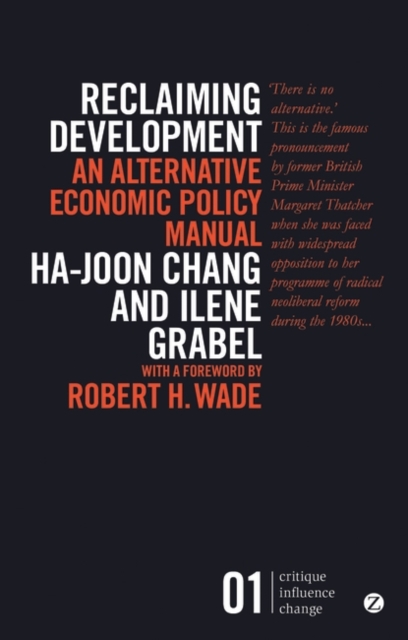
There is no alternative to neoliberal economics - or so it appeared when Reclaiming Development was published in 2004. Many of the same driving assumptions - monetarism and globalization - remain within the international development policy establishment. Ha-Joon Chang and Ilene Grabel confront this neoliberal development model head-on by combining devastating economic critique with an array of innovative policies and an in-depth analysis of the experiences of leading Western and East Asian economies. Still, much has changed since 2004 - the relative success of some developing countries in weathering the global financial crisis has exposed the latent contradictions of the neoliberal model. The resulting situation of increasingly open policy innovation in the global South means that Reclaiming Development is even more relevant today than
eBook

Music in Black American Life, 1600-1945
This first volume of Music in Black American Life collects
research and analysis that originally appeared in the journals
American Music and the Black Music Research
Journal , and in the University of Illinois Press's acclaimed
book series Music in American Life. In these selections, experts
from a cross-section of disciplines engage with fundamental issues
in ways that changed our perceptions of Black music. The topics
includes the culturally and musically complex Black music-making of
colonial America; string bands and other lesser-known genres
practiced by Black artists; the jubilee industry and its audiences;
and innovators in jazz, blues, and Black gospel.
Eclectic and essential, Music in Black American Life,
1600-1945 offers specialists and students alike a gateway to
the history and impact of Black music in the United States.
Contributors: R. Reid Badger, Rae Linda Brown, Samuel A. Floyd
Jr., Sandra Jean Graham, Jeffrey Magee, Robert M. Marovich, Harriet
Ottenheimer, Eileen Southern, Katrina Dyonne Thompson, Stephen
Wade, and Charles Wolfe
eBook
Macroeconomic Issues Today
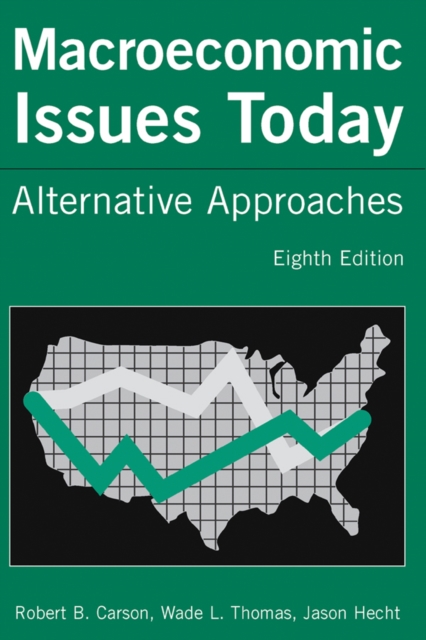
Now revised and updated to reflect critical changes in economic policy since the last edition, Macroeconomic Issues Today, Eighth Edition, provides Conservative, Liberal, and Radical interpretations and solutions for seven current macroeconomic issues, including all-new coverage of the Social Security debate. An instructor's manual with a test bank and discussion questions is available to professors who adopt the text, and PowerPoint downloads are available as teaching aids.
eBook
Economic Issues Today: Alternative Approaches
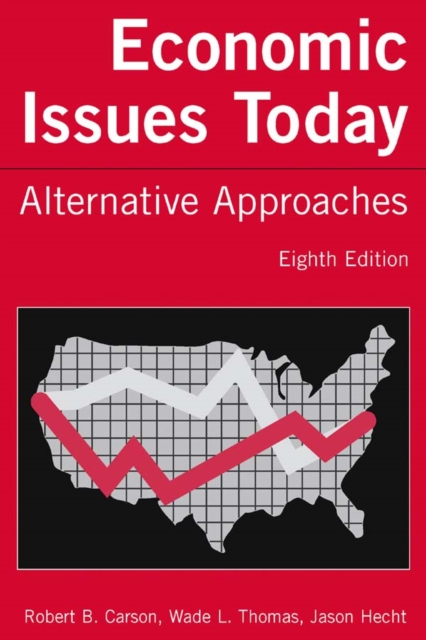
Written in non-technical, everyday language that is accessible to the undergraduate audience, and requiring no background in economic analysis, this acclaimed text provides a unique approach to understanding what the practice of economics is all about. The authors address fourteen current economic issues, covering both micro- and macro-economics, and offer analyses and proposed solutions for each from Conservative, Liberal, and Radical perspectives. This new edition incorporates critical changes in economic policy since the last edition that affect every issue covered in the text. Tables have been updated throughout to include current economic data, and an all-new section on social policy frames the current debate about the Social Security system. The book's unique approach stimulates critical thinking on everyday issues that traditional texts either ignore or present as \"settled\" debates. It helps students to understand the dual role that ideology and logical/empirical argumentation play in economics. Issues are presented as stand-alone subjects that can be read in any sequence and used to supplement a wide range of principles of economics texts. An instructor's manual with a test bank and discussion questions is available to professors who adopt the text, and Power Point downloads are available as teaching aids. The text is also available in two separate volumes: Microeconomics Today and Macroeconomics Today.
List of Figures and Tables; Preface; Part 1. Introduction; Alternative Economic Philosophies: A Survey of Conservative, Liberal, and Radical Critiques; Part 2. Problems in the Marketplace; Issue 1. Responding to Market Outcomes: Competition or Protection for American Agriculture? Issue 2. Consumer Welfare: Is It Necessary to Protect the Consumer? Issue 3. Dealing with Externalities: How Can We Save the Environment? Issue 4. Imperfect Competition: Is Big Business a Threat or a Boon? Issue 5. Economic Regulation: Which Path: Deregulation or Reregulation? Issue 6. Income Distribution: Does America Have an Income Inequality Problem? Issue 7. Financing Government: What Is a Fair System of Taxation? Part 3. Problems of Aggregate Economic Policy; Issue 8. Macroeconomic Instability: Are We Depression-Proof? Issue 9. Economic Growth and Stability: Can We Maintain High and Steady Rates of Economic Growth? Issue 10. Balancing the Federal Budget: Should We Be Worried About the Rising Federal Deficit? Issue 11. Unemployment: Is Joblessness an Overrated Problem? Issue 12. Inflation: Can Price Pressures Be Kept Under Control? Issue 13. The New Population Problem: Can We Save Our Social Security System? Issue 14. International Economics: Where Does America Fit into the New World Order? Part 4. Conclusion; Reprise: The Market Versus Planning and Controls: Which Strategy Works Better? Final Thoughts and Suggested Readings
eBook

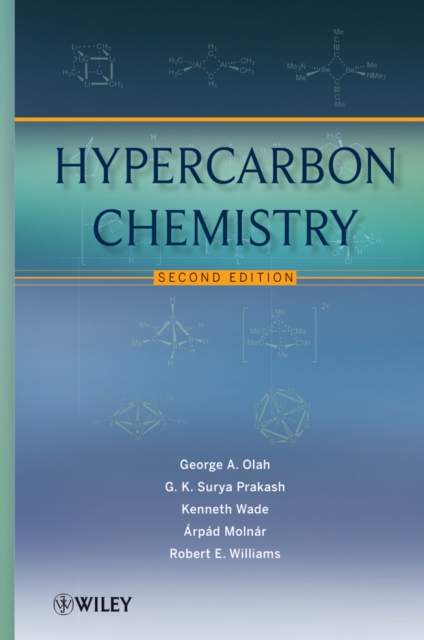
Hypercarbon chemistry
The essential new edition of the book that put hypercarbon chemistry on the map A comprehensive and contemporary treatment of the chemistry of hydrocarbons (alkanes, alkenes, alkynes, and aromatics) towards electrophiles, Hypercarbon Chemistry, Second Edition deals with all major aspects of such chemistry involved in hydrocarbon transformations.
eBook

Crafting Short Screenplays That Connect
The only screenwriting book that includes a DVD that contains performances of the short films and screenplays that are featured in the book! The beauty and power of any story lies in its ability to connect to the reader, listener, or observer. Crafting Short Screenplays That Connect is the first screenwriting guide to introduce connection as an essential, although essentially overlooked, aspect of creating stories for the screen and of the screenwriting process itself. Written with clarity and humor, this book teaches the craft of writing short screenplays by guiding the student through carefully focused writing exercises of increasing length and complexity. Eight award-winning student screenplays are included for illustration and inspiration. The text is divided into three parts. Part one focuses on preparing to write by means of exercises designed to help students think more deeply about the screenwriter's purposes; their own unique vision, material and process; and finally about what screenplays are at their simplest and most profound level--a pattern of human change, created from specific moments of change--discoveries and decisions. Part two teaches students how to craft an effective pattern of human change. It guides them through the writing and re-writing of \"Five (Not So Easy) Pieces\"--five short screenplays of increasing length and complexity--focusing on a specific principle of dramatic technique: The Discovery, The Decision, The Boxing Match, The Improbable Connection, and The Long Short Screenplay. Part Three presents the five screenplays used throughout the book to illustrate the dramatic principles that have been discussed, and includes interviews with the screenwriters, a look at where they are now and what they are doing, and brief discussion of how each film evolved.
Florida State University Screenwriter in Residence Claudia Hunter Johnson, Ph.D. has written numerous screenplays for feature film and television productions, including two documentary specials commissioned by the National Endowment for the Arts. Her last screenplay, Obscenity (co-written with Matt Stevens), was a finalist for the 1997 Sundance Screenwriters Lab. She has written several award-winning full-length and one-act plays. Her many awards include the Lorraine Hansberry Award, American National Theatre West Award, and Academy Award. In 1993, she won the inaugural PEN/Newman's Own First Amendment Award for her campaign to restore banned literary classics to high school classrooms in Florida. Her widely acclaimed book, Stifled Laughter: One Woman's Story About Fighting Censorship, was nominated for the Pulitzer Prize.
* The only screenwriting book that includes a DVD that contains performances of the short films and screenplays that are featured in the book! Praise for the first edition: \"In this beautifully written and inspiring book, Claudia Johnson leads the reader through the process of writing the short film, along the way illuminating something much bigger--how to write great drama in any form. A very accessible book, well-researched and full of original thinking, Crafting Short Screenplays That Connect adds an important part to the literature of screenwriting and filmmaking, and will undoubtedly lead to some great short films.\" - Linda Seger, author, Making a Good Script Great \"Crafting Short Screenplays that Connect would make a good addition to any screenwriter's library...a very accessible book for aspiring screenwriters.\" - Videomaker \"Whether you want to write short screenplays because you want some practice before you go the distance, or because it's an assignment for your film class, 'Crafting Short Screenplays That Connect' is for you.It is explicit in its detail and direction. What is perhaps the most unique part of this guide is the fact that it contains five short screenplays that illustrate dramatic principles she teaches.\" - Jason Antebi, Done Deal (scriptsales.com) 'My students respond well to her emphasis on connection being as important as conflict. They seem to be inspired to write more compelling work by the less academic/more personally explorative tone.' -Saul Fussiner, Hunter College Film & Media Praise for the second edition: \"If you are interested in making short films, buy this book...This book is written with authority, the voice of experience and, more importantly, with love and humour, drawing in experiences from other screenwriters along the way.\" - Focus magazine 'I am pleased to see a screenplay book which finds an alternative to placing conventional conflict and structure at the center of the writing universe! The emphasis on first finding emotional connection between the author and screenplay and then the developing the connection between the screenplay and audience is very fresh and creativity-enhancing.\" - Mick Hurbis-Cherrier, Hunter College, City University of New York 'I chose this book because it reflects what I believe about scriptwriting--that the technical aspects can always be fixed, but that without a story that has heart and meaning, technical competency doesn't matter.' - Anne Orwin, School of Film and Animation, Rochester Institute of Technology 'Johnson's book is unique...it openly addresses the 'groove' that traditional Hollywood narrative has worn into our minds and imaginations and provides real ways to go beyond these cliches to write more emotionally impactful stories.' M. Heather Hartley, Pennsylvania State University
Preface Acknowledgements Introduction: The Power and Importance of Human Connection Part I: Preparing to Write the Short Screenplay Chapter 1: Connecting to Purpose Only Connect The Screenplay Paradox Chapter 2: Connecting to Self Le Menu Depart the Donnee Chapter 3: Connecting to Process The Space-Time Conundrum Method in Your Madness Creating Rituals Taking Care of Yourself Just Do It Chapter 4: Connecting to Screenplays Surface and Deep Action Making Change The Mood Exersize The Pearl in the Oyster Emotional Flow Everything You Need to Know You Can Learn From City Lights Demystifying Format Chapter 5: Connecting to Collaboration Top Ten Reasons to Write With a Partner Finding the Right Writing Partner The Space-Time Conundrum Co-Drafting the Script Dealing With Disagreements Part II: Five (Not So) Easy Screenplays Chapter 6: The Discovery The First Screenplay - The Discovery Developing Character Developing Story and Structure Drafting the Screenplay Rewriting the Screenplay Chapter 7: The Decision The Second Screenplay - The Decision Choosing an Idea Developing Character Developing Story and Structure Drafting the Screenplay Rewriting the Screenplay Chapter 8: The Boxing Match The Third Screenplay - The Boxing Match Choosing an Idea Developing Character Developing Story and Structure Drafting the Screenplay Rewriting the Screenplay Chapter 9: The Improbable Connection The Fourth Screenplay - The Improbable Connection Choosing an Idea Developing Character Developing Story and Structure Drafting the Screenplay Rewriting the Screenplay Chapter 10: The Long Short Screenplay The Fifth Screenplay - The Long Short Screenplay Choosing an Idea Developing Character Developing Story and Structure Drafting the Screenplay Rewriting the Screenplay Part III: Seven Screenplays that Make it Look Easy Chapter 11: Kosher (by Aimee Barth) Chapter 12: My Josephine (by Barry Jenkins) Chapter 13: A Work in Progress (by Wes Ball) Chapter 14: Lena's Spaghetti (by Rachel Witenstein) Chapter 15: Cool Breeze and Buzz (by Lani Sciandra) Chapter 16: The Making of \"Killer Kite\" (story Matt Stevens, screenplay by Robert S. Gray) Chapter 17: Slow Dancin' Down the Aisles of the Quickcheck (by Thomas Wade Jackson) Chapter 18: Conclusion Appendix A: Available Screenwriting Software Appendix B: Films Referenced Appendix C: Further Reading INDEX
eBook