
Catalogue Search | MBRL


Are you sure you want to remove the book from the shelf?

{{itemTitle}}
208
result(s) for
"Wagner, Bryan"
Sort by:


Looking for Law in All the Wrong Places
Exploring law's articulation in everything from road signs and billboards to Supreme Court opinions, this volume opens up the possibilities of legal study beyond doctrine and official behavior.This broadly ranging volume shows the possibilities of studying law from many different angles: not only as rule or behavior, but as text, image, or culture, and in relation to religion, place, family, ritual, and performance.
For many, the right place to look for law is in constitutions, statutes, and judicial opinions. This book looks for law in the \"wrong places\"-sites and spaces where no formal law appears. These may be geographic regions beyond the reach of law, everyday practices ungoverned or ungovernable by law, or works of art that have escaped law's constraints.
InLooking for Law in All the Wrong Places, leading scholars of anthropology, cultural studies, history, law, literature, political science, race and ethnic studies, religion, and rhetoric look at law from the standpoint of the humanities. Beyond showing law to be determined by or determinative of distinct cultural phenomena, they show how law is itself interwoven with language, text, image, and culture.
Many contributors examine places where there appears to be no law, fi nding not only refl ections and remains of law but also rules and practices that seem indistinguishable from law and raise challenging questions about the locations of law and about law's meaning and function. Other essays look in the more common places- statute books and courtrooms-but from perspectives that are usually presumed to have nothing to say about law.
Looking at law sideways, upside-down, or inside-out de-familiarizes law. These essays show what legal understanding can gain when law is denied its ostensibly proper domain.
Contributors: Kathryn Abrams, Daniel Boyarin, Wendy Brown, Marianne Constable, Samera Esmeir, Daniel Fisher, Sara Ludin, Saba Mahmood, Rebecca McLennan, Ramona Naddaff , Beth Piatote, Sarah Song, Christopher Tomlins, Leti Volpp, Bryan Wagner
An impressive line-up of leading scholars from a wide range of disciplines - law, but also anthropology, rhetoric, literature, history, geography, and race and ethnic studies.
eBook

The tar baby : a global history
Perhaps the best-known version of the tar baby story was published in 1880 by Joel Chandler Harris in Uncle Remus: His Songs and His Sayings, and popularized in Song of the South, the 1946 Disney movie. Other versions of the story, however, have surfaced in many other places throughout the world, including Nigeria, Brazil, Corsica, Jamaica, India, and the Philippines. The Tar Baby offers a fresh analysis of this deceptively simple story about a fox, a rabbit, and a doll made of tar and turpentine, tracing its history and its connections to slavery, colonialism, and global trade.
Book

Looking for Law in All the Wrong Places
Exploring law's articulation in everything from road signs and billboards to Supreme Court opinions, this volume opens up the possibilities of legal study beyond doctrine and official behavior.This broadly ranging volume shows the possibilities of studying law from many different angles: not only as rule or behavior, but as text, image, or culture, and in relation to religion, place, family, ritual, and performance.
For many, the right place to look for law is in constitutions, statutes, and judicial opinions. This book looks for law in the \"wrong places\"-sites and spaces where no formal law appears. These may be geographic regions beyond the reach of law, everyday practices ungoverned or ungovernable by law, or works of art that have escaped law's constraints.
InLooking for Law in All the Wrong Places , leading scholars of anthropology, cultural studies, history, law, literature, political science, race and ethnic studies, religion, and rhetoric look at law from the standpoint of the humanities. Beyond showing law to be determined by or determinative of distinct cultural phenomena, they show how law is itself interwoven with language, text, image, and culture.
Many contributors examine places where there appears to be no law, fi nding not only refl ections and remains of law but also rules and practices that seem indistinguishable from law and raise challenging questions about the locations of law and about law's meaning and function. Other essays look in the more common places- statute books and courtrooms-but from perspectives that are usually presumed to have nothing to say about law.
Looking at law sideways, upside-down, or inside-out de-familiarizes law. These essays show what legal understanding can gain when law is denied its ostensibly proper domain.
Contributors: Kathryn Abrams, Daniel Boyarin, Wendy Brown, Marianne Constable, Samera Esmeir, Daniel Fisher, Sara Ludin, Saba Mahmood, Rebecca McLennan, Ramona Naddaff , Beth Piatote, Sarah Song, Christopher Tomlins, Leti Volpp, Bryan Wagner
An impressive line-up of leading scholars from a wide range of disciplines - law, but also anthropology, rhetoric, literature, history, geography, and race and ethnic studies.
eBook

Disturbing the Peace
W. C. Handy waking up to the blues on a train platform, Buddy Bolden eavesdropping on the drums at Congo Square, John Lomax taking his phonograph recorder into a southern penitentiary - in Disturbing the Peace, Bryan Wagner revises the history of the black vernacular tradition and gives a new account of black culture by reading these myths in the context of the tradition's ongoing engagement with the law.
eBook
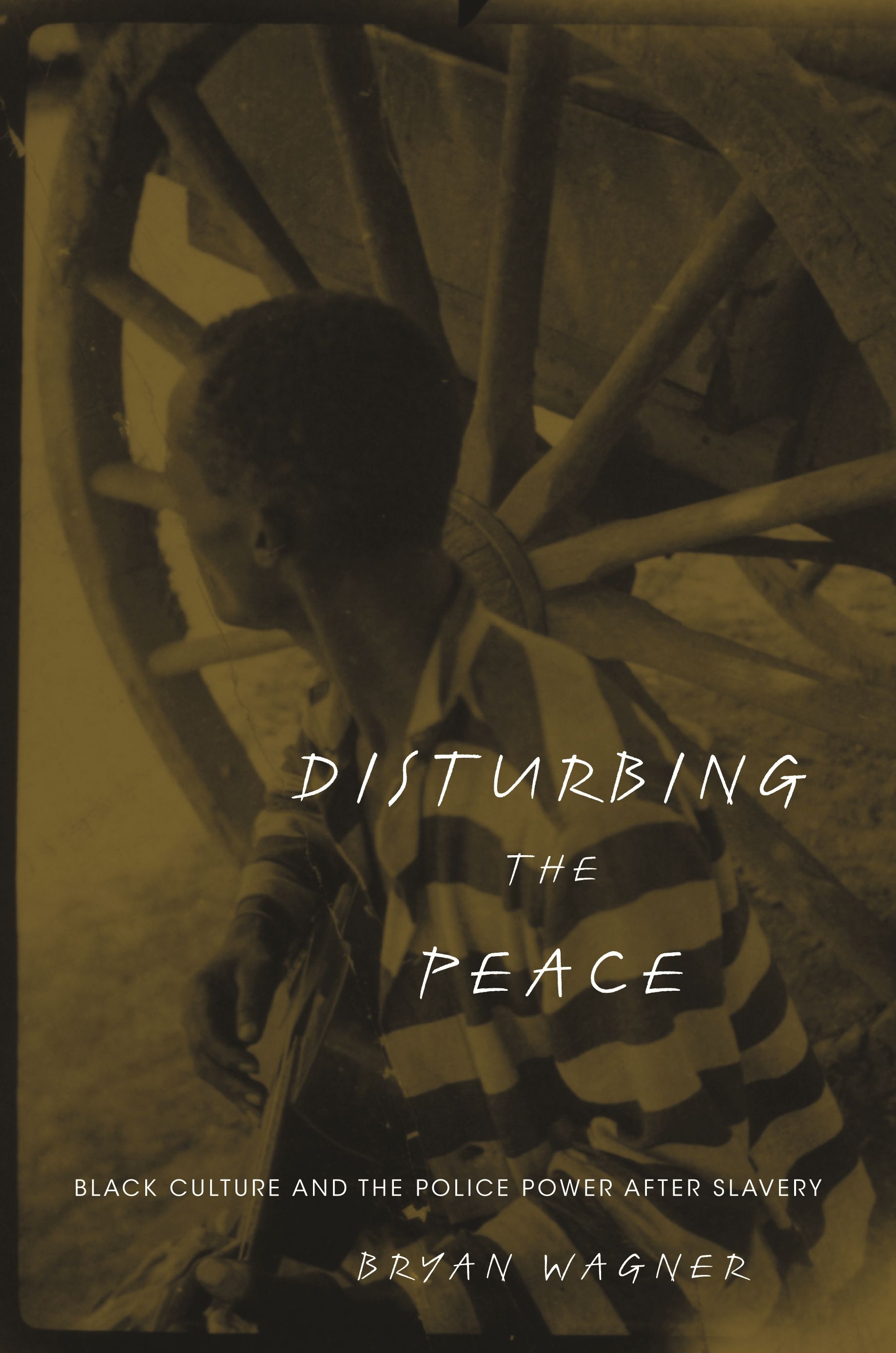
Disturbing the Peace
W. C. Handy waking up to the blues on a train platform, Buddy Bolden eavesdropping on the drums at Congo Square, John Lomax taking his phonograph recorder into a southern penitentiary—some foundational myths of the black vernacular remain inescapable, even as they come under increasing pressure from skeptics.
In Disturbing the Peace, Bryan Wagner revises the history of the black vernacular tradition and gives a new account of black culture by reading these myths in the context of the tradition's ongoing engagement with the law. Returning to some familiar examples (trickster tales, outlaw legends, blues lyrics) central to previous studies of the black vernacular expression, Wagner uses an analytic framework he has developed from the historical language of the law to give new and surprising analyses.
Wagner's work draws both on his deep understanding of history and on a wealth of primary sources that range from novels to cartoons to popular ballads and early blues songs to newspapers and court reports. Through his innovative engagement with them, Wagner gives us a new and deeper understanding of black cultural expression, revealing its basis in the relational workings of African Americans in the social world.
eBook


The Trial of Romeo Rosebud
THE FORMAT FOR blackface theater was standardized in the 1840s, when most minstrel troupes abandoned their free-form slapstick for an orthodox three-part structure. In this new format, the first part featured the entire company in a semicircle taking turns in dialogue. The second part (or “olio”) was the variety section, with song, dance, acrobatic displays, magic tricks, and malapropistic sermons performed in front of the curtain, followed by a concluding one-act burlesque (or “afterpiece”) with a full storyline staged in some conventional setting such as a lodge, church, tavern, farm, field, or plantation.¹
There were many blackface shows in which
Book Chapter
