
Catalogue Search | MBRL


Are you sure you want to remove the book from the shelf?

{{itemTitle}}
26
result(s) for
"Wakefield, Kirk L"
Sort by:
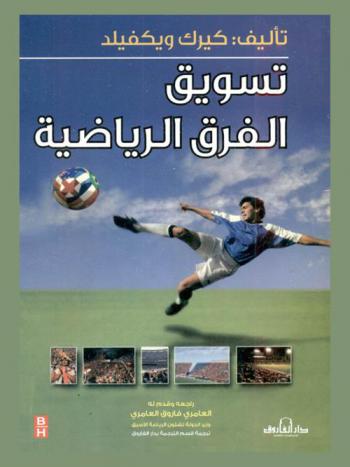
تسويق الفرق الرياضية
يوضح هذا الكتاب أنه على الرغم من أن العديد من جوانب مجال التسويق الرياضي تعتبر خاصة به دون غيره من مجالات التسويق الأخرى فإن قطاعات تسويق المنتجات والخدمات الأخرى سوف تتعلم الكثير من الفرق الرياضية الكبرى التي استطاعت كسب متابعيها وتحويلهم إلي مشجعين دائمين لها وإلي جانب عرضه لأهم مبادئ التسويق الرياضي يتضمن الكتاب العديد من الأمثلة لأفضل الأساليب والممارسات المتبعة في هذا المجال كما يتناول موضوعات متنوعة مثل: عمليات الرعاية وطرق زيادة مبيعات التذاكر الموسمية والإدارة الفعالة للأحداث الرياضية وغير ذلك من الموضوعات المهمة لذلك فهذا الكتاب لا غني عنه بالنسبة للمسوقين والمديرين المحترفين في المجال الرياضي.
BOOK

How consumer shopping orientation influences perceived crowding, excitement, and stress at the mall
While a few researchers have started to chip away at the notion that retail density is always negative, extant studies do not empirically address the question of why some shoppers respond negatively to a specific level of density while others respond positively. We examine this issue by drawing upon field theory (Lewin
1939
) to shed light on how shoppers vary in terms of deeper motives (McClelland
1953
) to seek control or intimacy with others in retail mall settings, and whether these motives influence shopping orientations. Shopping orientation is then hypothesized to affect perceptions of crowding, and, in turn, subsequent affective responses to the mall shopping experience. Moreover, we examine whether individual differences (gender and age) can help retailers segment those with different shopping orientations and the motives that influence these orientations. We found that task and social shopping orientations were influenced by deeper motives for control and intimacy. The causal relationships between shopping motive, shopping orientation, and consumers’ affective responses of stress and excitement were also discovered. Finally, we address theoretical and managerial implications of our results.
Journal Article

Planning to Make Unplanned Purchases? The Role of In‐Store Slack in Budget Deviation
We propose that consumers have mental budgets for grocery trips that are typically composed of both an itemized portion and in‐store slack. We conceptualize the itemized portion as the amount that the consumer has allocated to spend on items planned to the brand or product level and the in‐store slack as the portion of the mental budget that is not assigned to be spent on any particular product but remains available for in‐store decisions. Using a secondary data set and a field study, we find incidence of in‐store slack. Moreover, we find support for our framework predicting that the relationship between in‐store slack and budget deviation (the amount by which actual spending deviates from the mental trip budget) depends on factors related to desire and willpower.
Journal Article

I Spy a Sponsor: The Effects of Sponsorship Level, Prominence, Relatedness, and Cueing on Recall Accuracy
This study examines differential effects of sponsorship levels (anchor, mid-tier, low-tier) and individual exposure levels on sponsorship recall accuracy in a field study, providing validity for lab studies indicating that individuals rely on prominence and relatedness heuristics when identifying sponsors of an event. In addition, we examine differences in sponsorship recall accuracy when the response is elicited through free recall versus cued recall. The results indicate that free (or direct) recall is generally more accurate than cued recall that relies on reconstructive processes, but that this effect differs based on the type of sponsor in terms of its prominence and relatedness.
Journal Article

Retrospective: the importance of servicescapes in leisure service settings
Purpose
The purpose of the paper is to review the contribution of the paper, “The Importance of Servicescapes in Leisure Service Settings” to the discipline and to offer directions for further research and developments in the research area.
Design/methodology/approach
Key findings from research streams in sports and entertainment, leisure and hospitality, and services and retail marketing, which emanated from the publication of the paper, are highlighted. Opportunities for future research are discussed.
Findings
The importance of the servicescape in leisure settings has become even greater on a national and global basis as individuals spend more time, money and effort pursuing hedonic consumption in service settings. More research is needed within specific service contexts among and between individuals, groups and cultures to determine the holistic and particular influences of the physical environment on consumer response.
Research limitations/implications
With increased co-production of service experiences, including the integration of technology and mobile/wearable devices, marketers and researchers must better understand the role of the physical surroundings on individual, group and organizational behavior in the evolving servicescape.
Originality/value
The original paper motivated significant, highly cited studies in multiple disciplines integrated and overlapping with services and retail marketing. Taking a historical perspective encourages other researchers to conduct research of personal interest to address theoretical, methodological and practical issues. The retrospective analysis by the authors gives insight into the thought processes associated with understanding key aspects of the servicescape that contribute to the historical development of services marketing and offers food for thought (if not ambience and layout) for future research directions.
Journal Article
Modeling the consumer journey for membership services
Purpose
The purpose of this study is to model the consumer journey of admission-based membership services from initial purchase to full-season memberships. Particularly, the study pays attention to customer-owned contacts (purchase behavior) and service-owned contacts (salesperson voice- and text-based communications), to examine longitudinal internal data to determine factors which hinder and propel customers toward full memberships.
Design/methodology/approach
On the basis of big data supplied by a National Hockey League team, the study uses three simultaneous equations in modeling to account for potential endogeneity related to the likelihood that sales and service personnel are more likely to contact frequent customers. The longitudinal data allow us to map the customer journey over the course of multiple years, compared to typical cross-section studies.
Findings
The findings show that as customers increasingly own committed points of contact, they are prepared to move to the next level – but rarely skip major steps in the relationship journey. The quantity, type and timing of customer contacts by the service firm may hinder or propel the customer down the path to purchase full memberships.
Research limitations/implications
The prevalence of big data among service firms should allow researchers to better understand how consumers respond to contact strategies over time, as well as fluctuations in firm performance. The research adds to the customer journey research stream, while meeting the call of researchers to bridge the gap between service marketing research priorities and current practice.
Practical implications
Sales practices and marketing automation tactics may come at the cost of burning leads and alienating future members. Frequent text-based contacts absent voice-based interactions hinder consumer journey and work against relationship building. Service marketers can learn how to better allocate resources, properly manage and motivate contact strategies and target campaigns to send the right message via the right media at the right time.
Originality/value
This is the first study to map customer journey for admission-based, membership services. The longitudinal approach across multiple years provides a deep understanding of how customers take steps toward loyal membership status, while also pinpointing potential drawbacks of current contact strategies.
Journal Article

Spending on the Fly: Mental Budgets, Promotions, and Spending Behavior
Recent research has suggested that consumers have in-store slack for grocery trips—that is, they leave room in their mental budgets to make unplanned purchases. Drawing on this work, this article examines how the impact of promotions depends on whether the shopper still has in-store slack remaining in his or her mental budget. Specifically, the authors evaluate how the effect of promotional savings for both planned and unplanned items on spending varies as a function of whether the item is purchased before or after the shopper's in-store slack is depleted. In addition, they examine how these relationships vary depending on income. To achieve these goals, the authors conducted a field study in which respondents used a handheld scanner to record the order of purchases. The results suggest that savings on planned items lead to stockpiling by higher-income shoppers when the savings occur before the in-store slack has been depleted but lead to increased purchase of unplanned items when they occur after in-store slack is depleted. The results also show that promotions on unplanned grocery items generate incremental spending at the basket level, which increases with income but only when the item is purchased after the in-store slack is exceeded. The authors discuss implications for shopper marketing strategies.
Journal Article

How website socialness leads to website use
Website designers are beginning to incorporate social cues, such as helpfulness and familiarity, into e-commerce sites to facilitate the exchange relationship. Website socialness elicits a social response from users of the site and this response produces enjoyment. Users patronize websites that are exciting, entertaining and stimulating. The purpose of our study is to explore the effects of website socialness perceptions on the formation of users' beliefs, attitudes and subsequent behavioral intentions. We manipulate website socialness perceptions across two different online shopping contexts, one for functional products and the other for pleasure-oriented products, and draw from the responses of 300 Internet users. Our findings show that website socialness perceptions lead to enjoyment, have a strong influence on user intentions and these effects are invariant across shopping contexts.
Journal Article
Affective Intensity and Sponsor Identification
This study focuses on the accurate identification of corporate sponsors among consumers attending a NASCAR event. The results of this study support prior experimental work (e.g., Johar and Pham 1999), indicating that consumers are more likely to correctly identify prominent and related sponsors. Importantly, the findings indicate that a reason for such recall is that the best-performing properties attract prominent and related sponsors, and affective intensity (either strong positive or negative feelings) toward a property activates or enhances the cognitive processing by consumers of sponsors of highly competitive properties.
Journal Article
The effect of the servicescape on customers' behavioral intentions in leisure service settings
The servicescape model was tested across three different leisure services: major college football, minor league baseball and casinos. It is shown that specific servicescape elements (facility aesthetics, layout, seating comfort, electronic equipment, and cleanliness) influence customers' perceived quality and satisfaction with the servicescape.
Journal Article