
Catalogue Search | MBRL


Are you sure you want to remove the book from the shelf?

{{itemTitle}}
131
result(s) for
"Walker, Polly"
Sort by:

How Sustainable Agriculture Can Address the Environmental and Human Health Harms of Industrial Agriculture
The industrial agriculture system consumes fossil fuel, water, and topsoil at unsustainable rates. It contributes to numerous forms of environmental degradation, including air and water pollution, soil depletion, diminishing biodiversity, and fish die-offs. Meat production contributes disproportionately to these problems, in part because feeding grain to livestock to produce meat-instead of feeding it directly to humans-involves a large energy loss, making animal agriculture more resource intensive than other forms of food production. The proliferation of factory-style animal agriculture creates environmental and public health concerns, including pollution from the high concentration of animal wastes and the extensive use of antibiotics, which may compromise their effectiveness in medical use. At the consumption end, animal fat is implicated in many of the chronic degenerative diseases that afflict industrial and newly industrializing societies, particularly cardiovascular disease and some cancers. In terms of human health, both affluent and poor countries could benefit from policies that more equitably distribute high-protein foods. The pesticides used heavily in industrial agriculture are associated with elevated cancer risks for workers and consumers and are coming under greater scrutiny for their links to endocrine disruption and reproductive dysfunction. In this article we outline the environmental and human health problems associated with current food production practices and discuss how these systems could be made more sustainable.
Journal Article

A new tool to measure approaches to supervision from the perspective of community health workers: a prospective, longitudinal, validation study in seven countries
Background
The global scale-up of community health workers (CHWs) depends on supportive management and supervision of this expanding cadre. Existing tools fail to incorporate the perspective of the CHW (i.e. perceived supervision) in terms of supportive experiences with their supervisor. Aligned to the WHO’s strategy on human resources for health, we developed and validated a simple tool to measure perceived supervision across seven low and middle-income countries.
Methods
Phase 1 was carried out with 327 CHWs in Sierra Leone. Twelve questions, informed by the extant literature on health worker supervision, were reduced to six questions using confirmatory factor analysis. Phase 2 employed structural equation modelling with 741 CHWs in six countries (Bangladesh, Ethiopia, Indonesia, Kenya, Malawi, Mozambique), to assess the factorial validity, predictive validity, and internal reliability of the questions at three time-points, over 8-months.
Results
We developed a robust, 6-item measure of perceived supervision (PSS), capturing regular contact, two-way communication, and joint problem-solving elements as being critical from the perspective of CHWs. When assessed across the six countries, over time, the PSS was also found to have good validity and internal reliability. PSS scores at baseline positively and significantly predicted a range of performance-related outcomes at follow-up.
Conclusion
The PSS is the first validated tool that measures supervisory experience from the perspective of CHWs and is applicable across multiple, culturally-distinct global health contexts with a wide range of CHW typologies. Simple, quick to administer, and freely available in 11 languages, the PSS could assist practitioners in the management of community health programmes.
Journal Article

Relapse and regression to severe wasting in children under 5 years: A theoretical framework
Systematic reviews have highlighted that repeated severe wasting after receiving treatment is likely to be common, but standardised measurement is needed urgently. The Council of Research & Technical Advice for Acute Malnutrition (CORTASAM) released recommendations on standard measurement of relapse (wasting within 6 months after exiting treatment as per recommended discharge criteria), regression (wasting within 6 months after exiting treatment before reaching recommended discharge criteria) and reoccurrence (wasting after 6 months of exit from treatment as per recommended discharge criteria). We provide a theoretical framework of post‐treatment relapse and regression to severe wasting to guide discussions, risk factor analyses, and development and evaluations of interventions. This framework highlights that there are factors that may impact risk of relapse and regression in addition to the impact of contextual factors associated with incidence and reoccurrence of severe wasting more generally. Factors hypothesised to be associated with relapse and regression relate specifically to the nutrition and health status of the child on admission to, during and exit from treatment and treatment interventions, platforms and approaches as well as type of exit from treatment (e.g., before reaching recommended criteria). These factors influence whether children reach full recovery, and poorer nutritional and immunological status at exit from treatment are more proximate determinants of risk of severe wasting after treatment, although post‐treatment interventions may modify risks. The evidence base for many of these factors is weak. Our framework can guide research to improve our understanding of risks of relapse and regression and how to prevent them and inform programmes on what data to collect to evaluate relapse. Implementation research is needed to operationalise results in programmes and reduce post‐treatment severe wasting at scale.
Journal Article

Acting Together II: Performance and the Creative Transformation of Conflict
Acting Together, Volume ll, continues from where the
first volume ends documenting exemplary peacebuilding performances
in regions marked by social exclusion structural violence and
dislocation. Acting Together: Performance and the
Creative Transformation of Conflict is a two-volume work
describing peacebuilding performances in regions beset by violence
and internal conflicts. Volume I, Resistance and Reconciliation
in Regions of Violence , emphasizes the role theatre and ritual
play both in the midst and in the aftermath of direct violence,
while Volume II: Building Just and Inclusive Communities ,
focuses on the transformative power of performance in regions
fractured by \"subtler\" forms of structural violence and social
exclusion. Volume I: Resistance and Reconciliation in Regions
of Violence focuses on the role theatre and ritual play both
in the midst and in the aftermath of violence. The performances
highlighted in this volume nourish and restore capacities for
expression, communication, and transformative action, and
creatively support communities in grappling with conflicting moral
imperatives surrounding questions of justice, memory, resistance,
and identity. The individual chapters, written by scholars,
conflict resolution practitioners, and artists who work directly
with the communities involved, offer vivid firsthand accounts and
analyses of traditional and nontraditional performances in Serbia,
Uganda, Sri Lanka, Palestine, Israel, Argentina, Peru, India,
Cambodia, Australia, and the United States. Complemented by a
website of related materials, a documentary film, Acting
Together on the World Stage , that features clips and
interviews with the curators and artists, and a toolkit, or \"Tools
for Continuing the Conversation,\" that is included with the
documentary as a second disc, this book will inform and inspire
socially engaged artists, cultural workers, peacebuilding scholars
and practitioners, human rights activists, students of peace and
justice studies, and whoever wishes to better understand conflict
and the power of art to bring about social change. The Acting
Together project is born of a collaboration between Theatre
Without Borders and the Program in Peacebuilding and the Arts at
the International Center for Ethics, Justice, and Public Life at
Brandeis University. The two volumes are edited by Cynthia E.
Cohen, director of the aforementioned program and a leading figure
in creative approaches to coexistence and reconciliation; Roberto
Gutierrez Varea, an award-winning director and associate professor
at the University of San Francisco; and Polly O. Walker, director
of Partners in Peace, an NGO based in Brisbane, Australia.
eBook

Acting Together I: Performance and the Creative Transformation of Conflict
Courageous artists working in conflict regions describe
exemplary peacebuilding performances and groundbreaking theory on
performance for transformation of violence. Acting
Together: Performance and the Creative Transformation of
Conflict is a two-volume work describing peacebuilding
performances in regions beset by violence and internal conflicts.
Volume I: Resistance and Reconciliation in Regions of
Violence , emphasizes the role theatre and ritual play both in
the midst and in the aftermath of direct violence, while Volume
II: Building Just and Inclusive Communities , focuses on the
transformative power of performance in regions fractured by
\"subtler\" forms of structural violence and social exclusion.
Volume I: Resistance and Reconciliation in Regions of
Violence focuses on the role theatre and ritual play both in
the midst and in the aftermath of violence. The performances
highlighted in this volume nourish and restore capacities for
expression, communication, and transformative action, and
creatively support communities in grappling with conflicting moral
imperatives surrounding questions of justice, memory, resistance,
and identity. The individual chapters, written by scholars,
conflict resolution practitioners, and artists who work directly
with the communities involved, offer vivid firsthand accounts and
analyses of traditional and nontraditional performances in Serbia,
Uganda, Sri Lanka, Palestine, Israel, Argentina, Peru, India,
Cambodia, Australia, and the United States. Complemented by a
website of related materials, a documentary film, Acting
Together on the World Stage , that features clips and
interviews with the curators and artists, and a toolkit, or \"Tools
for Continuing the Conversation,\" that is included with the
documentary as a second disc, this book will inform and inspire
socially engaged artists, cultural workers, peacebuilding scholars
and practitioners, human rights activists, students of peace and
justice studies, and whoever wishes to better understand conflict
and the power of art to bring about social change. The Acting
Together project is born of a collaboration between Theatre
Without Borders and the Program in Peacebuilding and the Arts at
the International Center for Ethics, Justice, and Public Life at
Brandeis University. The two volumes are edited by Cynthia E.
Cohen, director of the aforementioned program and a leading figure
in creative approaches to coexistence and reconciliation; Roberto
Gutierrez Varea, an award-winning director and associate professor
at the University of San Francisco; and Polly O. Walker, director
of Partners in Peace, an NGO based in Brisbane, Australia..
eBook

Transforming Complex Contemporary Challenges Through Arts and Culture 1
[...]we are devoting our time, energy, and resources to doing what we can, and we are working collaboratively with funders to fund it in a way that makes it effective and sustainable. To have boys and girls and young men and young women from a range of different ethnic backgrounds working together, which was not previously allowed in Afghanistan, is quite a feat in an environment rife with destruction from decades of war. Despite a longstanding divide related to the 1915 genocide of 1.5 million Armenians by the Ottoman Empire, which the international community recognizes and the Turkish government denies, women at the center of this initiative listened and heard one another, with many shifting their internal narratives around what they thought about those women on the other side. [...]with hearts and minds opened through this salt-and-bread process, they now have the potential to break down suspicion and resentment among their family members and communities, an important step in societies coming to terms with their pasts and their current disputes and building their agency to link with civil society.
Journal Article
Justice, Turning Points, and Bridging Research and Practice: Daniel Druckman Reflects on a Career in Peace and Conflict Research
The following interview took place prior to a master class and workshop that Dr. Druckman conducted, titled \"From Research to Practice in Peace & International Studies,\" at the Baker Institute for Peace & Conflict Studies at Juniata College. What I did in the paper-keep in mind that I was twenty-one years old-was to attempt to understand thought processes, the way people think through the external lens of social structure. The second grant was for three years, from a bank foundation in Sweden. If there is a lot of transparency in the negotiation process and the parties perceive that they are being treated fairly, the chances are increased that there will be both a durable agreement and a more lasting peace in the society.
Journal Article

Acting together : performance and the creative transformation of conflict. Volume II, Building just and inclusive communities
Describes peacebuilding performances in different regions of the world fractured by war and violence.
eBook
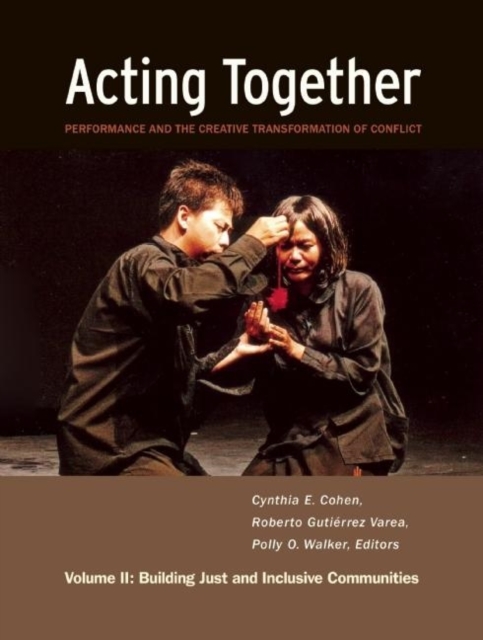
Acting together: performance and the creative transformation of conflict. (Building just and inclusive communities)
Acting Together, Volume ll, continues from where the first volume ends documenting exemplary peacebuilding performances in regions marked by social exclusion structural violence and dislocation. Acting Together: Performance and the Creative Transformation of Conflict is a two-volume work describing peacebuilding performances in regions beset by violence and internal conflicts. Volume I, Resistance and Reconciliation in Regions of Violence, emphasizes the role theatre and ritual play both in the midst and in the aftermath of direct violence, while Volume II: Building Just and Inclusive Communities, focuses on the transformative power of performance in regions fractured by \"subtler\" forms of structural violence and social exclusion. Volume I: Resistance and Reconciliation in Regions of Violence focuses on the role theatre and ritual play both in the midst and in the aftermath of violence. The performances highlighted in this volume nourish and restore capacities for expression, communication, and transformative action, and creatively support communities in grappling with conflicting moral imperatives surrounding questions of justice, memory, resistance, and identity. The individual chapters, written by scholars, conflict resolution practitioners, and artists who work directly with the communities involved, offer vivid firsthand accounts and analyses of traditional and nontraditional performances in Serbia, Uganda, Sri Lanka, Palestine, Israel, Argentina, Peru, India, Cambodia, Australia, and the United States. Complemented by a website of related materials, a documentary film, Acting Together on the World Stage, that features clips and interviews with the curators and artists, and a toolkit, or \"Tools for Continuing the Conversation,\" that is included with the documentary as a second disc, this book will inform and inspire socially engaged artists, cultural workers, peacebuilding scholars and practitioners, human rights activists, students of peace and justice studies, and whoever wishes to better understand conflict and the power of art to bring about social change. The Acting Together project is born of a collaboration between Theatre Without Borders and the Program in Peacebuilding and the Arts at the International Center for Ethics, Justice, and Public Life at Brandeis University. The two volumes are edited by Cynthia E. Cohen, director of the aforementioned program and a leading figure in creative approaches to coexistence and reconciliation; Roberto Gutierrez Varea, an award-winning director and associate professor at the University of San Francisco; and Polly O. Walker, director of Partners in Peace, an NGO based in Brisbane, Australia.
eBook

Acting together : performance and the creative transformation of conflict. Volume I, Resistance and reconciliation in regions of violence
Describes peacebuilding performances in different regions of the world fractured by war and violence.
eBook