
Catalogue Search | MBRL


Are you sure you want to remove the book from the shelf?

{{itemTitle}}
261
result(s) for
"Wallace, Rob"
Sort by:


Divergent Genotype of Hepatitis A Virus in Alpacas, Bolivia, 2019
Hepatitis A virus (HAV) is a common human pathogen found exclusively in primates. In a molecular and serologic study of 64 alpacas in Bolivia, we detected RNA of distinct HAV in ≈9% of animals and HAV antibodies in ≈64%. Complete-genome analysis suggests a long association of HAV with alpacas.
Journal Article
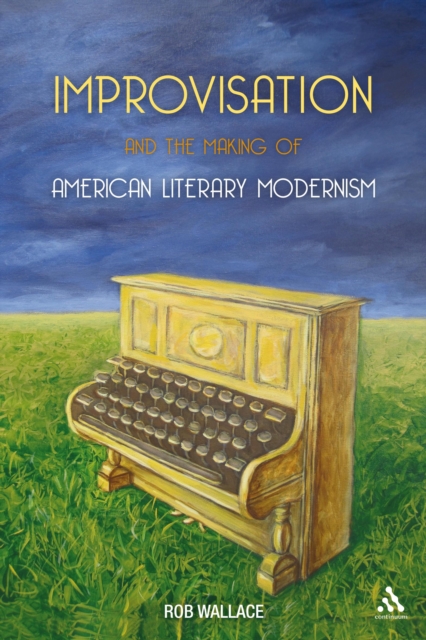
Improvisation and the making of American literary modernism
Explores the concept and practice of improvisation in literary modernism and the interconnections between American literature and music.
eBook

Persistence of Highly Pathogenic Avian Influenza H5N1 Virus Defined by Agro-Ecological Niche
The highly pathogenic avian influenza (HPAI) H5N1 virus has spread across Eurasia and into Africa. Its persistence in a number of countries continues to disrupt poultry production, impairs smallholder livelihoods, and raises the risk a genotype adapted to human-to-human transmission may emerge. While previous studies identified domestic duck reservoirs as a primary risk factor associated with HPAI H5N1 persistence in poultry in Southeast Asia, little is known of such factors in countries with different agro-ecological conditions, and no study has investigated the impact of such conditions on HPAI H5N1 epidemiology at the global scale. This study explores the patterns of HPAI H5N1 persistence worldwide, and for China, Indonesia, and India includes individual provinces that have reported HPAI H5N1 presence during the 2004–2008 period. Multivariate analysis of a set of 14 agricultural, environmental, climatic, and socio-economic factors demonstrates in quantitative terms that a combination of six variables discriminates the areas with human cases and persistence: agricultural population density, duck density, duck by chicken density, chicken density, the product of agricultural population density and chicken output/input ratio, and purchasing power per capita. The analysis identifies five agro-ecological clusters, or niches, representing varying degrees of disease persistence. The agro-ecological distances of all study areas to the medoid of the niche with the greatest number of human cases are used to map HPAI H5N1 risk globally. The results indicate that few countries remain where HPAI H5N1 would likely persist should it be introduced.
Journal Article


COVID-19 and Circuits of Capital: New York to China and Back
Wallace et al examine the threats of COVID-19 pandemic. COVID-19 is the illness caused by coronavirus SARS-CoV-2, the second severe acute respiratory syndrome virus since 2002, is now officially a pandemic. As of late March 2020, whole cities are sheltered in place and, one by one, hospitals are lighting up in medical gridlock brought about by surges in patients. China, its initial outbreak in contraction, presently breathes easier. South Korea and Singapore as well. Europe, especially Italy and Spain, but increasingly other countries, already bends under the weight of deaths still early in the outbreak. Latin America and Africa are only now beginning to accumulate cases, some countries preparing better than others. In the US, a bellwether if only as the richest country in the history of the world, the near future looks bleak. The outbreak is not slated to peak stateside until May and already health care workers and hospital visitors are fist fighting over access to the dwindling supply of personal protection equipment. Nurses, to whom the Centers for Disease Control and Protection (CDC) has appallingly recommended using bandanas and scarves as masks, have already declared that the system is doomed.
Magazine Article
Revolutionary Biology: The Dialectical Science of Christopher Caudwell
Next year will mark the eightieth anniversary of the Battle of Jarama... In February 1937, eleven thousand Republicans...fought and died defending Madrid against Francisco Franco's fascist incursion. At this point in Spain's Civil War, the country was split evenly between west and east by rebel Nationalist and Republican forces. An earlier direct assault on Madrid had been repulsed. Republican troops subsequently consolidated their defenses along the Manzanares River. An assault through Madrid's southern barrios would have cost Franco's forces dearly. General Emilio Mora's men north of the city in the meantime were held in check by Popular Front forces in the Sierra de Guadarrama... The Nationalists turned to cutting off Madrid from the Republic's provisional capital. They planned to march south before swinging north and capturing the road to Valencia. In early February, Franco ordered 40,000 of his battle-hardened Moroccan troops and an Italian unit provided by Mussolini to attack. The forces crossed the Jarama River on February 11. Republican General José Miaja countered the thrust with three battalions of the XV International Brigade, including the Dimitrov Battalion and the British Battalion.Click here to purchase a PDF version of this article at the Monthly Review website.
Journal Article
COVID-19 and Circuits of Capital
The cause of COVID-19 and other such pathogens is not found just in the object of any one infectious agent or its clinical course, but also in the field of ecosystemic relations that capital and other structural causes have pinned back to their own advantage. The wide variety of pathogens, representing different taxa, source hosts, modes of transmission, clinical courses, and epidemiological outcomes, all the earmarks that send us running wild-eyed to our search engines upon each outbreak, mark different parts and pathways along the same kinds of circuits of land use and value accumulation.
Journal Article

New Bridge, Old River: Writing in a Virtual Classroom
Last semester, I taught an \"Introduction to Literature\" class. This would not be anything new, except for the fact that the class was online. Because of the course content and the tools available on WebCT, however, the class seemed to fit very easily into a reading workshop model (Henry, 1995).
Journal Article

Be Smart, Be Simple
Today's world is cluttered with messages. In this environment, the author urges simplicity. Powerful brands cut through perceptional noise with a memorably iconic and minimalist approach to colors and symbols. Case studies amplify the principles he advocates, and a three-step process outlines specific criteria managers can use to build designs that are visually clean and engaging. An emerging trend to combat this visual chatter has now hit the mainstream. The most successful brands are able to connect with their core enthusiasts by using an effective visual shorthand. Using color, symbols, icons, and a singular focus, these brands cut through the visual noise. The key strategy they share is simplicity -- in their messages, their identities, and their communications architectures. Here are ways on how you go simple: 1. Hone your positioning down to its one most critical element. 2. Visualize your positioning. 3. Resist the urge to fill the white space. When in doubt: \"Think big, go small. Be smart, be simple.\"
Journal Article