
Catalogue Search | MBRL


Are you sure you want to remove the book from the shelf?

{{itemTitle}}
106
result(s) for
"Walmsley, Jan"
Sort by:


Celebrating Thirty Years of Inclusive Research
Inclusive research has been an important way of increasing the understanding of the lives and issues of people with intellectual (learning) disabilities for 30 years. Three authors of this paper, Amanda, J and Kelley, are Australian and have been conducting inclusive research for much of this time. The other three, Danielle, Shaun and Jan, are English. Jan has been doing it for a long time, while the others are relatively new to it. In this paper, we explore together what inclusive research has achieved in its original aims of supporting people with intellectual (learning) disabilities to have a heard voice and in working towards changing attitudes, policies and practices in relation to supporting them to lead good lives. Fundamental to achieving these aims was the need for active participation by people with intellectual (learning) disabilities in conducting research relevant to them. We record what we have done, how we did it and why it was important to do this work together. We focus on what inclusive research has meant to us and how it has been used to get positive change for people with intellectual disabilities. We end with a summary of what we think inclusive research can achieve and where we think it needs to go next.
Journal Article

Building Relationships in Inclusive Research in Diverse Contexts
This article explores relationships between academics and people with intellectual disabilities collaborating in inclusive research. The authors present and reflect upon narrative accounts from Norway and England from both sides of the relationship. Each relationship is examined, including how it was initiated, established, developed and sustained, what worked well, what the obstacles were and how any conflicts were approached. The concept of being an 'alongsider', working alongside each other (and alongside participants with intellectual disabilities) is used. The paper shows variety in how alongsider relationships are initiated and fostered over time. Mostly, partnerships were initiated informally, based on pre-existing relationships as friends or through support worker-client relationship or earlier research cooperation, although one was initiated through a formal selection process. The paper concludes that when building relationships over time, the personal dimension is important, including sharing an interest, mutual respect and liking each other, while funding and tight timelines can interfere. Accessible Summary Academics and researchers with intellectual disabilities from England and Norway wrote this article together. Academics thought up the idea and wrote the background and discussion; people with intellectual disabilities wrote about their experiences. The paper tells how we got to know each other and how we kept in touch over time. We wanted to do this because academic researchers in Norway want to do more research with people with intellectual disabilities, and need to know how to get started and keep it going. We learnt that it takes time spent alongside each other to build good research relationships, and it depends on having fun together as well as working. We learnt that the academic researcher needs to provide some support, even when there is someone else with that job. We learnt that sometimes funding and deadlines can get in the way of building strong research relationships. Keywords: intellectual disabilities, inclusive research, alongsider research, research relationships
Journal Article

Diverse faces of inclusive research: reflecting on three research studies
Inclusive research has become an increasing focus of research with people with disabilities, particularly people with intellectual disabilities. In this paper the authors argue that this generalized term covers a range of different approaches to including people with intellectual disabilities in research. Based on three case studies in which the authors were academic researchers the paper explores different approaches to inclusive research, raises questions about the place of inclusive research in relation to advocacy and academic research and explores some of the benefits and challenges of inclusive research with people with learning disabilities.
Journal Article

Commentary on \Enabling access to information by people with learning disabilities\
Purpose - The purpose of this paper is to provide a commentary on Oldreive and Waight's article on enabling access to information by people with learning disabilities.Design methodology approach - The article reflects on the issues raised by Oldreive and Waight, drawing on 25 years' experience and research.Findings - Accessible information needs to be tailored to the individual and part of a wider approach to improving access.Practical implications - We should not rely on \"easy read\". Instead we should be prepared to offer individualised support to people with learning disabilities, using \"easy read\" as a tool.Social implications - It is unlikely that any technology will replace support from skilled people.Originality value - The issues discussed provide a reminder that translating information does not equate to inclusion.
Journal Article
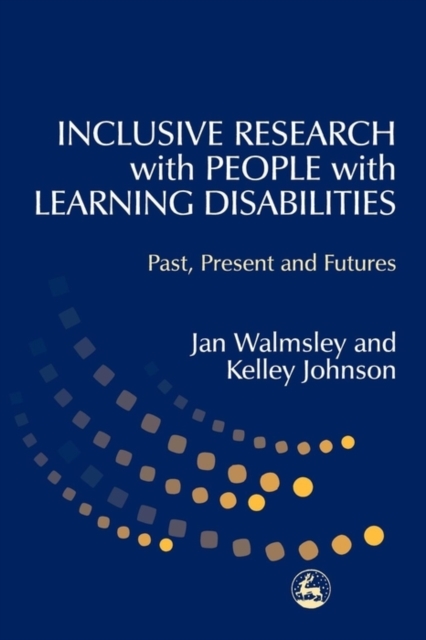
Inclusive Research with People with Learning Disabilities
The authors discuss participative approaches to research and provide an up-to-date account of inclusive practice with individuals with learning disabilities. Drawing on evidence from two major studies, they explain how lessons learnt from inclusive research in the learning disability field are applicable to others working with marginalized groups.
eBook

Familiarity and strangeness: a case study of one woman with learning disabilities in the 1940s-1950s
Examining the past reveals links with the present and enables reflection on how things have changed and what has remained the same. This article relates the story of a young woman, Gladys, who was institutionalised in the 1940s. The story is based on her case notes from a Hertfordshire institution for people with learning disabilities, although there are gaps in the records, particularly after her discharge. The names of people and places have been changed to protect their identities. The article shows how the authorities made efforts to support Gladys to live a life outside the institution, before this notion had gained wide currency and reflects on what has changed for young women with learning disabilities in the intervening years.
Journal Article

What funders and others can do to help save clinical academic medicine
The results of this consultation have proved invaluable in helping the Health Foundation shape its future contribution in this area and raise a number of questions about the future of clinical academic medicine. The consultation exercise has shown that an exciting future could be ahead for clinical academic medicine-a future where the emphasis is on vibrant research cultures in service delivery organisations, where the concerns of patients and practitioners lead the work that is done, and where putting good research into practice is as important as undertaking it.
Journal Article