
Catalogue Search | MBRL


Are you sure you want to remove the book from the shelf?

{{itemTitle}}
8,889
result(s) for
"Walsh, David"
Sort by:

Smart parenting, smarter kids : the one brain book you need to help your child grow brighter, healthier, and happier
When children are guided in healthy ways, their minds blossom and they are able to reach their full potential--academically, socially, physically, and emotionally. In his previous bestseller, Why Do They Act That Way?, Dr. David Walsh, an expert at translating cutting-edge neuroscience findings into practical parenting suggestions, showed how to manage the difficult teenage years by understanding how the adolescent brain develops. Now he's written a complete guide to parenting from birth through the teen years, with recommendations that will help maximize any child's potential. Some discoveries in neuroscience confirm age-old parental wisdom, while others may prompt you to make immediate changes; still other brain discoveries help explain behaviors that have puzzled parents forever. This book doesn't just describe new findings or explain interesting facts--it equips parents with usable information across a range of topics, like exercise, nutrition, play, sleep, stress, self-discipline, emotional intelligence, and connection.--From publisher description.
Book
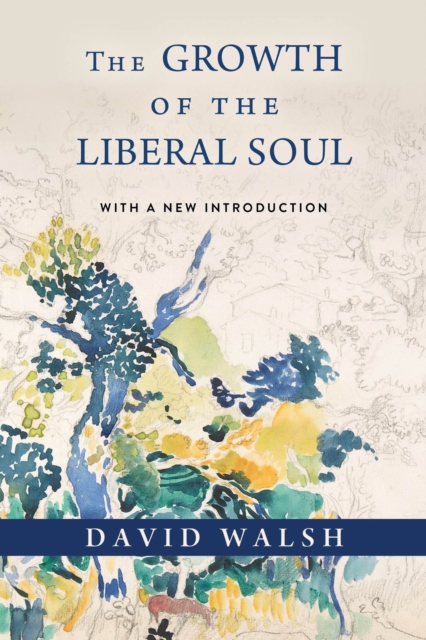
The Growth of the Liberal Soul
In
The Growth of the Liberal Soul , David Walsh provides a
dazzling defense of liberalism by confronting the core
difficulty of the liberal democratic tradition in explaining
and justifying itself.
David Walsh’s groundbreaking work addresses a pivotal
crisis in liberal democratic self-understanding, as many
leading thinkers abandoned the search for a foundation in human
nature or moral truth. Without a firm footing, proponents of
liberalism could not explain its initial extraordinary success
or the recent seeming unraveling of its own moral code.
Instead,
Walsh argues that Christianity and philosophy formed
the original foundation for liberalism, and that only the
ideals of service, self-responsibility, and the sacredness of
each person can provide the grounding that liberalism
desperately needs.
As Walsh seamlessly weaves together the ideas of Hobbes,
Locke, Kant, Hegel, Tocqueville, Nietzsche, and other leading
thinkers,
The Growth of the Liberal Soul crafts a compelling
defense of liberalism and issues an inspiring call to see
liberty not as an invitation to universal egoism, but as the
pursuit of the greatest justice, freedom, and fulfillment for
all members of the community.
eBook


The Invisible Source of Authority
The Invisible Source of Authority is a philosophical meditation on the secular age and challenges the notion that the secular can be understood without reference to God. How does one reject God while denying belief? This is the central paradox of our secular age, where efforts to erase God only affirm his presence. In The Invisible Source of Authority, David Walsh examines this paradox and argues that a secular world actually reveals God more clearly, rather than bringing about what has been called the death of God. Unlike many critics of modernity, Walsh argues that secularism is not inhospitable to authentic religious faith and cannot be understood without reference to God. Drawing on the writings of early modern thinkers like Montaigne, Descartes, and Grotius, Walsh asserts that God's absence from the secular world is testimony to God's transcendence. Because the secular is always that which has withdrawn from serving God, Walsh suggests that this presupposition proves that God remains indispensable to the self-understanding of secular society. The Invisible Source of Authority seeks to remind us that, despite his seeming absence, the transcendent God remains an essential presence.
eBook

Post-critical museology : theory and practice in the art museum
\"Post Critical Museology examines the current status of learning and knowledge practices in the art museum and investigates how to understand the challenges presented by the visual cultures of global migration and new media. The book locates the discussion of the future of the art museum in the realm of public participation and engagement with art and the museum. It provides a new analytical synthesis of the art museum through accounting for the agency of different communities of users and using theoretical approaches associated with science and technology studies. In the book's terms the art museum is continually made and remade through related networks and instead of an approach that starts with traditional hierarchies of cultural knowledge and value, it develops an analysis of the art museum in terms of an extended set of objects and performances and examines the points of relationship between them. In this way the book shows how the art museum in the first decade of the twenty-first century is no longer governed by the civic and civilizing mission of the nineteenth century, nor ruled by the logic of Modernist rationalism, but instead, can be seen as an institution seeking a new social role and identity and currently still struggling to understand and negotiate wider cultural signifying systems, government policy and market forces. Locating its critique in a constructive relationship to international progressive museological thinking and practice, the book calls for a new alignment in what it announces as post-critical museology. An alignment that is committed to rethinking what an art museum in the twenty-first century could be, as well as what knowledge and understanding its future practitioners might mobilize in a rapidly changing social and cultural context. The book aims to be essential reading in the growing field of museum studies. It will also be of professional interest to all those working in the cultural sphere, including museum professionals, policy makers and art managers. \"-- Provided by publisher.
Book

Relationship between childhood socioeconomic position and adverse childhood experiences (ACEs): a systematic review
Background‘Adverse childhood experiences’ (ACEs) are associated with increased risk of negative outcomes in later life: ACEs have consequently become a policy priority in many countries. Despite ACEs being highly socially patterned, there has been very little discussion in the political discourse regarding the role of childhood socioeconomic position (SEP) in understanding and addressing them. The aim here was to undertake a systematic review of the literature on the relationship between childhood SEP and ACEs.MethodsMEDLINE, PsycINFO, ProQuest and Cochrane Library databases were searched. Inclusion criteria were: (1) measurement of SEP in childhood; (2) measurement of multiple ACEs; (3) ACEs were the outcome; and (4) statistical quantification of the relationship between childhood SEP and ACEs. Search terms included ACEs, SEP and synonyms; a second search additionally included ‘maltreatment’. Overall study quality/risk of bias was calculated using a modified version of the Hamilton Tool.ResultsIn the ACEs-based search, only 6 out of 2825 screened papers were eligible for qualitative synthesis. The second search (including maltreatment) increased numbers to: 4562 papers screened and 35 included for synthesis. Eighteen papers were deemed ‘high’ quality, five ‘medium’ and the rest ‘low’. Meaningful statistical associations were observed between childhood SEP and ACEs/maltreatment in the vast majority of studies, including all except one of those deemed to be high quality.ConclusionLower childhood SEP is associated with a greater risk of ACEs/maltreatment. With UK child poverty levels predicted to increase markedly, any policy approach that ignores the socioeconomic context to ACEs is therefore flawed.PROSPERO registration numberCRD42017064781.
Journal Article

Hail Hydra
\"Welcome to a Domain ruled by Hydra, and its capital, New York. The city that had better sleep after curfew, if it knows what's good for it. But when the young hero named Nomad finds himself in this rotten Big Apple, he will challenge this regime of terror. Nomad is no stranger to hellish surroundings - he grew up in Dimension Z, where he was raised as Captain America's son. But in Hydra's zone of Battleworld, Nomad will face a new kind of nightmare. A very personal foe with an all-too-familiar face - the Sentinel of Subjugation known as Captain Hydra!\"--Amazon.com.
Book

Enabling Microfluidics: from Clean Rooms to Makerspaces
The traditional requirement for clean rooms and specialized skills has inhibited many biologists from pursuing new microfluidic innovations. Makerspaces provide a growing alternative to clean rooms: they provide low-cost access to fabrication equipment such as laser cutters, plotter cutters, and 3D printers; use commercially available materials; and attract a diverse community of product designers. This Opinion discusses the materials, tools, and building methodologies particularly suited for developing novel microfluidic devices in these spaces, with insight into biological applications and leveraging the maker community. The lower barrier to access of makerspaces ameliorates the otherwise poor accessibility and scalability of microfluidic prototyping.
The use of simple tools and materials to manufacture microfluidic devices provides an opportunity for makerspaces to serve as a hotbed for microfluidic device development.
Materials such as plastic, adhesive, and paper, along with tools such as plotter/laser cutters and 3D printers, enable building integrated microfluidic systems that are more easily translated to large-scale manufacturing.
Makerspaces provide low-cost access to prototyping tools and access to technically diverse human capital, and they enable those without advanced skills to participate in microfluidic device development.
Journal Article


Mechanisms and targets of angiogenesis and nerve growth in osteoarthritis
Angiogenesis facilitates inflammation and contributes to structural disease progression in osteoarthritis (OA). As new blood vessel growth is coupled with innervation, inappropriate vascularization might sensitize tissues that are usually impervious to pain. In this article, the authors describe sites of angiogenesis and mechanisms of nerve and new blood vessel growth in the synovial joint. They discuss the neurovascular interactions that might contribute to pain in OA, as well as potential targets for new therapies.
During osteoarthritis (OA), angiogenesis is increased in the synovium, osteophytes and menisci and leads to ossification in osteophytes and the deep layers of articular cartilage. Angiogenic and antiangiogenic factors might both be upregulated in the osteoarthritic joint; however, vascular growth predominates, and the articular cartilage loses its resistance to vascularization. In addition, blood vessel growth is increased at—and disrupts—the osteochondral junction. Angiogenesis in this location is dependent on the creation of channels from subchondral bone spaces into noncalcified articular cartilage. Inflammation drives synovial angiogenesis through macrophage activation. Blood vessel and nerve growth are linked by common pathways that involve the release of proangiogenic factors, such as vascular endothelial growth factor, β-nerve growth factor and neuropeptides. Proangiogenic factors might also stimulate nerve growth, and molecules produced by vascular cells could both stimulate and guide nerve growth. As sensory nerves grow along new blood vessels in osteoarthritic joints, they eventually penetrate noncalcified articular cartilage, osteophytes and the inner regions of menisci. Angiogenesis could, therefore, contribute to structural damage and pain in OA and provide potential targets for new treatments.
Key Points
Angiogenesis contributes to synovitis, osteochondral damage, osteophyte formation and meniscal pathology in patients with osteoarthritis (OA)
Angiogenesis is intimately linked to sensory nerve growth through shared regulatory pathways
Nerve growth along new blood vessels into structures that are normally not innervated could contribute to pain in OA
Inhibition of subchondral bone turnover can prevent osteochondral angiogenesis and reduce pain in animal models of OA
Inhibition of angiogenesis could potentially be used to treat OA
Journal Article