
Catalogue Search | MBRL


Are you sure you want to remove the book from the shelf?

{{itemTitle}}
93
result(s) for
"Walters, Reece"
Sort by:


A post-capitalocentric critique of digital technology and environmental harm: New directions at the intersection of digital and green criminology
Only recently have scholars of criminology begun to examine a wider spectrum of the effects of digital technologies beyond 'cybercrime' to include human rights, privacy, data extractivism and surveillance. Such accounts, however, remain anthropocentric and capitalocentric. They do not fully consider the environmental impacts caused by the manufacture, consumption, use and disposal of digital technologies under conditions of ecologically unequal exchange. The worst impacts of extractivism and pollution are borne by societies and ecosystems in the world's economic periphery and contribute to an acceleration of planetary ecocide. Three examples illustrate our argument: (1) deep-sea mining of metals and minerals; (2) the planned obsolescence of digital devices while limiting the right to repair; and (3) the disposal of e-waste. Acknowledging the urgent need to reorient the trajectory of technology innovation towards more-than-human futures, we advance some ideas from the field of design research-that is, the field of scholarly inquiry into design practices-on how to decouple technological progress from neoliberal economic growth. We venture outside criminology and offer a glimpse into how design researchers have recently begun a similar reflective engagement with post-anthropocentric critiques, which can inspire new directions for research across digital and green criminology.
Journal Article
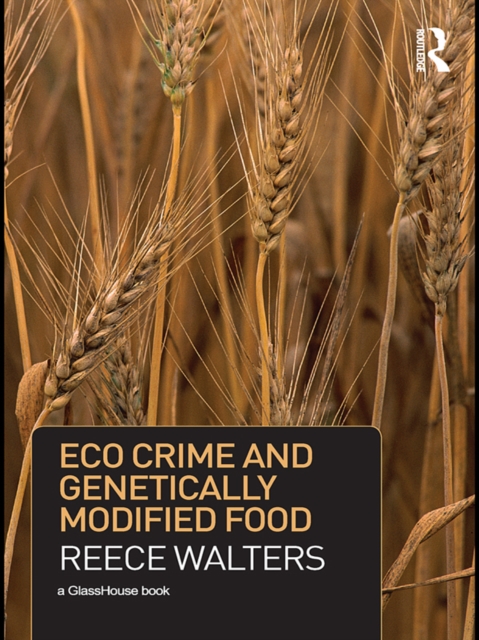
Eco Crime and Genetically Modified Food
The GM debate has been ongoing for over a decade, yet it has been contained in the scientific world and presented in technical terms. Eco Crime and Genetically Modified Food brings the debates about GM food into the social and criminological arena.
This book highlights the criminal and harmful actions of state and corporate officials. It concludes that corporate and political corruption, uncertain science, bitter public opposition, growing farmer concern and bankruptcy, irreversible damage to biodervisty, corporate monopolies and exploitation, disregard for social and cultural practices, devastation of small scale and local agricultural economies, imminent threats to organics, weak regulation, and widespread political and biotech mistrust – do not provide the bases for advancing and progressing GM foods into the next decade. Yet, with the backing of the WTO, the US and UK Governments march on – but at what cost to future generations?
Reece Walters is Professor in Criminology, and Head of the Social Policy and Criminology Department at The Open University. He has published widely on the politics and governance of criminological knowledge, including Deviant Knowledge - Criminology, Politics and Policy and Critical Thinking about the Uses of Research (with Tim Hope).
1. Introduction: Planting the Seed 2. The Politicisation of GM: Terrain, Terms and Concepts 3. The Perils, Prospects and Controversies of GM Food 4. Risk, Public Opinion and Consumer Resistance 5. Biotech, Papal and Trade ‘Wars’: Third World Hunger, Exploitation and the Politics of GM Food 6. Regulatory Regimes: Ensuring Safety or Enhancing Profits? 7. Green Criminology: Power, Harm and (In) Justice 8. Reflections and Conclusions
eBook

Crime, Bio-Agriculture and the Exploitation of Hunger
The rapid expansion of biotechnology during the past decade has created widespread debate and concern within the agricultural sector and consumer groups. This article examines the monopolization of bio-technology and the political economy of genetically modified food. It further explores the ways that powerful governments and corporations seek to dominate global food markets whilst exploiting, pressuring and threatening vulnerable countries. In doing so, it provides a detailed examination of Zambia, which has experienced significant political and economic pressure from Western governments and corporations to accept genetically modified maize. Finally, it explores 'eco-crime' within frameworks of state and corporate crime, international environmental law and emerging discourses in green criminology.
Journal Article
Water theft maleficence in Australia
The United Nations (2020) has repeatedly recognised that freshwater security is one of the greatest challenges facing humanity, and that water theft is a global problem exacerbating human conflict, denying human rights and accelerating environmental despoliation. Australia is the world's driest inhabited continent where water security is seriously threatened and constantly monitored by federal, state and local authorities. The devastating 2019-20 bushfires across Australia serve as a stark reminder of the nation's vulnerabilities to drought and the imperatives of water security and sustainability. While some threats are undoubtedly climate induced, it is widely reported that the 'theft' of water is playing an increasingly significant role in compromising Australia's water security. This article provides a critical overview of the contemporary significance of water theft and its governance. It interrogates official documents of government inquiries, examines court proceedings, and critiques water theft within a green criminology perspective.
Journal Article

Deviant Knowledge
In this important and original book, Reece Walters examines the politics of criminology and the ways in which criminological knowledge is generated. It includes an overview of the politics and practice of conducting criminological research (drawing upon material from Britain, Europe, Australia, New Zealand and the USA), and the ways that regulatory and governing authorities set research agendas, manipulate the processes and production of knowledge and silence or suppress critical voices through various techniques of neutralisation.
The book argues for 'knowledges of resistance' - a position that promotes critique, challenges concepts of power and social order, wrestles with notions of truth and adheres to intellectual autonomy and independence. It provides invaluable insights into the relationship between the criminological researcher, public officials and corporate representatives. Drawing upon a wide range of interviews with academics and administrators from government and business, the book provides rare insights into the ways that knowledge about crime and criminal justice is produced and consumed, revealing why certain topics of criminological enquiry are rarely funded and why others receive ongoing political and governmental support.
The book will be essential reading for anybody interested in the development of criminological theory and research, and the context and influences that shape it.
Reece Walters is Professor of Criminology at the Open University, UK.
1. Questions, contours and methods 2. Contours of criminological knowledge: haunted by a spirit of pragmatism? 3. Criminology, government and public policy 4. The politics and control of criminological knowledge 5. Silencing the critics: the 'War on Terror' and the suppression of dissent 6. New modes of governance and the commercialization of criminological knowledge 7. Reflections and new horizons
eBook
Fraud risk and the visibility of carbon
Analyses the carbon markets and the disparate communications of fraud control - carbon as an economic opportunity - reduction emissions - fraud from criminological to political - examines cases of fraud within green criminology - Missing Trader Fraud - Investment scams - carbon credits for 'carbon neutrality' - certified offset projects - structural conditions for fraud and corruption - green criminology and the visibility of carbon.
Journal Article
Criminology and Genetically Modified Food
Genetically modified or engineered foods are produced from rapidly expanding technologies that have sparked international debates and concerns about health and safety. These concerns focus on the potential dangers to human health, the risks of genetic pollution, and the demise of alternative farming techniques as well as biopiracy and economic exploitation by large private corporations. This article discusses the findings of the world's first Royal Commission on Genetic Modification conducted in New Zealand and reveals that there are potential social, ecological and economic risks created by genetically modified foods that require closer criminological scrutiny. As contemporary criminological discourses continue to push new boundaries in areas of crimes of the economy, environmental pollution, risk management, governance and globalization, the potential concerns posed by genetically modified foods creates fertile ground for criminological scholarship and activism.
Journal Article

In and Against the State: The Dynamics of Environmental Activism
The emerging and changing roles of environmental activists pose interesting questions for criminological inquiry. On the one hand, environmental activism has become pivotal to the implementation, compliance and regulation of environmental policies. For example, the resources and technologies of environmental non-governmental organizations (NGOs) are increasingly employed by state agencies to help identify, monitor and prosecute environmental crime. In this sense, environmental activism has become a quasi-arm of the state in preventing environmental crime. On the other hand, environmental activists have been targeted by state legislatures and enforcement agencies as “eco-terrorists” and ideological warriors who impede trade, economic prosperity and the aspirations of private enterprise. As such, protecting the environment through protest has become an increasingly dangerous endeavor with harassment, persecution and death of activists occurring at the hands of both states and corporations. In these instances, environmental activists are perceived as a threat to the corporations and states that seek profit through the exploitation of natural resources. Thus, it can be argued that the relationship between those seeking to protect the environment and the state is paradoxical, involving both collaboration and coercion, and dynamism and danger. This article addresses the relationship between environmental activists and government. It examines three different dynamics between activists and states working to develop environmental policies, each with varying levels of trust and cooperation.
Journal Article
