
Catalogue Search | MBRL


Are you sure you want to remove the book from the shelf?

{{itemTitle}}
87
result(s) for
"Waltz, Mitzi"
Sort by:


Development of a questionnaire to determine the case detection delay of leprosy: A mixed-methods cultural validation study
Delay in case detection is a risk factor for developing leprosy-related impairments, leading to disability and stigma. The objective of this study was to develop a questionnaire to determine the leprosy case detection delay, defined as the period between the first signs of the disease and the moment of diagnosis, calculated in total number of months. The instrument was developed as part of the PEP4LEP project, a large-scale intervention study which determines the most effective way to implement integrated skin screening and leprosy post-exposure prophylaxis with a single-dose of rifampicin (SDR-PEP) administration in Ethiopia, Mozambique and Tanzania.
A literature review was conducted and leprosy experts were consulted. The first draft of the questionnaire was developed in Ethiopia by exploring conceptual understanding, item relevance and operational suitability. Then, the first draft of the tool was piloted in Ethiopia, Mozambique and Tanzania. The outcome is a questionnaire comprising nine questions to determine the case detection delay and two annexes for ease of administration: a local calendar to translate the patient's indication of time to number of months and a set of pictures of the signs of leprosy. In addition, a body map was included to locate the signs. A 'Question-by-Question Guide' was added to the package, to provide support in the administration of the questionnaire. The materials will be made available in English, Oromiffa (Afaan Oromo), Portuguese and Swahili via https://www.infolep.org.
It was concluded that the developed case detection delay questionnaire can be administered quickly and easily by health workers, while not inconveniencing the patient. The instrument has promising potential for use in future leprosy research. It is recommended that the tool is further validated, also in other regions or countries, to ensure cultural validity and to examine psychometric properties like test-retest reliability and interrater reliability.
Journal Article
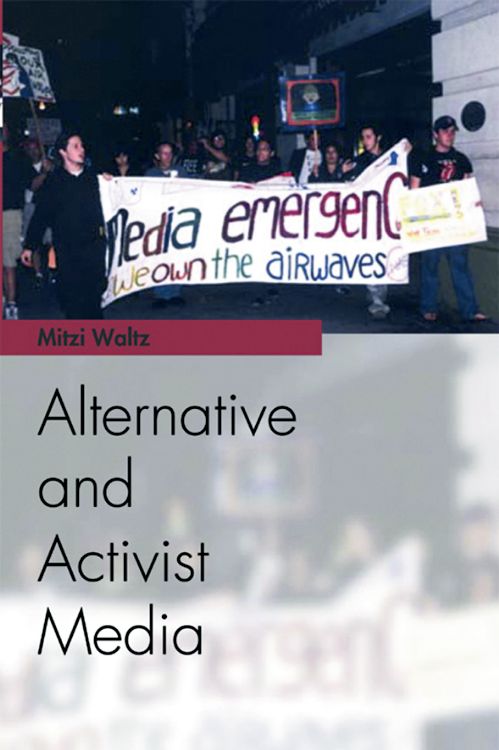
Alternative and activist media
This study of alternative and activist media provides an introduction to alternative media theories, audiences and practices. It brings diverse voices and concepts from outside the commercial media world to the fore, enriching and challenging mass media. Illustrated with historical and current examples, from both a UK and international perspective, it also includes carefully constructed exercises and discussion topics based on case studies and available texts.
eBook

Depression and mental wellbeing in people affected by leprosy in southern Nepal
Leprosy, a leading cause of disability, remains endemic in southern Nepal. Alongside physical impairment and stigmatization, many people affected by leprosy suffer from mental health problems.
This study had two objectives: (a) Establishing a baseline level of mental wellbeing and depression among people affected by leprosy in southern Nepal, and (b) Examining factors that influence mental wellbeing and depression in this target group.
A cross-sectional survey was conducted using three interview-administered questionnaires measuring level of depression (PHQ-9), mental wellbeing status (WEMWBS) and level of stigma (5-QSI-AP). Random clustering sampling was used to include leprosy-affected people from Self Help Groups (SHGs) and the reference group was matched based on socio-demographic characteristics. All participants were adults with no additional major morbidities. A sample of 142 persons affected by leprosy and 54 community controls were included.
People affected by leprosy participating in SHGs had a significantly lower level of mental wellbeing and higher level of depression than the general population. Both mental wellbeing and depression were influenced by gender and the level of stigma. In addition, the level of depression was associated with the disability grade of leprosy-affected people.
Leprosy-affected people need mental health-care interventions at different organizational levels, with attention to identifying individuals at increased risk for mental health problems or with additional needs. These findings highlight the demand for further research on specific interventions to improve the mental health of leprosy-affected people.
Journal Article

The Magnitude and Directions of the Associations between Early Life Factors and Metabolic Syndrome Differ across Geographical Locations among Migrant and Non-Migrant Ghanaians—The RODAM Study
Background: Early-life factors (ELFs) such as childhood nutrition and childhood socio-economic status could be the drivers of the increase in metabolic syndrome (MetSyn) among African populations, but data are lacking. This study evaluated whether markers of childhood nutritional status and childhood socio-economic status were associated with MetSyn in adulthood among migrant Ghanaians living in Europe and non-migrant Ghanaians living in Ghana. Methods: Data from the Research on Obesity and Diabetes among African Migrants (RODAM) study, involving 2008 migrants and 2320 non-migrants aged ≥25 years, were analysed for this study. We used leg-length to height ratio (LHR), which is an anthropometric marker of childhood nutritional status, and parental education, which is a marker of childhood socio-economic status, as proxies. Adjusted odds ratios (AOR) and 95% confidence intervals (95% CI) were calculated by logistic regression with adjustments for demographic and lifestyle factors. Results: Parental education was higher among Ghanaians in Europe than among residents in rural and urban Ghana. The prevalence of MetSyn was 18.5%, 27.7% and 33.5% for rural, urban, and migrant residents, respectively. LHR was inversely associated with MetSyn among migrants. Compared with high paternal education, individuals with low paternal education had lower odds of MetSyn in migrants (AOR 0.71 95% CI 0.54–0.94). In contrast, compared with high maternal education, individuals with intermediate maternal education had higher odds of MetSyn in urban Ghanaians (AOR 4.53 95% CI 1.50–3.74). No associations were found among rural Ghanaians. Conclusion: The magnitude and direction of the associations between ELFs and MetSyn differ across geographical locations. Intermediate maternal education was positively associated with MetSyn among urban Ghanaians, while LHR and low paternal education were inversely associated with MetSyn among migrant Ghanaians. Further research into the interplay of genetics, environment and behaviour is needed to elucidate the underlying pathological mechanisms of MetSyn amongst migrants.
Journal Article
Psychosocial burden of neglected tropical diseases in eastern Colombia: an explorative qualitative study in persons affected by leprosy, cutaneous leishmaniasis and Chagas disease
BackgroundLeprosy, cutaneous leishmaniasis (CL) and Chagas disease (CD) are neglected tropical diseases (NTDs) with a high psychosocial burden in Norte de Santander and Arauca in Colombia. This study provides insights into affected persons' feelings, perceptions and experiences to better understand the nature of this burden.MethodsIn 2018, 34 leprosy, CD and CL patients participated in four focus groups discussing the influence of the disease on mental well-being, social participation and stigma. Additionally, 13 leprosy patients participated in semi-structured interviews to further explore the health-related stigma related to this disease. Audio recordings were transcribed verbatim, and open coding was used to identify the most relevant categories and themes.ResultsPersons suffering from CD reported that their mental distress was mainly caused by impairments and stress related to the progressive and incurable nature of the disease. Persons affected by CL perceived the treatment for the disease as having the most impact on their psychosocial well-being. Persons affected by leprosy reported suffering most from anticipated and experienced stigma.ConclusionsThe findings indicate that these diseases are likely to impose a significant psychosocial burden on patients in the studied regions, even though these vary per condition. Consistent data collection on the psychosocial burden and the sharing of knowledge of effective interventions can contribute to the holistic approach needed to win the fight against NTDs.
Journal Article

Disability, Access to Food and the UN CRPD: Navigating Discourses of Human Rights in the Netherlands
In 2016, the Netherlands ratified the UN Convention on the Rights of Persons with Disabilities (UN CRPD), one of the last developed nations to do so. In this article, we explore how equal access to food provides a lens through which barriers to implementing a rights-based approach to disability equality can be examined in countries that are historically resistant to such discourses. Through a literature review, policy research, and interviews with disabled people, representatives of disabled people’s organisations, Dutch legal scholars, food researchers, and foodbanks, we have explored barriers to equal food access in the Netherlands, and current approaches to overcoming social, economic and physical barriers. Our analysis indicates that implementation of the UN CRPD and other relevant international and EU policies continues to be limited in the Netherlands due to narrow interpretations, leading to policies and practices that do not foster equal access to resources and environments. Dutch understandings of disability equality are evolving, but encounter opposition from an entrenched system of separation and resistance to mandating change, including a reluctance to even collect data about inequality. From this basis, we identify knowledge gaps and make recommendations for steps the Netherlands could take to ensure equal access to food.
Journal Article

Commentary on “Political engagement in the 2019 UK general election of patients with autism and/or a learning disability detained in a psychiatric hospital”
Purpose
The purpose of this paper is to provide a commentary on the article “Political engagement in the 2019 UK general election of patients with autism and/or a learning disability detained in a psychiatric hospital”.
Design/methodology/approach
This paper considers the wider issue of political participation by persons with disabilities, especially those whose freedom is restricted.
Findings
Access to voting rights remains problematic for many disabled people. It is crucial that this basic form of political participation is ensured, but there is further to go.
Originality/value
This paper suggests the need for greater attention to and support for disabled peoples’ right to political participation, including people with learning disabilities and autism.
Journal Article

Nothing about us, without us: A case study of a consumer-run organization by and for people on the autism spectrum in the Netherlands
In this exploratory case study based on qualitative research, we explore the perspectives and experiences of autistic self-advocates in the Netherlands regarding autism, (self-)advocacy, and consumer-run organizations. The focus of our study is a consumer-run organization by and for adult Persons on the Autism Spectrum in the Netherlands: PAS-Nederland or PAS for short. Our analysis reveals four themes relevant to the acceptance and integration of adults with autism into society and work: (1) invisibility of autistic adults; (2) diversity of the autism spectrum; (3) autistic leadership; and (4) collaboration between people with and without autism. We discuss the practical implications of our findings for the inclusion of people with autism in work and society. Our study underscores the importance of putting autistic people at the center of decision-making processes and solutions aimed at improving their outcomes in society, in general, and in the workplace specifically.
Journal Article