
Catalogue Search | MBRL


Are you sure you want to remove the book from the shelf?

{{itemTitle}}
28,344
result(s) for
"Wang, Gang"
Sort by:

نحو عالم عادل يسع الجميع : الاشتراكية الصينية في القرن الحادي والعشرين
يقدم هذا الكتاب عرضا للتجربة الاشتراكية الصينية في القرن العشرين، ولتصور الأمة الصينية لمستقبلها الاشتراكي في القرن الحادي والعشرين. ولتحقيق هذا التطور الهائل، أسست الصين تقاليدها الاشتراكية ذات الخصائص الصينية، وتغلبت على تحديات تحديث نظامها السياسي والاقتصادي، مع التمسك بالاقتصاد الجماعي في ظل اقتصاد السوق، وبناء حكومة موجهة نحو الخدمة العامة، والحكم الذاتي للشعب، وسيادة القانون، ومحاربة الفساد، وحل مشكلات المؤسسات المملوكة للدولة، وممارسة الديمقراطية الاشتراكية، والتنمية الحرة والشاملة للإنسان.
Book

Real-time mass spectrometric characterization of the solid–electrolyte interphase of a lithium-ion battery
The solid–electrolyte interphase (SEI) dictates the performance of most batteries, but the understanding of its chemistry and structure is limited by the lack of in situ experimental tools. In this work, we present a dynamic picture of the SEI formation in lithium-ion batteries using in operando liquid secondary ion mass spectrometry in combination with molecular dynamics simulations. We find that before any interphasial chemistry occurs (during the initial charging), an electric double layer forms at the electrode/electrolyte interface due to the self-assembly of solvent molecules. The formation of the double layer is directed by Li+ and the electrode surface potential. The structure of this double layer predicts the eventual interphasial chemistry; in particular, the negatively charged electrode surface repels salt anions from the inner layer and results in an inner SEI that is thin, dense and inorganic in nature. It is this dense layer that is responsible for conducting Li+ and insulating electrons, the main functions of the SEI. An electrolyte-permeable and organic-rich outer layer appears after the formation of the inner layer. In the presence of a highly concentrated, fluoride-rich electrolyte, the inner SEI layer has an elevated concentration of LiF due to the presence of anions in the double layer. These real-time nanoscale observations will be helpful in engineering better interphases for future batteries.An operando mass spectrometry technique, along with molecular dynamics simulations, unveils the evolution of the solid–electrolyte interphase chemistry and structure in lithium-ion batteries during the first cycle.
Journal Article
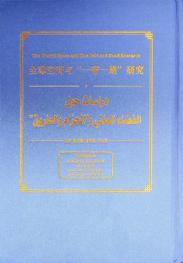
دراسات حول الفضاء العالمي و\الحزام والطريق\ : (مجلد الموانئ البحرية)
ينقسم الكتاب إلى خمسة فصول، يقدم الفصل الأول نظام الموانئ العالمي والعلاقات بين المدن الساحلية والتعاون في مجال الموانئ، ويناقش الفصل الثاني الخدمات اللوجستية البحرية العالمية وتطوير لوجستيات الموانئ الرئيسية، ويتناول الفصل الثالث نظام الموانئ في الصين وخصائصه. الاستجابة العالمية: يحلل الفصل الرابع بشكل رئيسي مؤشر البلطيق، وهو مؤشر تقييم مراكز الشحن الدولية، ويناقش الفصل الخامس نمط الموانئ العالمية وتغيرات النظام وتطور النقل البحري بناءً على منظور عالمي.
BOOK

Analysis of the doubly heavy baryon states and pentaquark states with QCD sum rules
In this article, we study the doubly heavy baryon states and pentaquark states with the QCD sum rules by carrying out the operator product expansion up to the vacuum condensates of dimension 7 and 13 respectively in a consistent way. In calculations, we separate the contributions of the negative parity and positive parity hadron states unambiguously, and study the masses and pole residues of the doubly heavy baryon states and pentaquark states in details. The present predictions can be confronted to the experimental data in the future.
Journal Article


From amplitudes to contact cosmological correlators
A
bstract
Our understanding of quantum correlators in cosmological spacetimes, including those that we can observe in cosmological surveys, has improved qualitatively in the past few years. Now we know many constraints that these objects must satisfy as consequences of general physical principles, such as symmetries, unitarity and locality. Using this new understanding, we derive the most general scalar four-point correlator, i.e., the trispectrum,
to all orders in derivatives
for manifestly local
contact
interactions. To obtain this result we use techniques from commutative algebra to write down all possible scalar four-particle amplitudes without assuming invariance under Lorentz boosts. We then input these amplitudes into a
contact reconstruction formula
that generates a contact cosmological correlator in de Sitter spacetime from a contact scalar or graviton amplitude. We also show how the same procedure can be used to derive higher-point contact cosmological correlators. Our results further extend the reach of the boostless cosmological bootstrap and build a new connection between flat and curved spacetime physics.
Journal Article
Boostless cosmological collider bootstrap
A
bstract
Cosmological correlation functions contain valuable information about the primordial Universe, with possible signatures of new massive particles at very high energies. Recent developments, including the cosmological bootstrap, bring new perspectives and powerful tools to study these observables. In this paper, we systematically classify inflationary three-point correlators of scalar perturbations using the bootstrap method. For the first time, we derive a complete set of single-exchange cosmological collider bispectra with new shapes and potentially detectable signals. Specifically, we focus on the primordial scalar bispectra generated from the exchange of massive particles with all possible boost-breaking interactions during inflation. We introduce three-point “seed” functions, from which we bootstrap the inflationary bispectra of scalar and spinning exchanges using weight-shifting and spin-raising operators. The computation of the seed function requires solving an ordinary differential equation in comoving momenta, a boundary version of the equation of motion satisfied by a propagator that linearly mixes a massive particle with the external light scalars. The resulting correlators are presented in analytic form, for any kinematics. These shapes are of interest for near-future cosmological surveys, as the primordial non-Gaussianity in boost-breaking theories can be large. We also identify new features in these shapes, which are phenomenologically distinct from the de Sitter invariant cases. For example, the oscillatory shapes around the squeezed limit have different phases. Furthermore, when the massive particle has much lower speed of sound than the inflaton, oscillatory features appear around the equilateral configuration.
Journal Article

Heterogeneous Fe3 single-cluster catalyst for ammonia synthesis via an associative mechanism
The current industrial ammonia synthesis relies on Haber–Bosch process that is initiated by the dissociative mechanism, in which the adsorbed N
2
dissociates directly, and thus is limited by Brønsted–Evans–Polanyi (BEP) relation. Here we propose a new strategy that an anchored Fe
3
cluster on the θ-Al
2
O
3
(010) surface as a heterogeneous catalyst for ammonia synthesis from first-principles theoretical study and microkinetic analysis. We have studied the whole catalytic mechanism for conversion of N
2
to NH
3
on Fe
3
/θ-Al
2
O
3
(010), and find that an associative mechanism, in which the adsorbed N
2
is first hydrogenated to NNH, dominates over the dissociative mechanism, which we attribute to the large spin polarization, low oxidation state of iron, and multi-step redox capability of Fe
3
cluster. The associative mechanism liberates the turnover frequency (TOF) for ammonia production from the limitation due to the BEP relation, and the calculated TOF on Fe
3
/θ-Al
2
O
3
(010) is comparable to Ru B5 site.
The current industrial ammonia synthesis relies on the Haber-Bosch process that is limited by the Brønsted–Evans–Polanyi relation. Here, the authors propose a new strategy that an anchored Fe
3
on θ-Al
2
O
3
(010) surface serves as a heterogeneous single cluster catalyst for ammonia synthesis from first-principles calculations and microkinetic analysis.
Journal Article
Strong decays of the Y(4660) as a vector tetraquark state in solid quark-hadron duality
In this article, we choose the \\[[sc]_P[\\bar{s}\\bar{c}]_A-[sc]_A[\\bar{s}\\bar{c}]_P\\] type tetraquark current to study the hadronic coupling constants in the strong decays \\[Y(4660)\\rightarrow J/\\psi f_0(980)\\], \\[ \\eta _c \\phi (1020)\\], \\[ \\chi _{c0}\\phi (1020)\\], \\[ D_s \\bar{D}_s\\], \\[ D_s^* \\bar{D}^*_s\\], \\[ D_s \\bar{D}^*_s\\], \\[ D_s^* \\bar{D}_s\\], \\[ \\psi ^\\prime \\pi ^+\\pi ^-\\], \\[J/\\psi \\phi (1020)\\] with the QCD sum rules based on solid quark-hadron quality. The predicted width \\[\\Gamma (Y(4660) )= 74.2^{+29.2}_{-19.2}\\,\\mathrm{{MeV}}\\] is in excellent agreement with the experimental data \\[68\\pm 11\\pm 1 { \\text{ MeV }}\\] from the Belle collaboration, which supports assigning the Y(4660) to be the \\[[sc]_P[\\bar{s}\\bar{c}]_A-[sc]_A[\\bar{s}\\bar{c}]_P\\] type tetraquark state with \\[J^{PC}=1^{--}\\]. In calculations, we observe that the hadronic coupling constants \\[ |G_{Y\\psi ^\\prime f_0}|\\gg |G_{Y J/\\psi f_0}|\\], which is consistent with the observation of the Y(4660) in the \\[\\psi ^\\prime \\pi ^+\\pi ^-\\] mass spectrum, and favors the \\[\\psi ^{\\prime }f_0(980)\\] molecule assignment. It is important to search for the process \\[Y(4660)\\rightarrow J/\\psi \\phi (1020)\\] to diagnose the nature of the Y(4660), as the decay is greatly suppressed.
Journal Article
Pseudo-adsorption and long-range redox coupling during oxygen reduction reaction on single atom electrocatalyst
Fundamental understanding of the dynamic behaviors at the electrochemical interface is crucial for electrocatalyst design and optimization. Here, we revisit the oxygen reduction reaction mechanism on a series of transition metal (M = Fe, Co, Ni, Cu) single atom sites embedded in N-doped nanocarbon by ab initio molecular dynamics simulations with explicit solvation. We have identified the dissociative pathways and the thereby emerged solvated hydroxide species for all the proton-coupled electron transfer (PCET) steps at the electrochemical interface. Such hydroxide species can be dynamically confined in a “pseudo-adsorption” state at a few water layers away from the active site and respond to the redox event at the catalytic center in a coupled manner within timescale less than 1 ps. In the PCET steps, the proton species (in form of hydronium in neutral/acidic media or water in alkaline medium) can protonate the pseudo-adsorbed hydroxide without needing to travel to the direct catalyst surface. This, therefore, expands the reactive region beyond the direct catalyst surface, boosting the reaction kinetics via alleviating mass transfer limits. Our work implies that in catalysis the reaction species may not necessarily bind to the catalyst surface but be confined in an active region.
The reaction region is commonly considered to be the direct catalyst surface. Here, the authors challenge this view and use molecular dynamics simulations to reveal a solvated hydroxide species dynamically confined in a pseudo-adsorption state at a few water layers away from the active site during oxygen reduction reaction on single atom electrocatalyst.
Journal Article