
Catalogue Search | MBRL


Are you sure you want to remove the book from the shelf?

{{itemTitle}}
1,905
result(s) for
"Wang, Wen-yu"
Sort by:
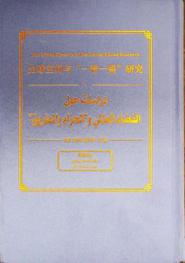
دراسات حول الفضاء العالمي و\الحزام والطريق\ : (مجلد الثقافة)
ينطلق هذا المجلد من العلاقة الهيكلية بين \"الفضاء\" و\"الثقافة\"، ويجمع بين مفهوم \"الفضاء\" في الجغرافيا ومفهوم \"السياق\" في الدراسات الثقافية وغيرهم من المفاهيم الأخرى، ويشرح نماذج ودلالات وأهداف مبادرة \"الحزام والطريق\" في سياق الحضارة الحديثة، ويصف صورة امتداد الحضارة على المحور التاريخي لـ \"الحزام والطريق\"، ويحلل الدلالة الثقافية في كل من اتجاه القيمة وبناء القوة الناعمة وإنشاء السياق الشرقي الخاصين بمبادرة \"الحزام والطريق\"، ويفسر علاقة الارتباط بين الثقافة الوطنية لـ \"الحزام والطريق\" والفضاء الوطني، ويكشف عن السرد عبر الفضاء للرموز الثقافية لـ \"الحزام والطريق\" ويوضح التعبير الرقمي والمرئي لواقع \"الحزام والطريق\"
Book

Upregulation of the long noncoding RNA FOXD2-AS1 promotes carcinogenesis by epigenetically silencing EphB3 through EZH2 and LSD1, and predicts poor prognosis in gastric cancer
Accumulating data indicate that long noncoding RNAs (lncRNAs) serve as important modulators in biological processes and are dysregulated in diverse tumors. The function of
FOXD2-AS1
in gastric cancer (GC) progression and related biological mechanisms remain undefined. A comprehensive analysis identified that
FOXD2-AS1
enrichment was upregulated markedly in GC and positively correlated with a large tumor size, a later pathologic stage, and a poor prognosis. Gene-set enrichment analysis (GSEA) in GEO datasets uncovered that cell cycle and DNA replication associated genes were enriched in patients with high
FOXD2-AS1
expression. Loss of
FOXD2-AS1
function inhibited cell growth via inhibiting the cell cycle in GC, whereas upregulation of
FOXD2-AS1
expression promoted cancer progression. The enhancer of zeste homolog 2 (EZH2) and lysine (K)-specific demethylase 1A (LSD1) proteins were found to serve as binding partners of
FOXD2-AS1
and mediators of
FOXD2-AS1
function. Mechanically,
FOXD2-AS1
promoted GC tumorigenesis partly through EZH2 and LSD1 mediated EphB3 downregulation. The present results revealed that
FOXD2-AS1
acted as a tumor inducer in GC partly through EphB3 inhibition by direct interaction with EZH2 and LSD1, and may prove to be a potential biomarker of carcinogenesis.
Journal Article


KLF5 and MYC modulated LINC00346 contributes to gastric cancer progression through acting as a competing endogeous RNA and indicates poor outcome
It was found in this study that long intergenic non-protein coding RNA 346 (LINC00346) was an lncRNA aberrantly expressed in gastric cancer (GC) based on multiple Gene Expression Omnibus (GEO) databases of GC cohorts. The LINC00346 gene was recurrently amplified and upregulated in GC, and its expression was positively correlated with poor pathologic stage, large tumor size, and poor prognosis. In addition, the oncogenic transcription factors KLF5 and MYC could bind to the LINC00346 promoter and enhance its expression. Gene Set Enrichment Analysis (GSEA) in the GEO datasets revealed that cell cycle and focal adhesion genes were enriched in patients with high LINC00346 expression. In vitro and in vivo assays of LINC00346 alterations revealed a complex integrated phenotype affecting cell growth, migration and invasion. Strikingly, high-throughput sequencing analysis after LINC00346 alterations highlighted alterations in cell cycle and focal adhesion pathways in GC cells. Mechanistically, argonaute 2 (Ago2) was recruited by LINC00346, which functioned as a molecular sponge for miR-34a-5p by antagonizing its ability to repress CD44, NOTCH1, and AXL protein translation. Taken together, our findings support a model in which the KLF5, MYC/LINC00346/miR-34a-5p cross-talk served as critical effectors in GC tumorigenesis and progression, suggesting a new therapeutic direction in the treatment of GC.
Journal Article

Analogous β-Carboline Alkaloids Harmaline and Harmine Ameliorate Scopolamine-Induced Cognition Dysfunction by Attenuating Acetylcholinesterase Activity, Oxidative Stress, and Inflammation in Mice
The analogous β-carboline alkaloids, harmaline (HAL) and harmine (HAR), possess a variety of biological properties, including acetylcholinesterase (AChE) inhibitory activity, antioxidant, anti-inflammatory, and many others, and have great potential for treating Alzheimer's disease (AD). However, studies have showed that the two compounds have similar structures and
AChE inhibitory activities but with significant difference in bioavailability. The objective of this study was to comparatively investigate the effects of HAL and HAR in memory deficits of scopolamine-induced mice. In the present study, mice were pretreated with HAL (2, 5, and 10 mg/kg), HAR (10, 20, and 30 mg/kg) and donepezil (5 mg/kg) by intragastrically for 7 days, and were daily intraperitoneal injected with scopolamine (1 mg/kg) to induce memory deficits and then subjected to behavioral evaluation by Morris water maze. To further elucidate the underlying mechanisms of HAL and HAR in improving learning and memory, the levels of various biochemical factors and protein expressions related to cholinergic function, oxidative stress, and inflammation were examined. The results showed that HAL and HAR could effectively ameliorate memory deficits in scopolamine-induced mice. Both of them exhibited an enhancement in cholinergic function by inhibiting AChE and inducing choline acetyltransferase (ChAT) activities, and antioxidant defense via increasing the antioxidant enzymes activities of superoxide dismutase and glutathione peroxidase, and reducing maleic diadehyde production, and anti-inflammatory effects through suppressing myeloperoxidase, tumor necrosis factor α, and nitric oxide as well as modulation of critical neurotransmitters such as acetylcholine (ACh), choline (Ch), L-tryptophan (L-Trp), 5-hydroxytryptamine (5-HT), γ-aminobutyric acid (γ-GABA), and L-glutamic acid (L-Glu). Furthermore, the regulations of HAL on cholinergic function, inflammation, and neurotransmitters were more striking than those of HAR, and HAL manifested a comparable antioxidant capacity to HAR. Remarkably, the effective dosage of HAL (2 mg/kg) was far lower than that of HAR (20 mg/kg), which probably due to the evidently differences in the bioavailability and metabolic stability of the two analogs. Taken together, all these results revealed that HAL may be a promising candidate compound with better anti-amnesic effects and pharmacokinetic characteristics for the treatments of AD and related diseases.
Journal Article

The effect of Saccharomyces boulardii supplementation on Helicobacter pylori eradication in children: a systematic review and meta-analysis of Randomized controlled trials
Background
It is unclear whether
Saccharomyces boulardii
(
S. boulardii
) supplementation in standard triple therapy (STT) is effective in eradicating
Helicobacter pylori
(
H. pylori
) infection in children. We therefore conducted a meta-analysis of randomized controlled trials (RCTs) to assess the effect of
S. boulardii
supplementation on
H. pylori
eradication in children.
Methods
We conducted electronic searches in PubMed, Embase, the Cochrane Library, China National Knowledge Infrastructure and Wanfang database from the beginning up to September 2023. A random-effects model was employed to calculate the pooled relative risk (RR) with 95% confidence intervals (CI) through a meta-analysis.
Results
Fifteen RCTs (involving 2156 patients) were included in our meta-analysis. Results of the meta-analysis indicated that
S. boulardii
in combination with STT was more effective than STT alone (intention-to-treat analysis : 87.7% vs. 75.9%, RR = 1.14, 95% CI: 1.10–1.19,
P
< 0.00001; per-protocol analysis : 88.5% vs. 76.3%, RR = 1.15, 95% CI: 1.10–1.19,
P
< 0.00001). The
S. boulardii
supplementation group had a significantly lower incidence of total adverse events (n = 6 RCTs, 9.2% vs. 29.2%, RR = 0.32, 95% CI: 0.21–0.48,
P
< 0.00001), diarrhea (n = 13 RCTs, 14.7% vs. 32.4%, RR = 0.46, 95% CI: 0.37–0.56,
P
< 0.00001), and nausea (n = 11 RCTs, 12.7% vs. 21.3%, RR = 0.53, 95% CI: 0.40–0.72,
P
< 0.0001) than STT group alone. Similar results were also observed in the incidence of vomiting, constipation, abdominal pain, abdominal distention, epigastric discomfort, poor appetite and stomatitis.
Conclusions
Current evidence indicated that
S. boulardii
supplementing with STT could improve the eradication rate of
H. pylori
, and concurrently decrease the incidence of total adverse events and gastrointestinal adverse events in children.
Journal Article

Cytogenetics and mutations could predict outcome in relapsed and refractory acute myeloid leukemia patients receiving BCL-2 inhibitor venetoclax
Venetoclax, a selective B cell leukemia/lymphoma-2 (BCL2) inhibitor, has recently shown activity in relapsed or refractory (R/R) acute myeloid leukemia (AML). Effective biomarkers for identifying patients most likely to respond to venetoclax-based treatment are of clinical utility. In this study, we aimed to evaluate the efficacy and safety profiles of venetoclax-based therapy in a total 40 R/R AML patients and identify the potentially predictive factors for response. Overall response rate was 50%, including 9 (22.5%) complete response (CR) or CR with incomplete hematologic recovery of either neutrophil or platelet counts (CRi). Median time to best response was 1.4 months and the median overall survival (OS) was 6.6 months. Presence of intermediate-risk cytogenetics predicted better OS compared to unfavorable-risk cytogenetics. Patients harboring NPM1, RUNX1, or SRSF2 mutations seemed to have higher CR/CRi rates and median OS was significantly longer in RUNX1-mutated patients. On the contrary, patients with FLT3-ITD, TP53, or DNMT3A mutations did not reach any objective response and had worse OS. No laboratory or clinical tumor lysis syndrome was observed and the most common adverse events were prolonged cytopenias which resulted in 67.5% of febrile neutropenia. Patients with concurrent use of azole antifungals had similar incidence of cytopenias compared with those without azole antifungals. In summary, we demonstrate that venetoclax is an effective and well-tolerated salvage option for R/R AML patients. Survival benefits were particularly remarkable in patients with intermediate-risk cytogenetics or RUNX1 mutations. In contrast, TP53, NRAS, and DNMT3A mutations as well as FLT3-ITD conferred negative impact on survival.
Journal Article

Intestinal permeability of N-acetylcysteine is driven by gut microbiota-dependent cysteine palmitoylation
Trillions of intestinal microbiota are essential to the permeability of orally administered drugs. However, identifying microbial-drug interactions remains challenging due to the highly variable composition of intestinal flora among individuals. Using single-pass intestinal perfusion (SPIP) platform, we establish the microbiota-based permeability screening framework involving germ-free (GF) and specific-pathogen-free (SPF) rats to compare in-situ
P
eff
-values and metabolomic profiles of 32 orally administered drugs with disputable classifications of permeability, prior to the verifications of bioorthogonal chemistry and LC-MS/MS. In contrast with SPF controls, N-Acetylcysteine (NAC) exhibits significantly increased permeability in GF rats, which is inversely related to reduced cysteine-3-ketosphinganine by
Bacteroides
. To further validate these microbiome features, we integrate clinical descriptors from a prospective cohort of 319 participants to optimize a 15-feature eXtreme Gradient Boosting (XGB) model, which reveal that cysteine palmitoylation by intestinal microbiota has significantly affected NAC permeability. By comparison of net reclassification improvement (NRI) index, this machine learning (ML) model of clinical prediction model encompassing intestinal microbial features outperforms other three commercial models in predicting NAC permeability. Here we have developed an intestinal microbiota-based strategy to evaluate uncharacterized NAC permeability, thus accounting for its discordant biopharmaceutics classification.
Here, based on single-pass intestinal perfusion platform, the authors establish a microbiota-based drug permeability screening framework to compare perfusion and metabolomic profiles of 32 orally administered drugs in germ-free rats, and show that increased permeability of N-Acetylcysteine is mediated by cysteine-3-ketosphinganine of
Bacteroides
.
Journal Article

Research on the GST gene family in Salix lindleyana reveals Trp162 and Pro202 as key amino acids controlling the release rate of GS-X
The adaptive evolution of the glutathione S-transferase (GST) gene family in
Salix lindleyana
provides insights into the relationship between enzyme structure and function. In this study, 37 genes encoding the GST protein were cloned from
S. lindleyana
with no genomic data available, and their expression levels and enzyme activity were determined
in vitro
. The 22 genes encoding the Tau GST subfamily were divided into Clades A and B, with Clade A subjected to more relaxed selection pressure than Clade B. Clade A was split into two smaller branches, Clades a and b. Three genes under positive selection from Clade a were chosen for 36 site-directed mutations, with Trp162 and Pro202 crucially affecting variations in GST enzyme activity. Crystal structure analysis of SliGSTU7 complexed with GSH revealed that the Trp162 residue was located at the bottom of the hydrophobic cavity. Homology modeling and molecular docking revealed that the W162G/P202A mutation in SliGSTU7 significantly reduced the neighboring effect during the formation of GS-DNB. A study of the GST gene family of
S. lindleyana
identified Trp162 and Pro202 as key amino acids that regulate the release rate of GS-X.
Journal Article

Effects of a 12-Week Semi-Immersive Virtual Reality-Based Exercise Program on the Quality of Life of Older Adults Across Different Age Groups: A Randomized Controlled Trial
Aging may affect quality of life (QOL). This study aimed to evaluate the impact of semi-immersive VR-based exercise on the QOL of young-old and middle-old adults. This study was a randomized controlled trial involving older adults aged 65–85 years. Methods: Two age groups were each randomly assigned to experimental (EG) and control (CG) groups. The EG underwent a 75–90 min semi-immersive VR-based exercise intervention twice a week for 12 weeks, whereas the CG continued with their usual daily activities. Each participant’s psychological QOL was assessed using the World Health Organization’s QOL Instrument-Older Adults Module (WHOQOL-OLD). Results: Compared with their CG counterparts, the EG older adults exhibited significantly higher QOL scores in four WHOQOL-OLD dimensions (i.e., sensory abilities, autonomy, social participation/isolation, and death and dying) and had a superior overall QOL. Furthermore, we observed significant decreases in the autonomy and overall QOL dimensions in CG older adults. On comparing the young-old and middle-old adults, a significant decrease in the past, present, and future activity QOL dimension was exclusively found in CG young-old adults. Conclusions: Semi-immersive VR-based exercise is a promising digital tool for supporting the psychological QOL of older adults across different age groups. This suggests that older persons, particularly young-old adults, should be encouraged to maintain physical activity habits in their daily lives in order to improve their QOL.
Journal Article