
Catalogue Search | MBRL


Are you sure you want to remove the book from the shelf?

{{itemTitle}}
43,426
result(s) for
"Wang, Zhong"
Sort by:


The role of macrophages polarization in sepsis-induced acute lung injury
Sepsis presents as a severe infectious disease frequently documented in clinical settings. Characterized by its systemic inflammatory response syndrome, sepsis has the potential to trigger multi-organ dysfunction and can escalate to becoming life-threatening. A common fallout from sepsis is acute lung injury (ALI), which often progresses to acute respiratory distress syndrome (ARDS). Macrophages, due to their significant role in the immune system, are receiving increased attention in clinical studies. Macrophage polarization is a process that hinges on an intricate regulatory network influenced by a myriad of signaling molecules, transcription factors, epigenetic modifications, and metabolic reprogramming. In this review, our primary focus is on the classically activated macrophages (M1-like) and alternatively activated macrophages (M2-like) as the two paramount phenotypes instrumental in sepsis’ host immune response. An imbalance between M1-like and M2-like macrophages can precipitate the onset and exacerbate the progression of sepsis. This review provides a comprehensive understanding of the interplay between macrophage polarization and sepsis-induced acute lung injury (SALI) and elaborates on the intervention strategy that centers around the crucial process of macrophage polarization.
Journal Article


Power generation from the interaction of a liquid droplet and a liquid membrane
Triboelectric nanogenerators are an energy harvesting technology that relies on the coupling effects of contact electrification and electrostatic induction between two solids or a liquid and a solid. Here, we present a triboelectric nanogenerator that can work based on the interaction between two pure liquids. A liquid–liquid triboelectric nanogenerator is achieved by passing a liquid droplet through a freely suspended liquid membrane. We investigate two kinds of liquid membranes: a grounded membrane and a pre-charged membrane. The falling of a droplet (about 40 μL) can generate a peak power of 137.4 nW by passing through a pre-charged membrane. Moreover, this membrane electrode can also remove and collect electrostatic charges from solid objects, indicating a permeable sensor or charge filter for electronic applications. The liquid–liquid triboelectric nanogenerator can harvest mechanical energy without changing the object motion and it can work for many targets, including raindrops, irrigation currents, microfluidics, and tiny particles.
Triboelectric nanogenerators harvest energy by contacting two solids or a liquid and a solid. Here the authors use a conductive liquid membrane as a permeable electrode to demonstrate triboelectrification via liquid–liquid contact by passing liquid droplets through a liquid membrane to generate power.
Journal Article
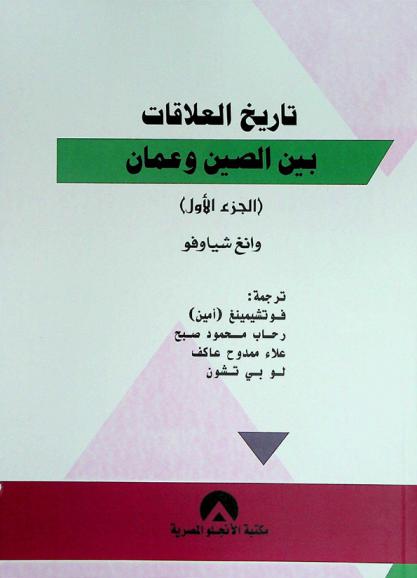
تاريخ العلاقات بين الصين وعمان
يستعرض هذا الكتاب الجوانب التاريخية والسياسية والثقافية للعلاقات بين الصين وسلطنة عمان، منذ العصور القديمة وحتى العصر الحديث، مع تركيز خاص على التبادل التجاري والبحري الذي ازدهر بين الجانبين عبر طريق الحرير البحري. يبرز الكتاب كيف شكل التواصل الحضاري بين الصين وعمان أحد أقدم النماذج للعلاقات السلمية في التاريخ، حيث ساهم البحارة العمانيون في نقل السلع والثقافات بين الشرق الأقصى والجزيرة العربية. كما يتناول العلاقات الدبلوماسية الحديثة بين البلدين، وتطورها في إطار الشراكات الاقتصادية ومبادرة الحزام والطريق، مؤكدا على الاحترام المتبادل والتعاون المتوازن بين البلدين عبر القرون.
BOOK
Quantifying electron-transfer in liquid-solid contact electrification and the formation of electric double-layer
Contact electrification (CE) has been known for more than 2600 years but the nature of charge carriers and their transfer mechanisms still remain poorly understood, especially for the cases of liquid–solid CE. Here, we study the CE between liquids and solids and investigate the decay of CE charges on the solid surfaces after liquid–solid CE at different thermal conditions. The contribution of electron transfer is distinguished from that of ion transfer on the charged surfaces by using the theory of electron thermionic emission. Our study shows that there are both electron transfer and ion transfer in the liquid–solid CE. We reveal that solutes in the solution, pH value of the solution and the hydrophilicity of the solid affect the ratio of electron transfers to ion transfers. Further, we propose a two-step model of electron or/and ion transfer and demonstrate the formation of electric double-layer in liquid–solid CE.
The identity of charge carriers (electron or ion) in contact electrification has been discussed for many years. Here, the authors demonstrate that the electron transfer paly an important role in liquid-solid contact electrification and the formation mechanism of electric double-layer is proposed.
Journal Article


Unique Roles of Gold Nanoparticles in Drug Delivery, Targeting and Imaging Applications
Nanotechnology has become more and more potentially used in diagnosis or treatment of diseases. Advances in nanotechnology have led to new and improved nanomaterials in biomedical applications. Common nanomaterials applicable in biomedical applications include liposomes, polymeric micelles, graphene, carbon nanotubes, quantum dots, ferroferric oxide nanoparticles, gold nanoparticles (Au NPs), and so on. Among them, Au NPs have been considered as the most interesting nanomaterial because of its unique optical, electronic, sensing and biochemical properties. Au NPs have been potentially applied for medical imaging, drug delivery, and tumor therapy in the early detection, diagnosis, and treatment of diseases. This review focuses on some recent advances in the use of Au NPs as drug carriers for the intracellular delivery of therapeutics and as molecular nanoprobes for the detection and monitoring of target molecules.
Journal Article

Pumping up the charge density of a triboelectric nanogenerator by charge-shuttling
As an emerging technology for harvesting mechanical energy, low surface charge density greatly hinders the practical applications of triboelectric nanogenerators (TENGs). Here, a high-performance TENG based on charge shuttling is demonstrated. Unlike conventional TENGs with static charges fully constrained on the dielectric surface, the device works based on the shuttling of charges corralled in conduction domains. Driven by the interaction of two quasi-symmetrical domains, shuttling of two mirror charge carriers can be achieved to double the charge output. Based on the mechanism, an ultrahigh projected charge density of 1.85 mC m
−2
is obtained in ambient conditions. An integrated device for water wave energy harvesting is also presented, confirming its feasibility for practical applications. The device provides insights into new modes of TENGs using unfixed charges in domains, shedding a new light on high-performance mechanical energy harvesting technology.
Conventionally, triboelectric nanogenerators are based on static charges fixed on dielectric surfaces. Here, the authors report a new mechanism using shuttling of mirror charge carriers corralled in quasi-symmetrical conduction domains, which boosts performance for blue energy harvesting.
Journal Article