
Catalogue Search | MBRL


Are you sure you want to remove the book from the shelf?

{{itemTitle}}
1,056
result(s) for
"Ward, Kelly"
Sort by:


Academic Motherhood
Academic Motherhoodtells the story of over one hundred women who are both professors and mothers and examines how they navigated their professional lives at different career stages. Kelly Ward and Lisa Wolf-Wendel base their findings on a longitudinal study that asks how women faculty on the tenure track manage work and family in their early careers (pre-tenure) when their children are young (under the age of five), and then again in mid-career (post-tenure) when their children are older. The women studied work in a range of institutional settings-research universities, comprehensive universities, liberal arts colleges, and community colleges-and in a variety of disciplines, including the sciences, the humanities, and the social sciences.Much of the existing literature on balancing work and family presents a pessimistic view and offers cautionary tales of what to avoid and how to avoid it. In contrast, the goal ofAcademic Motherhoodis to help tenure track faculty and the institutions at which they are employed \"make it work.\" Writing for administrators, prospective and current faculty as well as scholars, Ward and Wolf-Wendel bring an element of hope and optimism to the topic of work and family in academe. They provide insight and policy recommendations that support faculty with children and offer mechanisms for problem-solving at personal, departmental, institutional, and national levels.
eBook
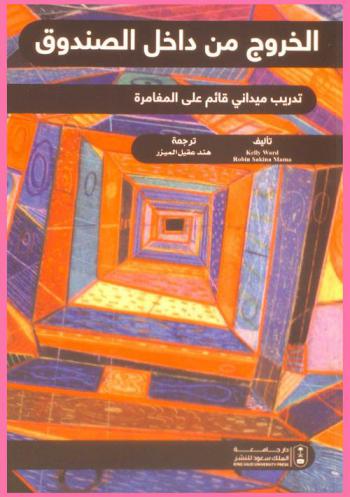
الخروج من داخل الصندوق : تدريب ميداني قائم على المغامرة
يقدم هذا الكتاب مجموعة من الموضوعات المرتبطة بمعارف وقيم ومهارات ممارسة العمل الاجتماعي في الميدان، بالإضافة إلى الأنشطة التدريبية التي تساعد طالب / ة الخدمة الاجتماعية على فهم وتطبيق الممارسة المهنية للخدمة الاجتماعية في المؤسسات المجتمعية التي تقدم خدماتها لعملائها. مع الربط والدمج بين مقررات التدريب والمقررات النظرية الأخرى مثل السلوك الإنساني والبيئة الاجتماعية، ومناهج البحث، وإدارة المؤسسات وغيرها من الموضوعات ذات الصلة، كذلك يتضمن الكتاب وثيقتين إحداهما الميثاق الأخلاقي للجمعية الكندية للإخصائيين الاجتماعيين CASW Code of Ethics والأخرى الميثاق الأخلاقي للجمعية الوطنية الأمريكية للإخصائيين الاجتماعيين NASW Code of Ethics والتي يتحتم على الإخصائي الاجتماعي كممارس لمهنة الخدمة الاجتماعية أن يلتزم بالسلوك المهني.
Book

Modeling human activity-related spread of the spotted lanternfly (Lycorma delicatula) in the US
The spotted lanternfly ( Lycorma delicatula ) has recently spread from its native range to several other countries and forecasts predict that it may become a global invasive pest. In particular, since its confirmed presence in the United States in 2014 it has established itself as a major invasive pest in the Mid-Atlantic region where it is damaging both naturally occurring and commercially important farmed plants. Quarantine zones have been introduced to contain the infestation, but the spread to new areas continues. At present the pathways and drivers of spread are not well-understood. In particular, several human activity related factors have been proposed to contribute to the spread; however, which features of the current spread can be attributed to these factors remains unclear. Here we collect county level data on infestation status and four specific human activity related factors and use statistical methods to determine whether there is evidence for an association between the factors and infestation. Then we construct a network model based on the factors found to be associated with infestation and use it to simulate local spread. We find that the model reproduces key features of the spread 2014 to 2021. In particular, the growth of the main infestation region and the opening of spread corridors in the westward and southwestern directions is consistent with data and the model accurately forecasts the correct infestation status at the county level in 2021 with 81% accuracy. We then use the model to forecast the spread up to 2025 in a larger region. Given that this model is based on a few human activity related factors that can be targeted, it may prove useful to incorporate it into more elaborate predictive forecasting models and in informing management efforts focused on interstate highway transport and garden centers in the US and potentially for current and future invasions elsewhere globally.
Journal Article

A Tangled Web of Terms: The Overlap and Unique Contribution of Involvement, Engagement, and Integration to Understanding College Student Success
Established theories and constructs long associated with student success, including involvement, engagement, and integration, provide common language and a body of knowledge to inform understanding of the challenges currently facing higher education. This paper examines how the theories and terms have evolved, explores how the terms are currently used, and considers their legacy for understanding contemporary concerns about student development and success.
Journal Article
Characterisation of Cultured Mesothelial Cells Derived from the Murine Adult Omentum
The human omentum has been long regarded as a healing patch, used by surgeons for its ability to immunomodulate, repair and vascularise injured tissues. A major component of the omentum are mesothelial cells, which display some of the characteristics of mesenchymal stem/stromal cells. For instance, lineage tracing studies have shown that mesothelial cells give rise to adipocytes and vascular smooth muscle cells, and human and rat mesothelial cells have been shown to differentiate into osteoblast- and adipocyte-like cells in vitro, indicating that they have considerable plasticity. However, so far, long-term cultures of mesothelial cells have not been successfully established due to early senescence. Here, we demonstrate that mesothelial cells isolated from the mouse omentum could be cultured for more than 30 passages. While epithelial markers were downregulated over passages in the mesothelial cells, their mesenchymal profile remained unchanged. Early passage mesothelial cells displayed clonogenicitiy, expressed several stem cell markers, and up to passage 5 and 13, respectively, could differentiate along the adipogenic and osteogenic lineages, demonstrating stem/progenitor characteristics and differentiation potential.
Journal Article

Restricted differentiative capacity of Wt1-expressing peritoneal mesothelium in postnatal and adult mice
Previously, genetic lineage tracing based on the mesothelial marker Wt1, appeared to show that peritoneal mesothelial cells have a range of differentiative capacities and are the direct progenitors of vascular smooth muscle in the intestine. However, it was not clear whether this was a temporally limited process or continued throughout postnatal life. Here, using a conditional
Wt1
-based genetic lineage tracing approach, we demonstrate that the postnatal and adult peritoneum covering intestine, mesentery and body wall only maintained itself and failed to contribute to other visceral tissues. Pulse-chase experiments of up to 6 months revealed that Wt1-expressing cells remained confined to the peritoneum and failed to differentiate into cellular components of blood vessels or other tissues underlying the peritoneum. Our data confirmed that the
Wt1
-lineage system also labelled submesothelial cells. Ablation of
Wt1
in adult mice did not result in changes to the intestinal wall architecture. In the heart, we observed that Wt1-expressing cells maintained the epicardium and contributed to coronary vessels in newborn and adult mice. Our results demonstrate that Wt1-expressing cells in the peritoneum have limited differentiation capacities, and that contribution of Wt1-expressing cells to cardiac vasculature is based on organ-specific mechanisms.
Journal Article

Oxygen-carrying nanoemulsions and respiratory hyperoxia eliminate tumor hypoxia–induced immunosuppression
Hypoxia/hypoxia-inducible factor 1α-driven immunosuppressive transcription and cAMP-elevating signaling through A2A adenosine receptors (A2ARs) represent a major tumor-protecting pathway that enables immune evasion. Recent promising clinical outcomes due to the blockade of the adenosine-generating enzyme CD73 and A2AR in patients refractory to all other therapies have confirmed the importance of targeting hypoxia-adenosinergic signaling. We report a feasible approach to target the upstream stage of hypoxia-adenosinergic immunosuppression using an oxygen-carrying nanoemulsion (perfluorocarbon blood substitute). We show that oxygenation agent therapy (a) eliminates tumor hypoxia, (b) improves efficacy of endogenously developed and adoptively transferred T cells, and thereby (c) promotes regression of tumors in different anatomical locations. We show that both T cells and NK cells avoid hypoxic tumor areas and that reversal of hypoxia by oxygenation agent therapy increases intratumoral infiltration of activated T cells and NK cells due to reprogramming of the tumor microenvironment (TME). Thus, repurposing oxygenation agents in combination with supplemental oxygen may improve current cancer immunotherapies by preventing hypoxia-adenosinergic suppression, promoting immune cell infiltration and enhancing effector responses. These data also suggest that pretreating patients with oxygenation agent therapy may reprogram the TME from immunosuppressive to immune-permissive prior to adoptive cell therapy, or other forms of immunotherapy.
Journal Article

Academic Motherhood: Managing Complex Roles in Research Universities
Given the prevalence of women faculty entering the profession, many of childbearing age, it is important to understand how women juggle the often-conflicting demands of children and tenure. Interviews with 29 faculty from research universities find them reporting joy in their professional and personal roles, the \"greedy\" nature of academic and family life, the need to watch the clock, and the perspective that having children imposes on life as a junior faculty member.
Journal Article

Modelling the emergence of social-bird biological controls to mitigate invasions of the spotted lanternfly and similar invasive pests
The spotted lanternfly is an emerging global invasive insect pest. Due to a lack of natural enemies where it is invasive, human intervention is required. Extensive management has been applied but the spread continues. Recently, the idea of bird-based biological controls has re-emerged and shown effective in studies. However, it is questionable, if birds are able to effectively control unfamiliar and occasionally toxic invasive pests in short timeframes. Unless, perhaps, the birds are effective social learners and toxicity of the invaders is rare. Here, we introduce a mathematical model for social learning in a great tit-like bird to investigate conditions for the emergence of a collective biological control of a pest that is occasionally toxic, like the lanternfly. We find that the social observation rate relative to the proportion of toxic lanternfly dictate when collective biological controls will emerge. We also implement the social learning model into a model of collective motion in bird-like animals, and find that it produces results consistent with the mathematical model. Our work suggests that social birds may be useful in managing the spotted lanternfly, and that removing the toxicity-inducing preferred host of the lanternfly should be a priority to facilitate this.
Journal Article