
Catalogue Search | MBRL


Are you sure you want to remove the book from the shelf?

{{itemTitle}}
17,495
result(s) for
"Ward, Mike"
Sort by:

Simple machines
\"Machines help make work easier, like when you need to lift something heavy or reach way up high. There are six simple machines: the lever, the wheel and axle, the pulley, the ramp, the wedge, and the screw. Can you adjust a seesaw to lift an elephant? What happens when you combine two or more simple machines? Read and find out!\"--Amazon.com.
Book

The World Health Organization Global Benchmarking Tool an Instrument to Strengthen Medical Products Regulation and Promote Universal Health Coverage
National regulatory authorities (NRAs) are the gatekeepers of the supply chain of medical products, and they have a mandate to ensure the quality, safety and efficacy of medicines, vaccines, blood, and blood products, medical devices, including diagnostics and traditional, or herbal medicines. However, the majority of the world's regulators are still struggling to reach a level of maturity, whereby they have a stable, well-functioning and integrated regulatory system. The World Health Organization (WHO) has developed a Global Benchmarking Tool (GBT) as part of its five-step capacity building program to assist NRAs, using the tool, they can benchmark their own strengths and areas of weakness, and then engage in a formal benchmarking process together with WHO and international experts in order to formulate an effective and workable institutional development plan. The GBT is comprehensive across the entire product life cycle and allows benchmarking to be customized to the needs of the NRA. It has evolved from decades of experience using a variety of benchmarking tools, within WHO and other stakeholder organizations. By the end of December 2019, 26 countries had undergone formal benchmarking, and a further 54 countries had used the GBT to conduct self-benchmarking exercises assisted by WHO.
Journal Article

Adventure time. Beginning of the end
\"When Finn breaks a promise he doesn't even remember making, he finds himself on a quest through time as it unravels around him. Travel through Finn's past, present, and future--all that was and what could have been--as he faces down the fearsome Chronologius Rex. Meanwhile, Jake enlists the help of all of Ooo to get his best bud back before it's too late.\"-- Provided by publisher.
Book

Coming together to improve access to medicines: The genesis of the East African Community’s Medicines Regulatory Harmonization initiative
Independent, science-based regulation of medical products is a critical part of ensuring quality healthcare and, when conducted in a transparent, science-based, efficient, accountable, and predictable manner, it can help ensure access to quality products that patients need and can have a very positive impact on public health. [...]African countries must contend with 75% of the world’s HIV/AIDS cases and 90% of its malaria deaths, and access to quality versions of the newest and most effective medicines is key in treating these infections [8], as well as in disease control strategies. The consortium included regulatory and political bodies (AUDA-NEPAD, PAP, the African Union Commission, the Heads of NMRAs, the Joint United Nations Programme on HIV/AIDS), the World Bank, technical partners (WHO, the Swiss Agency for Therapeutic Products [Swissmedic]), and donors (the Bill & Melinda Gates Foundation, the Clinton Health Access Initiative, the UK Department for International Development) [12]. At this time, there was only sufficient funding for the consortium to support one pilot project. [...]the consortium decided to solicit proposals from each of the RECs and fund the most promising plan for MRH over the next 5 years.
Journal Article
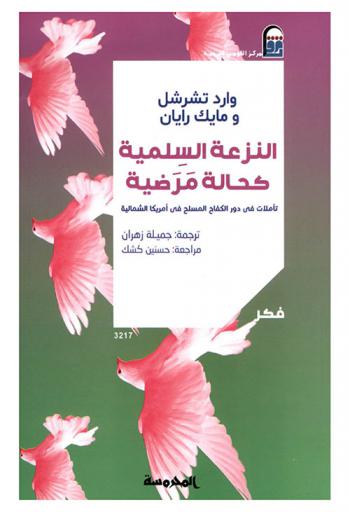
النزعة السلمية كحالة مرضية : تأملات في دور الكفاح المسلح في أمريكا الشمالية
يكشف هذا الكتاب عن فكر تيار رئيسي من مفكرى الغرب من غير ذوي الأصول الأوروبية فيما يتعلق بالعنصرية المتأصلة في الثقافة الأوروبية التي تساهم في مفاقمة ما يصفه وارد تشرشل \"بالحالة المرضية\" لما أصبح يعرف بالحركة السلمية والتي تقف وراء المواقف الثابتة المستمرة التي تتخذها \"المعارضة\" الأوروبية/الأمريكية \"البيضاء\"، فيفضح نفاق ما يعرف باليسار والقوى التقدمية في الغرب عموما، وفي أمريكا خصوصا وهو امر يجب أن تعيه بلدان وشعوب العالم الثالث -ومصر والمصريين من بينهم- في كفاحهم ضد الإستعمار (الذي كان ومازال أوروبيا بالتحديد) في ثوبه \"الجديد\" وأشكال حروبه الجديدة من النوع الثالث والرابع وماذا يجب أن نتوقع (أو لا نتوقع) مما يطلق عليه معارضة اوروبية فيما يتعلق بمواقفها المتراخية المتواطئة مع حكومتها من جهة ونظرتها العنصرية المتعالية تجاه شعوبنا \"في العالم الثالث\" من جهة أخرى.
Book
Optimizing the East African Community’s Medicines Regulatory Harmonization initiative in 2020–2022: A Roadmap for the Future
(Drug-induced extrapyramidal side effects are movement disorders with acute and long-term symptoms, including dystonia, akathisia, parkinsonism, bradykinesia, tremor, and tardive dyskinesia.) Without the help of the eight sub-Saharan African countries that submitted reports to VigiBase, it is unclear whether the association between the medicine combination and this adverse event would have been detected. Because of the countries’ vigilance, healthcare providers can now be alert for these reactions and treat them promptly. Unfortunately, due to a number of factors, including inadequate legal framework and infrastructure, limited financial resources, and the number and competency of staff available to support pharmacovigilance systems, many African countries struggle to gather and report information about suspected adverse events, which is key for monitoring the safety of medicines on the market. CRO, contract research organization; EAC, East African Community; GMP, good manufacturing practice; ISO, International Organization for Standardization; IVD, in vitro diagnostic; JA, joint assessment; MRH, Medicines Regulatory Harmonization; NMRA, national medicines regulatory authority; PV, pharmacovigilance; RTO, regional technical officer; WHO, World Health Organization. https://doi.org/10.1371/journal.pmed.1003129.g001 To ensure that all the program’s priorities are being championed, each NMRA now has one RTO, each of whom specializes in a different area. [...]once a product has been recommended through the joint assessment process, the RTO will follow up with NMRAs to ensure that national registrations proceed in a timely manner.
Journal Article

Thor. Volume 1, God of Thunder reborn
Thor Odinson has regained his mantle - and with it, a wild new world of trouble on his mighty hands! The artifacts of Asgard have been scattered across the Earth, and to reclaim them, Thor will have to face some ugly truths. Like the production cost on hundreds of new hammers! And the Thunder God is going to need every last one of them if he's going to stop the unstoppable Juggernaut.
Book
Eight years of the East African Community Medicines Regulatory Harmonization initiative: Implementation, progress, and lessons learned
According to the World Health Organization (WHO) [1], NMRAs contribute to promoting and protecting public health and safety by ensuring that. * medicines are of the required quality, safety, and efficacy; * health professionals and patients have the necessary information to enable them to use medicines rationally; * medicines are appropriately manufactured, stored, distributed, and dispensed; * illegal manufacturing and trade are detected and adequately sanctioned; * promotion and advertising are fair, balanced, and aimed at rational drug use; and * access to medicines is not hindered by unjustified regulatory work. Afterward, the medicines were registered by Kenya and Uganda (although the medicines were eligible for registration in all EAC countries, the manufacturer decided to register them in only 3). Because of this new regional approach to product assessment, these medicines were available in EAC countries sooner than they would have been otherwise. [...]the EAC MRH initiative was expected to identify a funding mechanism that would allow it to sustain and broaden its regulatory activities after the catalytic donor support available for the first 5 years expired. The initiative’s Medicines Evaluation & Registration Working Group, led by Tanzania’s NMRA, created this CTD as part of the program’s larger mandate of harmonizing technical requirements, standards, and standard operating procedures (SOPs) for medicines assessment and registration across the region [8]. Because the EAC’s CTD is based on the formats used by ICH and the WHO’s Prequalification Programme, EAC Partner States can easily leverage dossiers previously submitted to other regulatory authorities, such as the WHO, US Food and Drug Administration, or European Medicines Agency.
Journal Article

Expanding global access to essential medicines: investment priorities for sustainably strengthening medical product regulatory systems
Access to quality-assured medical products improves health and save lives. However, one third of the world’s population lacks timely access to quality-assured medicines while estimates indicate that at least 10% of medicine in low- and middle-income countries (LMICs) are substandard or falsified (SF), costing approximately US$ 31 billion annually. National regulatory authorities are the key government institutions that promote access to quality-assured medicines and combat SF medical products but despite progress, regulatory capacity in LMICs is still insufficient. Continued and increased investment in regulatory system strengthening (RSS) is needed. We have therefore reviewed existing global normative documents and resources and engaged with our networks of global partners and stakeholders to identify three critical challenges being faced by NRAs in LMICs that are limiting access to medical products and impeding detection of and response to SF medicines. The challenges are; implementing value-added regulatory practices that best utilize available resources, a lack of timely access to new, quality medical products, and limited evidence-based data to support post-marketing regulatory actions. To address these challenges, we have identified seven focused strategies; advancing and leveraging convergence and reliance initiatives, institutionalizing sustainability, utilizing risk-based approaches for resource allocation, strengthening registration efficiency and timeliness, strengthening inspection capacity and effectiveness, developing and implementing risk-based post-marketing quality surveillance systems, and strengthening regulatory management of manufacturing variations. These proposed solutions are underpinned by 13 focused recommendations, which we believe, if financed, technically supported and implemented, will lead to stronger health system and as a consequence, positive health outcomes.
Journal Article

Acoustophoretic Orientation of Red Blood Cells for Diagnosis of Red Cell Health and Pathology
Distortions of the normal bi-concave disc shape for red blood cells (RBCs) appear in a number of pathologies resulting from defects in cell membrane skeletal architecture, erythrocyte ageing, and mechanical damage. We present here the potential of acoustic cytometry for developing new approaches to light-scattering based evaluation of red blood cell disorders and of the effects of storage and ageing on changes or damage to RBCs membranes. These approaches could be used to immediately evaluate the quality of erythrocytes prior to blood donation and following transfusion. They could also be applied to studying RBC health in diseases and other pathologies, such as artificial heart valve hemolysis, thermal damage or osmotic fragility. Abnormal distributions of erythrocytes can typically be detected after just 30 to 45 seconds of acquisition time using 1–2 µL starting blood volumes.
Journal Article