
Catalogue Search | MBRL


Are you sure you want to remove the book from the shelf?

{{itemTitle}}
10
result(s) for
"Warner, John (John T.), author"
Sort by:

The handbook of lithium-ion battery pack design : chemistry, components, types and terminology
'The Handbook of Lithium-Ion Battery Pack Design' offers to the reader a clear and concise explanation of how Li-ion batteries are designed from the perspective of a manager, sales person, product manager or entry level engineer who is not already an expert in Li-ion battery design. It will offer a layman's explanation of the history of vehicle electrification, what the various terminology means, and how to do some simple calculations that can be used in determining basic battery sizing, capacity, voltage and energy. By the end of this book the reader has a solid understanding of all of the terminology around Li-ion batteries and is able to do some simple battery calculations.
Book
Handbook of Lithium-Ion Battery Pack Design - Chemistry, Components, Types and Terminology
This handbook offers to the reader a clear and concise explanation of how Li-ion batteries are designed from the perspective of a manager, sales person, product manager or entry level engineer who is not already an expert in Li-ion battery design. It will offer a layman's explanation of the history of vehicle electrification, what the various terminology means, and how to do some simple calculations that can be used in determining basic battery sizing, capacity, voltage and energy. By the end of this book the reader has a solid understanding of all of the terminology around Li-ion batteries and is able to do some simple battery calculations.
eBook

Air Pollution and Health
This 10th volume in the Issues in Environmental Science and Technology series provides a comprehensive review of air pollution and health that complements the 9th volume covering air quality management. Dealing with the common gaseous and particulate air pollutants, including chemical carcinogens, this volume reviews the epidemiological and exposure chamber study research and considers mechanistic studies in the case of particulate matter.
eBook

Environmental Impact of Power Generation
In today's automated world, the need for economic generation of power is of vital importance. However, the industry is commonly perceived as being responsible for pollution of the atmosphere and contamination of land and water. Encompassing areas as diverse as current performance standards, the use of nuclear fuel and a historical overview of electricity supply, this 11th volume of Issues in Environmental Science and Technology aims to contribute to the public understanding of science in this important area. The emotive issues of air pollution and the ecological effects of overhead power lines are tackled, along with energy efficiency and conservation.
eBook
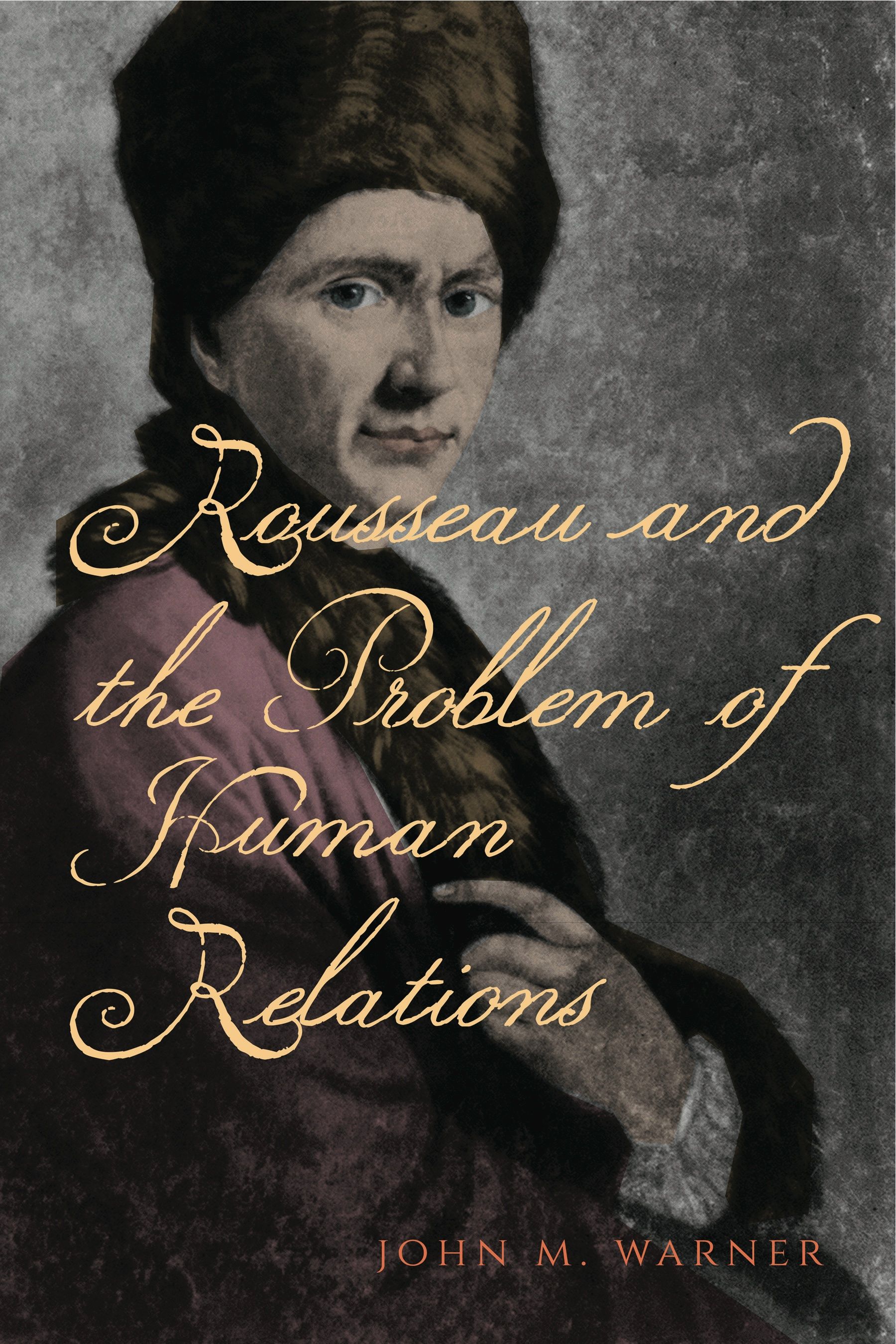
Rousseau and the Problem of Human Relations
Self-interest in social relationships preoccupied Jean-Jacques Rousseau. A person divided between himself and others couldn't achieve wholeness. Warner traces Rousseau's argument via three distinct types of relationships, and he concludes that Rousseau’s failure to recognize the good in human associations is deliberate, self-conscious, and tragic.
eBook
Agri-environmental Management in Europe: Sustainable Challenges and Solutions - From Policy Interventions to Practical Farm Management
Modern agriculture faces many challenges, most crucially food security and the need for sustainable farming systems. Decisions and actions in the agricultural sector come from government and stakeholder policies and on-farm decision-making. This comprehensive monograph provides a perspective on the current state of agri-environmental management in Europe from both a policy and practical perspective. Some of the issues in agriculture discussed are climate change and air pollution, biodiversity, water use and quality, pesticides, pathogens, flooding and drought, energy resources, land use, soil composition, nutrients, livestock, cropping, habitat management and cultural considerations. These important issues form the framework of the book, with each issue discussed in the context of its history, as well as asking the questions \"why is it an issue, \" \"what is the current scientific understanding regarding it, \" and \"how has policy shaped it.\" The book takes an integrated approach by not just examining these issues separately, but examining the whole system in which these problems are manifested. At the end, technologies and solutions, which are currently being developed and could be used in the future, are discussed and the horizon scanned for future environmental challenges. Agri-environmental Management in Europe is an authoritative source for both undergraduate and post-graduate studies that consider the agri-environmental challenges society faces. [Subject: Agricultural Studies, Farming, Environmental Studies, Natural Sciences]
eBook
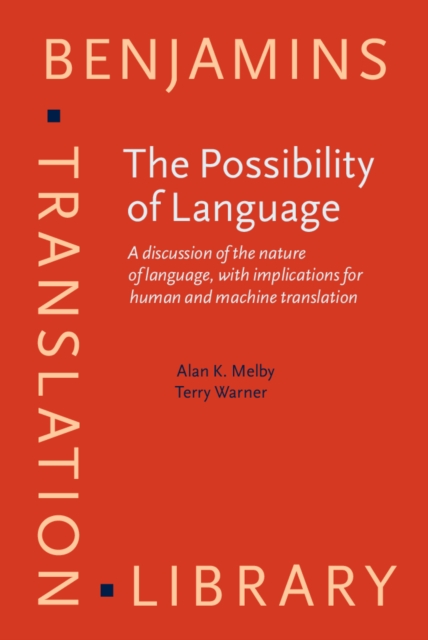
The possibility of language : a discussion of the nature of language, with implications for human and machine translation
This book is about the limits of machine translation. It is widely recognized that machine translation systems do much better on domain-specific controlled-language texts (domain texts for short) than on dynamic general-language texts (general texts for short). The authors explore this general - domain distinction and come to some uncommon conclusions about the nature of language. Domain language is claimed to be made possible by general language, while general language is claimed to be made possible by the ethical dimensions of relationships. Domain language is unharmed by the constraints of objectivism, while general language is suffocated by those constraints. Along the way to these conclusions, visits are made to Descartes and Saussure, to Chomsky and Lakoff, to Wittgenstein and Levinas. From these conclusions, consequences are drawn for machine translation and translator tools, for linguistic theory and translation theory. The title of the book does not question whether language is possible; it asks, with wonder and awe, why communication through language is possible.
eBook

Hiroshima diary : the journal of a Japanese physician, August 6-September 30, 1945
The late Dr.Michihiko Hachiya was director of the Hiroshima Communications Hospital when the world's first atomic bomb was dropped on the city.Though his responsibilities in the appalling chaos of a devastated city were awesome, he found time to record the story daily, with compassion and tenderness.
eBook

Vaults, mirrors, and masks: rediscovering U.S. counterintelligence
Decision makers matching wits with an adversary want intelligence-good, relevant information to help them win. Intelligence can gain these advantages through directed research and analysis, agile collection, and the timely use of guile and theft. Counterintelligence is the art and practice of defeating these endeavors. Its purpose is the same as that of positive intelligence-to gain advantage-but it does so by exploiting, disrupting, denying, or manipulating the intelligence activities of others. The tools of counterintelligence include security systems, deception, and disguise: vaults, mirrors, and masks.In one indispensable volume, top practitioners and scholars in the field explain the importance of counterintelligence today and explore the causes of-and practical solutions for-U.S. counterintelligence weaknesses. These experts stress the importance of developing a sound strategic vision in order to improve U.S. counterintelligence and emphasize the challenges posed by technological change, confused purposes, political culture, and bureaucratic rigidity. Vaults, Mirrors, and Masks skillfully reveals that robust counterintelligence is vital to ensuring America's security.Published in cooperation with the Center for Peace and Security Studies and the George T. Kalaris Memorial Fund, Edmund A. Walsh School of Foreign Service, Georgetown University.
eBook
Life's but a walking shadow
THE Shadow Man is riveting, simply because it is easy to identify with. The urban reality that dominates our existence is John Katzenbach's most powerful weapon. The terror of vandalism, intrusion, and the inescapable fact that we are all prisoners in our own homes are effectively exploited. No one in the novel realizes this more than Simon Winter. Retired from the police force, Winter, like his surname suggests, exists in a cold, isolated world. He attempts suicide but a knock on the door by another terrified senior citizen diverts his attention. He decides to die another day. With The Shadow Man, Katzenbach gives death a name, a personality and a face. Der Schattenmann, as he is known in German, is a Jewish \"catcher\" during the Second World War. According to Frieda Kroner, a survivor, \"... if he saw you, then you died. If you heard his voice, then you died. If he touched you, then you died ...\"
Newspaper Article