
Catalogue Search | MBRL


Are you sure you want to remove the book from the shelf?

{{itemTitle}}
94
result(s) for
"Wartenberg, Thomas E"
Sort by:


Romantic Love and the Feudal Household: Romeo and Juliet as Social Criticism
Romeo and Juliet is one of the first works to emphasize the important place that romantic love holds in the lives of two individuals. Less frequently acknowledged is the role of romantic love in the play's criticism of feudal society. Using the notion of an unlikely couple, I explore the play's critique of feudal society for allowing the antagonism between the two lovers' noble households to undermine the possibility of their finding true love. The play argues for the importance of a strong, centralized state in securing the welfare of its citizens.
Journal Article

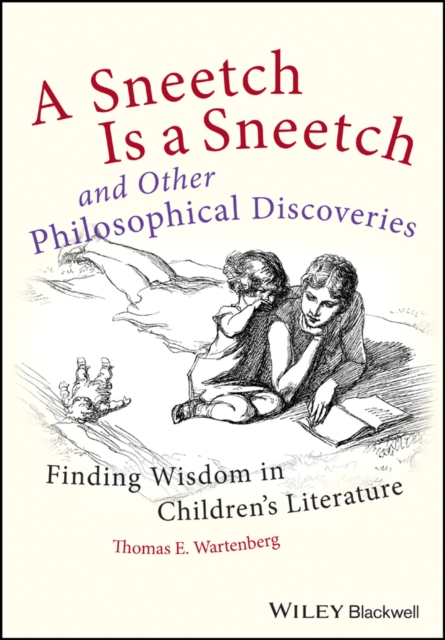
A sneetch is a sneetch and other philosophical discoveries
Taking Picture Books Seriously: What can we learn about philosophy through children's books?This warm and charming volume casts a spell on adult readers as it unveils the surprisingly profound philosophical wisdom contained in children's picture books, from Dr Seuss's Sneetches to William Steig's Shrek!.
eBook
أفكار كبيرة لأطفال صغار : تدريس الفلسفة عن طريق أدب الأطفال
\"أفكار كبيرة لأطفال صغار : تدريس الفلسفة عن طريق أدب الأطفال\" هو كتاب من تأليف توماس إي. وارتينبيرغ، وترجمة أمل إسماعيل. يتناول الكتاب فكرة تدريس الفلسفة للأطفال باستخدام أدب الأطفال، حيث يطرح كيفية استخدام القصص والأدب المخصص للأطفال لتبسيط المفاهيم الفلسفية وجعلها مفهومة وسهلة الاستيعاب للأطفال الصغار، يناقش المؤلف أهمية تدريس الفلسفة للأطفال وكيف يمكن أن تساعدهم في تطوير مهارات التفكير النقدي والتحليلي، عرض المؤلف الطرق المختلفة التي يمكن استخدامها لتدريس الفلسفة للأطفال، مع التركيز على استخدام أدب الأطفال كوسيلة فعالة، يوضح كيفية اختيار الكتب الأدبية المناسبة التي تحتوي على مفاهيم فلسفية يمكن مناقشتها مع الأطفال.
Book
Fight Club
Released in 1999, Fight Club is David Fincher's popular adaption of Chuck Palahniuk's cult novel, and one of the most philosophically rich films of recent years. This is the first book to explore the varied philosophical aspects of the film. Beginning with an introduction by the editor that places the film and essays in context, each chapter explores a central theme of Fight Club from a philosophical perspective. Topics discussed include:
Fight Club, Plato's cave and Descartes' cogito
moral disintegration
identity, gender and masculinity
visuals and narration.
Including annotated further reading at the end of each chapter, Fight Club is essential reading for anyone interested in the film, as well as those studying philosophy and film studies.
eBook
Philosophy in Schools
All of us ponder the big and enduring human questions-Who am I? Am I free? What should I do? What is good? Is there justice? Is life meaningful?-but this kind of philosophical interrogation is rarely carefully explored or even taken seriously in most primary and secondary school settings. However, introducing philosophy to young people well before they get to college can help to develop and deepen critical and creative thinking, foster social and behavioral skills, and increase philosophical awareness.
Philosophy in Schools: An Introduction Philosophers and Teachers is an invaluable resource for students and practitioners who wish to learn about the philosophy for children movement, and how to work its principles into their own classroom activities. The volume provides a wealth of practical information, including how to train educators to incorporate philosophy into their daily lessons, best practices and activity ideas for every grade level, and assessment strategies. With contributions from some of the best practitioners of philosophy for children, Philosophy in Schools is a must-have resource for students of philosophy and education alike.
eBook

From Big Shot to Parent: Penny Serenade's Depiction of Moral Transformation
The stark nature of Roger's comparison of his pre- and post-Trina approaches to life is quite remarkable. It's clear that he thinks his previous assumptions about living, which he characterizes as motivated by his desire to be a big shot, was morally deficient. At least from the perspective engendered by being young Trina's foster father, Roger sees himself as having been \"careless and irresponsible.\" Falling in love with Trina has had a morally salutary effect on Roger, who now, he says, will do anything to be able to continue to parent Trina, though he stops short of saying he'll steal, only admitting to be willing to beg or borrow.Penny Serenade is an exemplary cinematic presentation of the vicissitudes of moral life. Particularly noteworthy is the clarity with which the film depicts a man's moral transformation because of his experience foster parenting a baby. The focus on the change of a man's assumption about the appropriate ideal to strive for in living his life illustrates quite distinctly how a film's content can embody an important ethical experience had by one or more of its characters. Because that alteration in Roger's stance towards life is the result of caring for an adoptive child, the film breaks new ethical grounds.
Journal Article

Need There Be Implicit Narrators of Literary Fictions?
Issue Title: Proceedings of the Thirty-Seventh Oberlin Colloquium in Philosophy: Aesthetics
Journal Article