
Catalogue Search | MBRL


Are you sure you want to remove the book from the shelf?

{{itemTitle}}
1,148
result(s) for
"Watson, Anne"
Sort by:
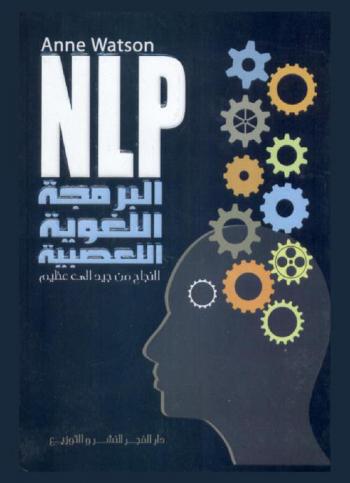
البرمجة اللغوية العصبية إن إل بي NLP : النجاح من جيد إلى عظيم
سوف تجد ضالتك في هذا الكتاب \" البرمجة اللغوية العصبية NLP \" مع NLP تستطيع أن ترتقي بأهدافك وتتصاعد في أدائك وتتقدم كل الصفوف وتنجح في كل التحديات سوف تكتشف كيف أنك تزيد من ثقتك بنفسك وتحسن من مهاراتك على التأثير والاقناع وتنشئ الوئام والألفة مع الآخرين وتكون أكثر فعالية في اتصالاتك وتتناول مواقف الصراع بقوة وثبات وتثق في تخميناتك وتوقعاتك مع الأدوات والأساليب التى يتضمنها NLP ، كل شئ يلزمك للتفوق وللتألق وللنجاح اللافت في حياتك المهنية والشخصية هو الآن بين يديك.
BOOK

Acalabrutinib May Offer a New Therapeutic Approach for Consolidation and Maintenance of Primary CNS Lymphoma with Expression of MYD88 and CD79B Gene Variants: A Case Report and Literature Review of Primary CNS Lymphoma in the BTKi Era
We present the case of a patient with primary CNS lymphoma (PCNSL), with MYD88 and CD79B gene variants, who was unable to complete standard induction and consolidation treatment due to toxicity and co-morbidities after three cycles of MATRix. Although he had responded to truncated induction, acalabrutinib, the BTK inhibitor, was used in an attempt to consolidate and maintain his response. He has an ongoing remission at 18 months of follow-up. Following the case presentation, we provide a review of PCNSL, the evolution of therapy, and how BTK inhibitors are now emerging treatments incorporated into the salvage of relapsed and refractory disease and into first-line treatment in some clinical trials. This is the first reported case in the literature of acalabrutinib use for consolidation and maintenance of PCNSL. We hope this can support clinical trial design for BTKi use in this setting in the future.
Journal Article

Dictionary of media and communication studies
\"The Watson and Hill Dictionary of Media and Communication Studies has served as a gateway into the study of intercultural communication, public relations and marketing communications since 1984. While this 9th edition explores the profound shifts that have taken place in the world of communication in recent years, the purpose of the new edition is not necessarily to keep abreast of every new media event but to make its twenty-first century readers more media literate, as well as more critical consumers of modern news.\"
Book

Towards an understanding of the burdens of medication management affecting older people: the MEMORABLE realist synthesis
Background
More older people are living in the community with multiple diagnoses and medications. Managing multiple medications produces issues of unrivalled complexity for those involved. Despite increasing literature on the subject, gaps remain in understanding how, why and for whom complex medication management works, and therefore how best to improve practice and outcomes. MEMORABLE, MEdication Management in Older people: Realist Approaches Based on Literature and Evaluation, aimed to address these gaps.
Methods
MEMORABLE used realism to understand causal paths within medication management. Informed by RAMESES (Realist And Meta-narrative Evidence Synthesis: and Evolving Standards) guidelines, MEMORABLE involved three overlapping work packages: 1) Realist Review of the literature (24 articles on medication management exploring causality)
;
2) Realist Evaluation (50 realist-informed interviews with older people, family carers and health and care practitioners, explaining their experiences)
;
and 3) data synthesis and theorising from 1) and 2).
Results
Medication management was viewed from the perspective of ‘implementation’ and structured into five stages: identifying a problem (Stage 1), getting a diagnosis and/or medications (Stage 2), starting, changing or stopping medications (Stage 3), continuing to take medications (Stage 4), and reviewing/reconciling medications (Stage 5).
Three individual stages (1, 3 and 4) are conducted by the older person sometimes with family carer support when they balance routines, coping and risk. Stages 2 and 5 are interpersonal where the older person works with a practitioner-prescriber-reviewer, perhaps with carer involvement.
Applying Normalisation Process Theory, four steps were identified within each stage: 1) sense making: information, clarification; 2) action: shared-decision-making; 3) reflection/monitoring; and 4) enduring relationships, based on collaboration and mutual trust.
In a detailed analysis of Stage 5: Reviewing/reconciling medications, adopting the lens of ‘burden’, MEMORABLE identified five burdens amenable to mitigation: ambiguity, concealment, unfamiliarity, fragmentation and exclusion. Two initial improvement propositions were identified for further research: a risk screening tool and individualised information.
Conclusions
Older people and family carers often find medication management challenging and burdensome particularly for complex regimens. Practitioners need to be aware of this potential challenge, and work with older people and their carers to minimise the burden associated with medication management.
Trial registration
PROSPERO
2016:CRD42016043506
.
Journal Article



Tick, Tick, Boom: Simulating Human Rights Decisions in the Classroom
This article presents an original simulation, called Tick, Tick, Boom, which is designed to help students examine the use of torture in counterterrorism interrogations. The simulation is designed to be embedded in a larger array of course content but needs only one 50-minute class period to play. Unlike many similar games, students participate individually, learning the consequences of their actions through dice rolls. The article summarizes the gameplay and debriefing, presents a brief assessment of the simulation as an activity, and offers suggestions for future extensions.
Journal Article


Appreciating mathematical structure for all
The authors take mathematical structure to mean the identification of general properties which are instantiated in particular situations as relationships between elements or subsets of elements of a set. Because they take the view that appreciating structure is powerfully productive, attention to structure should be an essential part of mathematical teaching and learning. This is not to be confused with teaching children mathematical structure. They observe that children from quite early ages are able to appreciate structure to a greater extent than some authors have imagined. Initiating students to appreciate structure implies, of course, that their appreciation of it needs to be cultivated in order to deepen and to become more mature. The authors first consider some recent research that supports this view and then go on to argue that unless students are encouraged to attend to structure and to engage in structural thinking they will be blocked from thinking productively and deeply about mathematics. They provide several illustrative cases in which structural thinking helps to bridge the mythical chasm between conceptual and procedural approaches to teaching and learning mathematics. These are drawn from various aspects of mathematics: patterns, children's arithmetic, angle sums, quadratics, multiplicative structure and geometric structure. Finally the authors place their proposals in the context of how several writers in the past have attempted to explore the importance of structure in mathematics teaching and learning. [Author abstract, ed]
Journal Article