
Catalogue Search | MBRL


Are you sure you want to remove the book from the shelf?

{{itemTitle}}
209
result(s) for
"Watson, Kelly L"
Sort by:


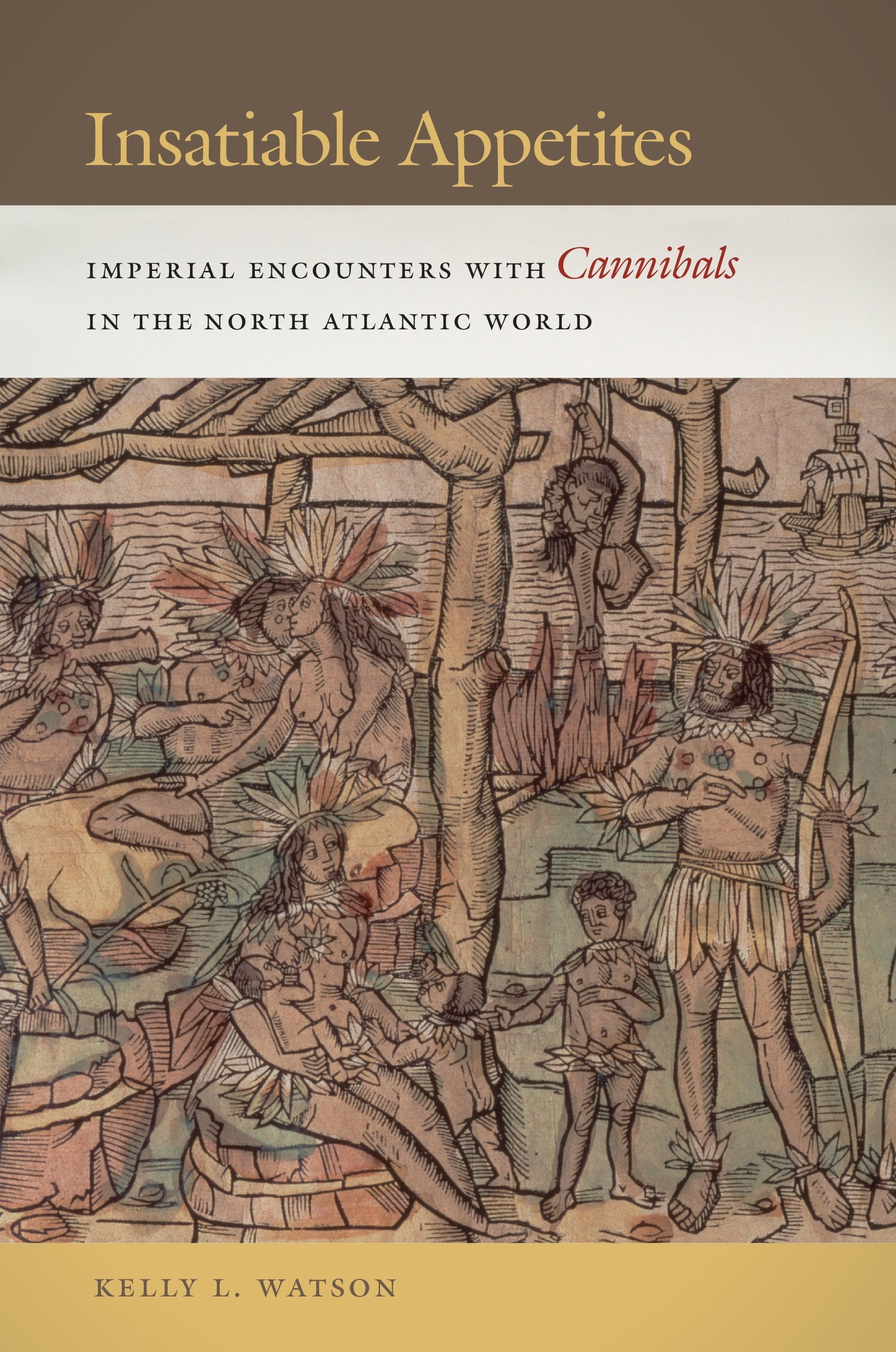
Insatiable Appetites
Cannibalism, for medieval and early modern Europeans, was synonymous withsavagery. Humans who ate other humans, they believed, were little better than animals. The European colonizers who encountered Native Americans described them as cannibals as a matter of course, and they wrote extensively about the lurid cannibal rituals they claim to have witnessed.
In this unique, comparative history of cross-cultural encounters in the early north Atlantic world, Kelly L. Watson argues that the persistent rumors of cannibalism surrounding Native Americans served a specific and practical purpose for European settlers. These colonizers had to forge new identities for themselves in the Americas and find ways to not only subdue but also co-exist with native peoples. They established hierarchical categories of European superiority and Indian inferiority upon which imperial power in the Americas was predicated.
In her close read of letters, travel accounts, artistic renderings, and other descriptions of cannibals and cannibalism, Watson focuses on how gender, race, and imperial power intersect within the figure of the cannibal. Watson reads cannibalism as a part of a dominant European binary in which civilization is rendered as male and savagery is seen as female, and she argues that as Europeans came to dominate the New World, they continually rewrote the cannibal narrative to allow for a story in which the savage, effeminate, cannibalistic natives were overwhelmed by the force of virile European masculinity. Original and historically grounded,Insatiable Appetitesuses the discourse of cannibalism to uncover the ways in which difference is understood in the West.
eBook

Mary Kittamaquund Brent, \The Pocahontas of Maryland\
This essay situates the life of Mary Kittamaquund Brent, the so-called \"Pocahontas of Maryland,\" within the larger context of intercultural diplomacy in seventeenth-century Maryland. It argues that the marriage between Mary, an eleven-year-old girl and the daughter of the Tayac (chief) of the Piscataway Confederacy, and Giles Brent, a forty-year-old member of a wealthy English Catholic family, demonstrates that sex and reproduction were key strategies for establishing diplomatic relationships between groups and for securing power in a particularly tumultuous time. Illuminating Mary Kittamaquund Brent's position as an embodied locus of power struggles between Chesapeake tribes and Anglo-Marylanders discloses both the role of Indigenous women in diplomacy and the importance of kinship in interethnic alliances. This article provides a brief background of Piscataway and Maryland colonial history, contextualizes the marriage of Giles and Mary Kittamaquund Brent, analyzes the place of sex and reproduction in western shore diplomacy, and considers Mary Kittamaquund Brent's place in the history of the seventeenth-century Chesapeake.
Journal Article


Inventing Cannibals
In a famous and gruesome tale from ancient Mediterranean mythology, the god Kronos (Saturn in the Roman incarnation) swallowed his children out of fear that he would lose his power at the hands of his son, as had been prophesied by his parents. Prior to eating his offspring, he had also castrated his father, Uranus, in a fit of jealous rage. After watching Kronos consume all but one of their children, Kronos’s sister-wife, Rhea, tricked him into eating a stone instead of their son Zeus. Later, as predicted, Zeus took revenge on his father and freed his brothers and sisters
Book Chapter
Converting Cannibals
Given the number of topics that appear in the Bible, it should come as no surprise that cannibalism is mentioned several times.¹ Most references to man-eating are found in the Old Testament and describe the punishments and deprivations experienced by nonbelievers. Cannibalism appears as both a punishment for misdeeds and a reason to punish. For example, the prophet Jeremiah proclaimed that God was going to punish the people of the Valley of Ben Hinnom by “mak[ing] them eat the flesh of their sons and the flesh of their daughters and all shall eat the flesh of their neighbors in the
Book Chapter
Living with Cannibals
In 1729 Jonathan Swift anonymously published his now famous work,A Modest Proposal for Preventing the Children of Poor People From being a Burthen to their Parents or the Country, and for making them Beneficial to the Publick, in response to the growing deprivation and desperation of the Irish. In this satirical essay Swift suggests that the Irish eat poor children as a way to solve both population problems and hunger. Swift was quite aware of the tropes of cannibalism and the tendency to denigrate peoples and cultures through anthropophagous accusations. He insists that he learned about the supposed deliciousness
Book Chapter