
Catalogue Search | MBRL


Are you sure you want to remove the book from the shelf?

{{itemTitle}}
375
result(s) for
"Watson, Sean"
Sort by:

Repurposing Hydrocarbon Wells for Geothermal Use in the UK: The Onshore Fields with the Greatest Potential
One potential opportunity for the decarbonisation of heat supply in the UK is the repurposing of onshore hydrocarbon wells for the production and/or storage of geothermal heat. This paper reports an investigation into the most favourable candidate sites for such repurposing, taking into consideration the available thermal energy outputs and technological options for heat use. A GIS mapping model was generated, combining public domain data on onshore wells and production data from onshore fields, provided by the UK Oil and Gas Authority, with available subsurface temperature data. This model has thus integrated information on location, depth, operational status, and bottom-hole temperature for onshore hydrocarbon wells with production rates from onshore fields in the UK. Of the 2242 onshore hydrocarbon wells thus reported, 560 have the potential to be repurposed, 292 of which are currently operating. Using aggregated water production data for all operating wells in each field, the fields with the greatest potential for geothermal repurposing are ranked. Two of these, the Wytch Farm and Wareham fields, are selected for more detailed analysis. Wytch Farm, the largest onshore oilfield in western Europe, produces water at ~65 °C that might yield a feasible thermal power output of ~90 MW. If an end use could be found where it might substitute for burning of natural gas, the value of this output would be ~£90,000 per day or ~£30 million per year. However, this field is located in a protected landscape where local development would be restricted by planning regulations. The Wareham field is not in a protected landscape, but the low temperature, ~44 °C, and low flow rate limit the scope of potential end uses. Nonetheless, these and the other highly ranked fields have potential heat outputs that are significant compared with other geothermal heat projects, thus offering the possibility of making useful contributions to the decarbonisation of UK energy use.
Journal Article

Experimental validation of computerised models of clustering of platelet glycoprotein receptors that signal via tandem SH2 domain proteins
The clustering of platelet glycoprotein receptors with cytosolic YxxL and YxxM motifs, including GPVI, CLEC-2 and PEAR1, triggers activation via phosphorylation of the conserved tyrosine residues and recruitment of the tandem SH2 (Src homology 2) domain effector proteins, Syk and PI 3-kinase. We have modelled the clustering of these receptors with monovalent, divalent and tetravalent soluble ligands and with transmembrane ligands based on the law of mass action using ordinary differential equations and agent-based modelling. The models were experimentally evaluated in platelets and transfected cell lines using monovalent and multivalent ligands, including novel nanobody-based divalent and tetravalent ligands, by fluorescence correlation spectroscopy. Ligand valency, receptor number, receptor dimerisation, receptor phosphorylation and a cytosolic tandem SH2 domain protein act in synergy to drive receptor clustering. Threshold concentrations of a CLEC-2-blocking antibody and Syk inhibitor act in synergy to block platelet aggregation. This offers a strategy for countering the effect of avidity of multivalent ligands and in limiting off-target effects.
Journal Article

Repurposing the Knutsford-1 borehole as a deep borehole heat exchanger with consideration of palaeoclimate corrections to heat flow in the Cheshire Basin
Subsurface thermal data from UK boreholes typically lack palaeoclimatic corrections, leading to underestimations in heat flow. This can significantly affect predicted geothermal resources and system performance, creating a false perception of energy limitations. This study evaluates the impact of palaeoclimate corrections on geothermal performance in an onshore setting; focusing on the potential for a well to be re-entered and repurposed as a deep borehole heat exchanger (DBHE). Using the Knutsford-1 borehole, this re-evaluation for palaeoclimatic impacts on heat flow shows that corrected heat flows (52 mW/m
2
) exceed uncorrected values (46 mW/m
2
). In a steady state conductive model, temperature predictions based on the corrected heat flow align more closely to the recorded temperature data. Moreover, transient DBHE simulations using OpenGeoSys software over 25 years reveal a minimum 17 kW increase in thermal yield, highlighting the operational implications and benefits of these corrections. With thousands of legacy boreholes worldwide, integrating palaeoclimate corrections into geothermal assessments could reveal substantial untapped energy potential. By unlocking previously overlooked geothermal potential, this research highlights how accurate subsurface (re)assessments can transform legacy infrastructure into a cost-effective, sustainable energy source – demonstrating that with better data and a more holistic approach, existing wells can support low-carbon heat production.
Journal Article
Permeability and Mineralogy of the Újfalu Formation, Hungary, from Production Tests and Experimental Rock Characterization: Implications for Geothermal Heat Projects
Hundreds of geothermal wells have been drilled in Hungary to exploit Pannonian Basin sandstones for district heating, agriculture, and industrial heating projects. Most of these sites suffer from reinjection issues, limiting efficient use of this vast geothermal resource and imposing significant extra costs for the required frequent workovers and maintenance. To better understand the cause of this issue requires details of reservoir rock porosity, permeability, and mineralogy. However, publicly available data for the properties of reservoir rocks at geothermal project sites in Hungary is typically very limited, because these projects often omit or limit data acquisition. Many hydrocarbon wells in the same rocks are more extensively documented, but their core, log, or production data are typically decades old and unavailable in the public domain. Furthermore, because many Pannonian sandstone formations are poorly consolidated, coring was always limited and the collected core often unsuitable for conventional analysis, only small remnant fragments typically being available from legacy hydrocarbon wells. This study aims to reduce this data gap and to showcase methods to derive reservoir properties without using core for flow experiments. The methods are thin-section analysis, XRD analysis and mercury intrusion porosimetry, and X-CT scanning followed by numerical flow simulation. We validate our results using permeability data from conventional production testing, demonstrating the effectiveness of our method for detailed reservoir characterization and to better constrain the lateral variation in reservoir properties across the Pannonian Basin. By eliminating the need for expensive bespoke coring to obtain reservoir properties, such analysis will contribute to reducing the capital cost of developing geothermal energy projects, thus facilitating decarbonization of global energy supply.
Journal Article
Reply to Comment by Alison A. Monaghan, David A.C. Manning, and Zoe K. Shipton on ‘Repurposing Hydrocarbon Wells for Geothermal Use in the UK: The Onshore Fields with the Greatest Potential, by Watson et al. (2020)’
[1] state that ‘The cost of the [GGERFS] Observatory includes boreholes and compounds for research incorporating numerous sensors, a wide range of open data including environmental baseline boreholes and monitoring equipment, a contribution to IT infrastructure for open data etc.’ [2] made clear by citation of Watson and Westaway [11] that this potential ~8 kW estimate was for the sustainable thermal power output that might be achieved if particular GGERFS wells were to be used for groundwater production and reinjection, and was based on a simple calculation reported by [11]. Since similar simple calculations were applied to many other sites to create Figure 11, this was a fair comparison. Monaghan, A.A.; Starcher, V.; Dochartaigh, B.O.; Shorter, K.; Burkin, J. UK Geoenergy Observatories: Glasgow Geothermal Energy Research Field Site: Science Infrastructure Version 2; Open Report OR/19/032; British Geological Survey: Nottingham, UK, 2019; 49p, Available online: http://nora.nerc.ac.uk/id/eprint/522814/1/OR_19_032_GGERFS_Science_infrastructure_reportv11.pdf (accessed on 5 September 2020).
Journal Article

Alignment of the Starlings: Learning With Generative AI
I will argue that answers to normative questions concerning the place of generative AI in learning rest on answers to ontological questions regarding (1) precisely what is happening when a human ‘interacts’ with generative AI and (2) What is distinctive about organic learning as opposed to currently existing ‘machine learning’ (3) What is the relevant context within which we must understand this pedagogic encounter? In order to think clearly about the first of these questions, we are best served by turning to process philosophy to deploy a conception of ‘individuation’ that makes some sense of the human/AI event. In relation to the second question I argue that differences between organic and currently existing machine learning pertain, most importantly, to the question of ‘creativity’. Corporate generative AI is driven by entropic repetition—the death instinct to use Freud's formulation. This is antithetical to creativity in learning and results in profound pedagogic, and political, challenges. There is nothing, in principle, preventing the development of truly creative hybrid AI individuation, however (My position is firmly posthumanist). Rather, it is the location of AI development within the context of the business models of the capitalist extinction event that makes this an unlikely development. The latter's predictive, automating algorithms are inherently antithetical to the animate novelty we value (I have chosen to employ the, strictly descriptive, ‘capitalist extinction event’ to designate out time, and recommend it to others).
Journal Article
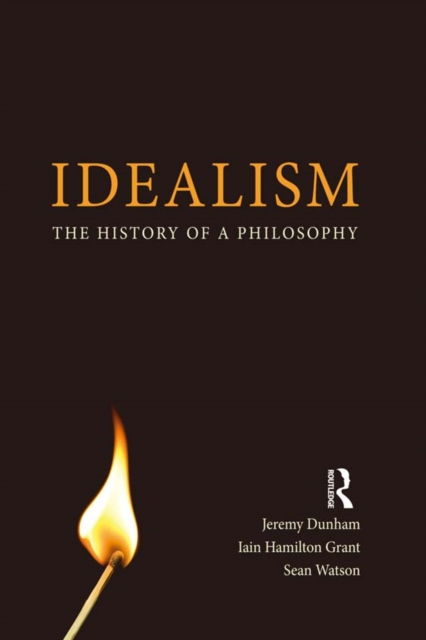
Idealism
The rediscovery of Idealism is an unmistakable feature of contemporary philosophy. Heavily criticised by the dominant philosophies of the twentieth century, it is being reconsidered in the twenty-first as a rich and untapped resource for contemporary philosophical arguments and concepts. Idealism is philosophy on a grand scale, combining micro and macroscopic problems into systematic accounts of everything from the nature of the universe to the particulars of human feeling. In consequence, it offers perspectives on everything from the natural to the social sciences, from ecology to critical theory. Since Idealism is sometimes considered antiscience, however, this book places particular emphasis on its naturalism. Written for a broad readership, the book provides the fullest possible introduction to this most philosophical of philosophical movements.
eBook

Fractal zeta functions and complex dimensions of Ahlfors metric measure spaces
While classical analysis dealt primarily with smooth spaces, much research has been done in the last half century on expanding the theory to the nonsmooth case. Metric Measure spaces are the natural setting for such analysis, and it is thus important to understand the geometry of subsets of these spaces. In this paper, we focus on the geometry of Ahlfors regular spaces, Metric Measure spaces with an additional regularity condition. Historically, fractals have been studied using different ideas of dimension which have all proven to be unsatisfactory to some degree. The theory of complex dimensions, developed by M. L. Lapidus and a number of collaborators, was developed in part to better understand fractality in the Euclidean case and seeks to overcome these problems. Of particular interest is the recent theory of complex dimensions in higher-dimensional Euclidean spaces, as studied by M. L. Lapidus, G. Radunović, and D. Žubrinić, who introduced and studied the properties of the distance and tube zeta functions, _A and _A . We show that this theory of complex dimensions naturally generalizes to the case of Ahlfors regular spaces, as the distance and tube zeta functions can be modified to apply to these spaces and all of its main properties carry over. We also provide a selection of examples in Ahlfors spaces, as well as hints that the theory can be expanded to a more general setting.
Journal Article

