
Catalogue Search | MBRL


Are you sure you want to remove the book from the shelf?

{{itemTitle}}
742
result(s) for
"Weaver, John C"
Sort by:

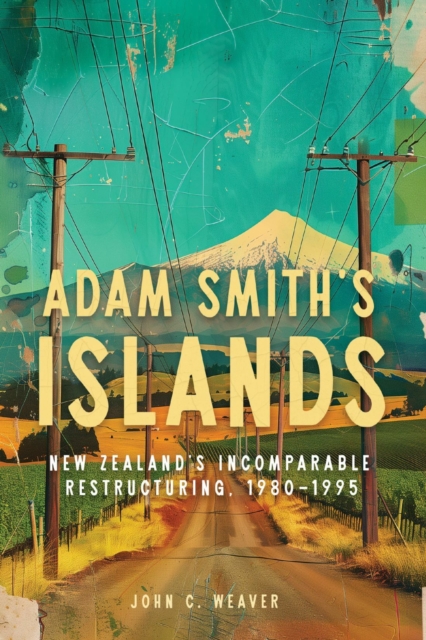
Adam Smith's Islands
\"From the late 1970s into the 1990s, many developed countries restructured relations between state and economy. Among them, New Zealand went far, fast, and left a clear trail, making it possible to shift attention from outside commentaries and critiques to inside expositions, debates among ministers and public servants over options, plus mistakes, surprises, accomplishments, and legacies. The general aim is to advance scholarship on economic restructuring activities prominent in the 1980s (in OECD and former Warsaw Pact) using an in-depth case study of New Zealand. The coverage is considerable: inflation fighting, central banking and monetary policy, the corporatization of government run businesses (several banks, telephone system, electricity, plantation forests and pulp and paper, coal mines, railway system, tourism hotels), reviews of social welfare and health care, changing a craft trade union system, and the sale of certain state assets (Air New Zealand, New Zealand Steel, Petrocorp, a shipping company, state insurance, and forestry rights). The combination of regulations and mounting evidence that the state had not functioned as an effective manager infuriated many employers, splitting the business community and primary producers into defenders of subsidisation and free-market insurgents. Realists in politics and the public service recognised that after years of protection and subsidisation deep changes could only be unpleasant. The unanswerable question was how long would social adjustments last? Adam Smith’s Islands settles on the verifiable. Attention to global economic shocks as well as distinctive local practices in finance, trade, labour relations, and social welfare can re-focus attention from neoliberal public intellectuals to local problem solving and a fading consensus around the notion that state actions were fair and effective. Scope is one dimension. Depth is another. Senior public servants involved in restructuring sent records to the archives undisturbed from file cabinets. Thus, the top letter, minute, or policy paper in a bundle was the most recent, the bottom item the oldest. Marginal comments (candid), sticky notes, memos to file, faxes, and other materials were present. This book draws on direct primary sources from roughly twenty-five state collections in the national archives and fifteen deposits of personal papers at university libraries and the national library. An archival cornucopia supports a narrative that has little in common with publications by authors of intellectual histories of neoliberalism. They touch on the economic transformations experienced in the late twentieth century, summoning the label ‘neoliberal.’ While this book shares with them a belief that the 1980s was remarkably important period because of adjustments to the state in many countries, this book emphasises context. We need to understand better why core institutions, cultural beliefs, and practices shed some of their once potent legitimacy. New ideas did not supplant old practices merely on account of persuasive or moneyed advocates and lobbies. Adam Smith’s Islands settles on the verifiable. Attention to global economic shocks as well as distinctive local practices in finance, trade, labour relations, and social welfare can re-focus attention from neoliberal public intellectuals to local problem solving and a fading consensus around the notion that state actions were fair and effective.\"--
eBook


Great Land Rush and the Making of the Modern World, 1650-1900
He also underscores the tragic history of the indigenous peoples of these regions and shoes how they came to lose \"possession\" of their land to newly formed governments made up of Europeans with European interests at heart. Weaver shows that the enormous efforts involved in defining and registering large numbers of newly carved-out parcels of property for reallocation during the Great Land Rush were instrumental in the emergence of much stronger concepts of property rights and argues that this period was marked by a complete disregard for previous notions of restraint on dreams of unlimited material possibility. Today, while the traditional forms of colonization that marked the Great Land Rush are no longer practiced by the European powers and their progeny in the new world, the legacy of this period can be seen in the western powers' insatiable thirst for economic growth, including newer forms of economic colonization of underdeveloped countries, and a continuing evolution of the concepts of property rights, including the development and increasing growth in importance of intellectual property rights.
eBook

Sadly Troubled History
In a study of nearly 7000 suicides from 1900 to 1950, John Weaver documents the challenges that ordinary people experienced during turbulent times and, using witnesses' testimony, death bed statements, and suicide notes, reconstructs individuals' thoughts as they decide whether to endure their suffering. Bridging social and medical history, Weaver presents an intellectual and political history of suicide studies, a revealing construction and deconstruction of suicide rates, a discussion of gender, life stages, and socio-economic circumstances in relation to suicide patterns, reflections on reasoning processes and intent, and society's reactions to suicide, including medical intervention.
eBook

Sorrows of a Century
In Sorrows of a Century, John Weaver describes how personal relationships, work, poverty, war, illness, and legal troubles have driven thousands to despair. His study is set in twentieth-century New Zealand where - in spite of high standards of living and a commitment to social welfare - citizens have experienced the profound losses and stresses of the human condition. Focusing on New Zealand because it has the most comprehensive and accessible coroners' records, Weaver analyzes a staggering amount of information to determine the social and cultural factors that contribute to suicide rates. He examines the country's investigations into sudden deaths, places them within the context of major events and societal changes, and turns to witnesses' statements, suicide notes, and medical records to remark on prevention strategies. His extensive survey of twelve thousand cases also provides an insightful assessment of psychiatry and psychology in the last century. In reviewing the motives and methods of suicide, Weaver points out the complications facing deterrence. Moving beyond the timeless present of the social sciences and the irrationality emphasized in psychology, Sorrows of a Century marshals testimony to highlight the historical context and rational conduct behind suicide.
eBook

Country Living, Country Dying: Rural Suicides in New Zealand, 1900-1950
The quality of rural living has long attracted contradictory assessments. In New Zealand where farm produce figured pre-eminently in the economy, opposing assessments abounded. Politicians tended to gloss over rural hardships, favoured an Arcadian myth, and initiated schemes to alleviate poverty by putting people on the land; dissenting portrayals emerged from the countryŠs realist literature. Historians have taken sides but, in common with social historians everywhere, their assessments of the quality of life turn on fragmentary evidence. Moreover, the typicality of well-documented cases is open to question. First hand accounts by farmers, farm labourers, and farm women are scarce. A study of inquests into the suicides of over a thousand rural New Zealanders overcomes a dearth of information and provides nation-wide coverage over many decades. WitnessesŠ depositions afford glimpses into the material and emotional crises during booms, slumps, depressions, and wars. Rural men had a much higher suicide rate than urban men. Farm operators endured debt and commodity price fluctuations, while farm labourers—essential to farm profitability—faced emotional, financial, and physical hazards from youth to old age. Rural life for many offered no unqualified release from the stresses of the modern age.
Journal Article
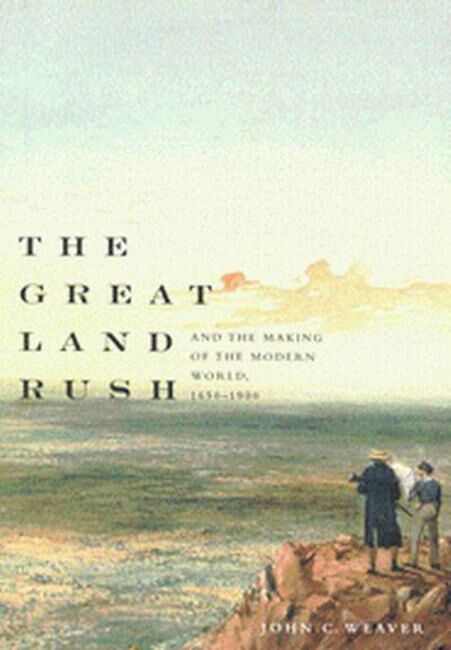
Great Land Rush and the Making of the Modern World, 1650-1900
He also underscores the tragic history of the indigenous peoples of these regions and shoes how they came to lose \"possession\" of their land to newly formed governments made up of Europeans with European interests at heart. Weaver shows that the enormous efforts involved in defining and registering large numbers of newly carved-out parcels of property for reallocation during the Great Land Rush were instrumental in the emergence of much stronger concepts of property rights and argues that this period was marked by a complete disregard for previous notions of restraint on dreams of unlimited material possibility. Today, while the traditional forms of colonization that marked the Great Land Rush are no longer practiced by the European powers and their progeny in the new world, the legacy of this period can be seen in the western powers' insatiable thirst for economic growth, including newer forms of economic colonization of underdeveloped countries, and a continuing evolution of the concepts of property rights, including the development and increasing growth in importance of intellectual property rights.
eBook

Sadly Troubled History
More people die by suicide each year than by homicide, wars, and terrorist attacks combined. Witnesses and survivors are left perplexed and troubled. Doctors, clinical psychologists, and social workers try to deal with it through their professional routines; sociologists and psychiatrists attempt to provide theoretical explanations of it. In a study of nearly 7000 suicides from 1900 to 1950 in New Zealand and Queensland, Australia, John Weaver documents the challenges that ordinary people experienced during turbulent times and, using witnesses' testimony, death bed statements, and suicide notes, reconstructs individuals' thoughts as they decide whether to endure their suffering. Bridging social and medical history, Weaver presents an intellectual and political history of suicide studies, a revealing construction and deconstruction of suicide rates, a discussion of gender, life stages, and socio-economic circumstances in relation to suicide patterns, reflections on reasoning processes and intent, and society's reactions to suicide, including medical intervention. A Sadly Troubled History marshals thousands of suicide inquests, replete with observations on the anxieties of unemployment, the heartbreak of romantic disappointment, the pain of domestic turmoil, and the torments of mental illness, to demonstrate that history - although, like biochemistry, sociology, psychology, and psychiatry, reliant on remarkable yet imperfect information - can contribute to a better understanding of the suicidal act and its motives.
eBook
