
Catalogue Search | MBRL


Are you sure you want to remove the book from the shelf?

{{itemTitle}}
458
result(s) for
"Weaver, Mary Anne"
Sort by:


WHY DO THEY GO?
was a dreamer, with Che Guevara looks--a jet-black beard and eyes--who built a new persona online, as a Muslim warrior riding into battle in the back of an open-bed truck, dressed in black, his long hair blowing in the breeze, with an AK-47 hanging from his shoulder, strapped to his back. He had just turned 22--the product of British private schools, a computer aficionado working in...
Newspaper Article

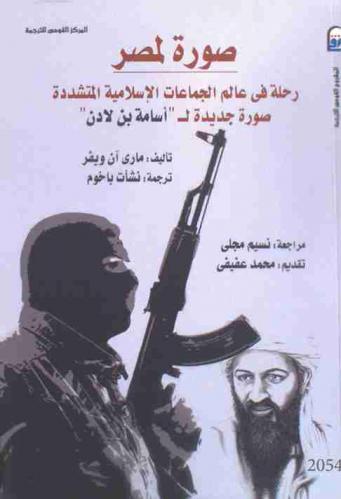
صورة لمصر : رحلة في عالم الجماعات الإسلامية المتشددة : صورة جديدة لـ \أسامة بن لادن\
بينما كان السادات يغادر القاهرة على متن طائرة الخطوط الجوية المصرية رقم واحد، كانت انتخابات اتحاد جامعة الإسكندرية تجري، تلك الانتخابات التي أثبتت أنها نقطة تحول، حين اكتسحت الجماعات الإسلامية كل التيارات الأخرى، وسيطرت على اتحادات كليات القمة كالطب والصيدلة والهندسة والحقوق، حيث بدأت الجماعات وبسرعة في فرض إراداتها، وكانت حملتهم تتم تحت قيادة رجل دين أعمى يدعي الشيخ عمر عبد الرحمن، كان يملك القليل من الشهرة في تلك الفترة خارج صعيد مصر، ولم يكن الهدف من وراء هذا الكتاب أن يكون بحثاً أكاديمياً أو حساباً دقيقاً، إنه ببساطة شديدة رحلة امرأة عبر عالم الميلشيات الإسلامية المتطرفة.
BOOK
Her Majesty's Jihadists
More British Muslims have joined Islamist militant groups than serve in the country's armed forces. How to understand the pull of jihad.
Newspaper Article

Children with visible congenital defects: An exploratory study of parents' experience
The qualitative study examines the experience of parents who have had a child born with a visible physical defect. The literature on the special/handicapped child assumes the impact on parents' emotional world is the same regardless of type of defect or sex of parent. Impact of the defect on parents' social world is neglected. A phenomenological perspective based in Object Relations psychoanalytic theory was used. The widespread theory of Solnit & Stark (1961) states that the mother must mourn the 'loss of the perfect baby' before she can invest in the baby with the defect. Their theory, intended to speak to the experience of mothers' whose babies are born with obvious mental retardation, has been applied to mothers whose babies arrive with any defective condition. Fifteen parental couples with children (9 mo.-6 yrs.) born with visible defects participated. Defects included cleft lip & palate, limb reduction & port wine stain. In depth interviews were conducted with each parent. The analysis used Glaser & Strauss' (1967) 'grounded theory' methodology. Descriptive themes portraying the parents' emotional experience were 'dislocation', 'emerging', 'relocating' & 'relocated'. Three phenomenological aspects of the self were involved--psychological, developmental & social. The dislocation was greater for mothers; fathers construct their experience differently from mothers. Throughout the process of relocating there was a continuum of difficulty & success in coping with the many emotional challenges they faced. An unexpected finding was that mothers showed varying capacities to help their child 'face the public'. There were 'preparing', 'wait and see' & 'non-preparing' mothers. The defect was experienced phenomenologically by the parents as an attack, as harming them because it appeared to mirror something bad about them. This was particularly intense for the mothers, the defect blamed the mothers. As mothers & fathers relocated, the defect being experienced as harming or blaming lessened; the impact of the defect faded. The analysis of these parents' experience does not support the ubiquitous application of Solnit & Stark's theory to all impairing conditions. The parents, but mothers especially, were grieving a loss of self & were involved in coping with multifaceted losses & anxieties created by the baby that did arrive than in mourning the baby that did not arrive.
Dissertation

HOW HE GOT AWAY
Well past midnight one day in early December 2001, according to US intelligence officials, Osama bin Laden sat with a group of top aides - including members of his elite international 055 Brigade - in the mountainous redoubt of Tora Bora in the White Mountains of eastern Afghanistan. Outside, it was blustery and bitterly cold; many of the passes were already blocked by snow. But inside the cave complex, where bin Laden had sought his final refuge from the American war in Afghanistan - a war Washington had initiated that October in answer to the September 11 terrorist attacks - bin Laden munched on olives and sipped sugary mint tea. He was dressed in his signature camouflage jacket, and a Kalashnikov rested by his side. Captured al-Qa'ida fighters, interviewed separately, told American interrogators that they recalled an address that bin Laden had made to his followers just before dawn. It concerned martyrdom. In defiance of American bombs, including a 6800kg \"daisy cutter\" raining from the sky and pulverising several of the Tora Bora caves, the 44-year-old Saudi multimillionaire appeared to be supremely confident. It was also during the war years that bin Laden first met Khalis; the two men became very close friends. Indeed, when bin Laden returned to Afghanistan in May 1996 from his base in the Sudan (after the US insisted that the Sudanese government expel him), it was Khalis, along with two of his key commanders - Hajji [Hajji Abdul Qadir] and Engineer Mahmoud - who first invited him. And it was also Khalis who, later that year, would introduce bin Laden to the one-eyed leader of the Taliban, Mullah Muhammad Omar, who had fought with Khalis - and would later become his protege - during the jihad. Defending its decision not to commit forces to the Tora Bora campaign, members of the [Bush] administration - including the President, the Vice President and General [Tommy Franks] - have continued to insist, as recently as the last presidential campaign, that there was no definitive information that bin Laden was even in Tora Bora in December 2001. \"We don't know to this day whether Mr bin Laden was at Tora Bora,\" Franks wrote on October 19, 2004, in The New York Times. Intelligence assessments on the al-Qa'ida leader's location varied, Franks continued, and bin Laden was \"never within our grasp\". It was not until this northern spring that the Pentagon, after a Freedom of Information Act request, released a document to Associated Press that says Pentagon investigators believed that bin Laden was at Tora Bora and that he escaped.
Newspaper Article

Why Do They Go?(British foreign fighters in Syria)
More British Muslims have joined Islamist groups such as Islamic State in Iraq and al-Sham (ISIS) and Nusra Front than serve in Britain's armed forces. Here, Weaver examines the pull of jihad. Among other things, she talks about Ifthekar Jaman, a British Muslim resident in Portsmouth, England who joined ISIS. She notes that Ifthekar's story would become an iconic one of the foreign jihad in Syria.
Magazine Article

Mubarak's iron hand: Egyptian Justice: Saad Eddin Ibrahim, the West's favourite Arab intellectual and Egypt's most prominent human rights advocate, is sentenced to seven years hard labour
As [Saad Eddin] was led out of the courtroom and returned to Tora prison late that Monday afternoon, it remained unclear precisely why the trial had even taken place. It was clear that Saad Eddin had crossed a \"red line,\" but what was it? And what had so provoked the 73-year-old Mubarak that he would risk international censure and opprobrium to teach a lesson to one influential but essentially powerless intellectual? At the American University of Cairo, Saad Eddin was first introduced to the Mubarak family. Suzanne, the wife of Mubarak, who was then vice- president, was a student of his. In 1981, when Mubarak became president, Suzanne Mubarak called on two of her former professors as advisers. One was Saad Eddin. Saad Eddin's fate rests, for the moment, in Mubarak's hands, yet in some sense, Mubarak's fate also rests in Saad Eddin's, in the court of public opinion abroad. And it was in that court, almost certainly on the day of the funeral of [Hafez Assad], that the contest between the professor and the president had been joined -- a contest with a present and a past, and one that is highly personal for both men.
Newspaper Article