
Catalogue Search | MBRL


Are you sure you want to remove the book from the shelf?

{{itemTitle}}
367
result(s) for
"Webb, JR"
Sort by:


Prospective and Multicenter Evaluation of Outcomes for Quality of Life and Activities of Daily Living for Balloon Kyphoplasty in the Treatment of Vertebral Compression Fractures: The EVOLVE Trial
Abstract
BACKGROUND
Osteoporotic and neoplastic vertebral compression fractures (VCF) are common and painful, threatening quality of life and increasing risk of morbidity and mortality. Balloon kyphoplasty is a percutaneous option for treating painful cancer- and osteoporosis-related VCFs, supported by 2 randomized trials demonstrating efficacy benefits of BKP over nonsurgical care.
OBJECTIVE
To investigate 12-mo disability, quality of life, and safety outcomes specifically in a Medicare-eligible population, representing characteristic patients seen in routine clinical practice.
METHODS
A total of 354 patients with painful VCFs were enrolled at 24 US sites with 350 undergoing kyphoplasty. Four coprimary endpoints—Numerical Rating Scale (NRS) back pain, Oswestry Disability Index (ODI), Short Form-36 Questionnaire Physical Component Summary (SF-36v2 PCS), EuroQol-5-Domain (EQ-5D)—were evaluated for statistically significant improvement 3 mo after kyphoplasty. Data were collected at baseline, 7 d, and 1, 3, 6, and 12 mo (www.clinicaltrials.gov registration NCT01871519).
RESULTS
At the 3-mo primary endpoint, NRS improved from 8.7 to 2.7 and ODI improved from 63.4 to 27.1; SF-36 PCS was 24.2 at baseline improving to 36.6, and EQ-5D improved from 0.383 to 0.746 (P < .001 for each). These outcomes were statistically significant at every follow-up time point. Five device-/procedure-related adverse events, intraoperative asymptomatic balloon rupture, rib pain, and aspiration pneumonia, and a new VCF 25 d postprocedure, and myocardial infarction 105 d postprocedure were reported and each resolved with proper treatment.
CONCLUSION
This large, prospective, clinical study demonstrates that kyphoplasty is a safe, effective, and durable procedure for treating patients with painful VCF due to osteoporosis or cancer.
Journal Article

BOARD-INVITED REVIEW: Peptide absorption and utilization: Implications for animal nutrition and health
Over the last 50 yr, the study of intestinal peptide transport has rapidly evolved into a field with exciting nutritional and biomedical applications. In this review, we describe from a historical and current perspective intestinal peptide transport, the importance of peptides to whole-body nutrition, and the cloning and characterization of the intestinal peptide transporter, PepT1. We focus on the nutritional significance of peptide transport and relate these findings to livestock and poultry. Amino acids are transported into the enterocyte as free AA by a variety of AA transporters that vary in substrate specificity or as di- and tripeptides by the peptide transporter, PepT1. Expression of PepT1 is largely restricted to the small intestine in most species; however, in ruminants, peptide transport and activity is observed in the rumen and omasum. The extent to which peptides are absorbed and utilized is still unclear. In ruminants, peptides make a contribution to the portal-drained visceral flux of total AA and are detected in circulating plasma. Peptides can be utilized by the mammary gland for milk protein synthesis and by a variety of other tissues. We discuss the factors known to regulate expression of PepT1 including development, diet, hormones, diurnal rhythm, and disease. Expression of PepT1 is detected during embryological stages in both birds and mammals and increases with age, a strategic event that allows for the immediate uptake of nutrients after hatch or birth. Both increasing levels of protein in the diet and dietary protein deficiencies are found to upregulate the peptide transporter. We also include in this review a discussion of the use of dietary peptides and potential alternate routes of nutrient delivery to the cell. Our goal is to impart to the reader the nutritional implications of peptide transport and dietary peptides and share discoveries that shed light on various biological processes, including rapid establishment of intestinal function in early neonates and maintenance of intestinal function during fasting, starvation, and disease states.
Journal Article

Azobenzene as an Effective Ligand in Europium Chemistry—A Synthetic and Theoretical Study
The preparation and characterization of two novel europium–azobenzene complexes that demonstrate the effectiveness of this ligand for stabilizing reactive, redox-active metals are reported. With the family of rare earth metals receiving attention due to their potential as catalysts, critical components in electronic devices, and, more recently, in biomedical applications, a detailed understanding of factors contributing to their coordination chemistry is of great importance for customizing their stability and reactivity. This study introduces azobenzene as an effective nonprotic ligand system that provides novel insights into rare earth metal coordination preferences, including factors contributing to the coordinative saturation of the large, divalent europium centers. The two compounds demonstrate the impact of the solvent donors (tetrahydrofuran (THF) and dimethoxyethane (DME)) on the overall coordination chemistry of the target compounds. Apart from the side-on coordination of the doubly-reduced azobenzene and the anticipated N-N bond elongation due to decreased bond order, the two compounds demonstrate the propensity of the europium centers towards limited metal-π interactions. The target compounds are available by direct metallation in a straightforward manner with good yields and purity. The compounds demonstrate the utility of the azobenzene ligands, which may function as singly- or doubly-reduced entities in conjunction with redox-active metals. An initial exploration into the computational modeling of these and similar complexes for subsequent property prediction and optimization is performed through a methodological survey of structure reproduction using density functional theory.
Journal Article
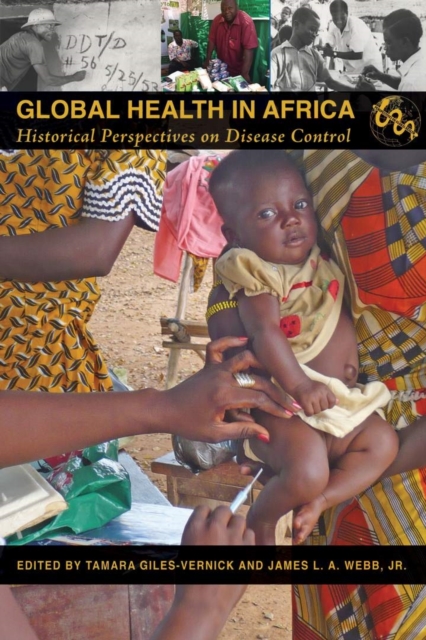
Global Health in Africa
Global Health in Africa is a first exploration of selected histories of global health initiatives in Africa. The collection addresses some of the most important interventions in disease control, including mass vaccination, large-scale treatment and/or prophylaxis campaigns, harm reduction efforts, and nutritional and virological research.The chapters in this collection are organized in three sections that evaluate linkages between past, present, and emergent. Part I, \"Looking Back, \" contains four chapters that analyze colonial-era interventions and reflect upon their implications for contemporary interventions. Part II, \"The Past in the Present, \" contains essays exploring the historical dimensions and unexamined assumptions of contemporary disease control programs. Part III, \"The Past in the Future, \" examines two fields of public health intervention in which efforts to reduce disease transmission and future harm are premised on an understanding of the past. This much-needed volume brings together international experts from the disciplines of demography, anthropology, and historical epidemiology. Covering health initiatives from smallpox vaccinations to malaria control to HIV campaigns, Global Health in Africa offers a first comprehensive look at some of global health's most important challenges.
eBook

Developmental Regulation of Nutrient Transporter and Enzyme mRNA Abundance in the Small Intestine of Broilers
The objective of this study was to investigate intestinal nutrient transporter and enzyme mRNA in broilers selected on corn- and soybean-based (line A) or wheat-based (line B) diets. We investigated the peptide transporter PepT1, 10 amino acid transporters (rBAT, b(o,+)AT, ATB(o,+), CAT1, CAT2, LAT1, y(+)LAT1, y(+)LAT2, B(o)AT, and EAAT3), 4 sugar transporters (SGLT1, SGLT5, GLUT5, and GLUT2), and a digestive enzyme (aminopeptidase N). Intestine was collected at embryo d 18 and 20, day of hatch, and d 1, 3, 7, and 14 posthatch. The mRNA abundance of each gene was assayed using real-time PCR and the absolute quantification method. For PepT1, line B had greater quantities of mRNA compared with line A (P = 0.001), suggesting a greater capacity for absorption of amino acids as peptides. Levels of PepT1 mRNA were greatest in the duodenum (P < 0.05), whereas the abundances of SGLT1, GLUT5, and GLUT2 mRNA were greatest in the jejunum (P < 0.05). Abundances of EAAT3, b(o,+)AT, rBAT, B(o)AT, LAT1, CAT2, SGLT5, and aminopeptidase N mRNA were greatest in the ileum (P < 0.05). Quantities of PepT1, EAAT3, B(o)AT, SGLT1, GLUT5, and GLUT2 mRNA increased linearly (P < 0.01), whereas CAT1, CAT2, y(+)LAT1, and LAT1 mRNA decreased linearly (P < 0.05) with age. Abundance of y(+)LAT2 mRNA changed cubically (P = 0.002) with peaks of expression at day of hatch and d 7, and aminopeptidase N and SGLT5 mRNA changed quadratically (P = 0.005) with age. These results provide a comprehensive profile of the temporal and spatial expression of nutrient transporter mRNA in the small intestine of chicks.
Journal Article
Growth performance and intestinal morphology responses in early weaned pigs to supplementation of antibiotic-free diets with an organic copper complex and spray-dried plasma protein in sanitary and nonsanitary environments
The objective of this study was to determine the effects of addition of spray-dried plasma protein (SDPP) and Cu to nonmedicated diets on growth performance and intestinal morphology in weaned pigs reared in sanitary or nonsanitary environments. Weanling pigs (n = 192, 18 ± 2 d of age, 6.0 ± 0.2 kg of BW) were assigned to 8 treatments arranged factorially, including 2 dietary levels of SDPP (0 or 6% for the initial 10 d), 2 levels of added dietary Cu (0 or 200 ppm for the entire 35-d experiment), and 2 pen sanitation conditions (sanitized or nonsanitized before pig placement). The nonsanitary pen condition was created by 3 applications of swine manure slurry to all pen surfaces in 1 room and not washing or disinfecting. In an identical adjacent room, sanitary pens were washed and disinfected before weaning. There were 4 pigs per pen, and feed and water were available ad libitum. Growth performance was determined at the end of each diet formulation phase (d 10, 20, and 35 after weaning). On d 10, 1 pig per pen was euthanized, and cross sections of duodenum, jejunum, and ileum were collected for microscopic assessment of mucosal morphology. During the initial postweaning period, SDPP, and Cu supplementation improved ADG and ADFI (P < 0.001). A trend for an interaction of sanitation x dietary SDPP (P = 0.07) was observed for G:F, with a positive response to the supplement in nonsanitary pens but no response in sanitary pens. There were no interactions of SDPP and Cu for any performance variables (P > 0.30). By d 35, there were no main or interaction effects of treatment on ADG or G:F (P > 0.17). Pen sanitation condition produced morphological effects, with shorter villous length and less crypt depth observed in each intestinal segment for pigs reared in the nonsanitary pens (P < 0.05), but these effects must be considered conditional based on the potential confounding influence of separate nursery rooms. In the duodenum, reduced crypt depth with Cu supplementation (P = 0.01) and a tendency for greater villous length with SDPP supplementation (P = 0.09) were observed. In this study, SDPP and Cu supplementation improved pig growth performance during the initial 10-d postweaning. These modifications to nonmedicated diets acted independently with regard to their impacts on postweaning performance and, therefore, could have additive effects.
Journal Article

Mammary Uptake, Portal-Drained Visceral Flux, and Hepatic Metabolism of Free and Peptide-Bound Amino Acids in Cows Fed Steam-Flaked or Dry-Rolled Sorghum Grain Diets
Our objectives were to measure net fluxes of free AA (FAA) and peptide-bound AA (PBAA) across portal-drained viscera, liver, splanchnic tissues, and mammary tissues, and milk AA output of lactating Holstein cows (n = 8, 86±8 d in milk). Cows were fed an alfalfa-based total mixed ration containing 40% steam-flaked (SFS) or dry-rolled (DRS) sorghum grain. The total mixed rations were offered at 12-h intervals in a crossover design. Blood samples were obtained from indwelling catheters in portal, hepatic, and mammary veins and from mesenteric or costoabdominal arteries every 2h from each cow and diet. Intake of dry matter was 17.9 and 18.6 kg/d of the SFS and DRS diets, respectively, but dropped to 16.3 kg/d for cows fed the SFS diet in the last 3 experimental days, sampling day included. Milk and milk crude protein yields (kg/12-h sampling) were 13.85 vs. 13.25 and 0.425 vs. 0.396 for cows fed SFS or DRS, respectively, and were not affected by the considerable drop in dry matter intake of cows fed the SFS diet during the last 3 experimental days. The portal-drained visceral flux of total essential FAA was 417 and 442 g/12h (SEM 63) in cows fed SFS and DRS, respectively. However, the portal-drained visceral flux of 7 essential PBAA out of the 9 determined was numerically greater in cows fed the SFS diet, and total essential PBAA in that treatment was 77.4±22.2 compared with 35.4±50.2 g/12h for cows fed the DRS diet. This phenomenon was again observed in a greater total splanchnic flux (FAA + PBAA) of 462 and 371 g/12h in SFS- and DRS-fed cows, respectively. Mammary uptake of essential AA from both pools (free and peptide bound), and recovery of essential AA in milk, was again numerically higher in SFS-fed cows. In addition to FAA, quantifying the contribution of PBAA may improve our understanding of tissue use of AA substrates, and this may ultimately lead to improved diet formulations with respect to intestinal absorption and mammary uptake of AA.
Journal Article
Uptake of zinc from zinc sulfate and zinc proteinate by ovine ruminal and omasal epithelia
Uptake and transport of Zn from ⁶⁵Zn-labeled ZnSO₄ and Zn proteinate (ZnProt) by ruminal and omasal epithelia were examined by using a parabiotic chamber system. Uptake was measured during a 4-h incubation with 10, 20, or 200 μM Zn as ZnSO₄ or ZnProt in the mucosal buffer (pH 6.0, Krebs-Ringer phosphate). Zinc uptake and transport were also evaluated after simulated ruminal digestion. Buffered ruminal fluid contained a feed substrate and 10 or 200 μM added Zn as ZnSO₄ or ZnProt. In a preliminary experiment, uptake of Zn by omasal tissue was low; thus, the remaining experiments were conducted solely with ruminal epithelium. Incubations to determine the effect of time on Zn uptake from mucosal buffer containing 20 μM added Zn as ZnSO₄ or ZnProt resulted in increased (P < 0.01) Zn uptake as incubation time increased from 30 to 240 min. Zinc uptake was also greater (P = 0.02) from mucosal buffer containing ZnProt compared with ZnSO₄. Zinc uptake from incubations containing 10 or 200 μM was affected by source x concentration (P = 0.05) and concentration x time (P < 0.01) interactions. With 10 μM Zn, uptake was not influenced by Zn source, whereas when 200 μM Zn was added, Zn uptake from ZnProt was greater than from ZnSO₄. Increasing incubation time resulted in increased Zn uptake with 200 μM Zn in the mucosal buffer; however, with 10 μM Zn, uptake did not change after 30 min. After simulated ruminal fermentation, the proportion of Zn in a soluble form was influenced by a source x concentration interaction (P = 0.03). After 18 h of incubation, the proportion of Zn that was soluble was not different between ZnProt and ZnSO₄ in buffered ruminal fluid that contained 10 μM added Zn, but was greater for ZnProt compared with ZnSO₄ with 200 μM Zn in the incubation. Zinc uptake from the aqueous fractions of simulated ruminal digestions containing 200 μM added Zn was greater (P < 0.01) than from those containing 10 μM added Zn. Zinc transport, based on detection of ⁶⁵Zn in serosal buffer, did not occur in any of the experiments. The results of the current experiments suggest that absorption of Zn into the bloodstream does not occur from the ruminant foresto-mach; however, Zn uptake occurs in ruminal tissue and is greater from ZnProt than from ZnSO₄.
Journal Article

HISTORICAL EPIDEMIOLOGY AND INFECTIOUS DISEASE PROCESSES IN AFRICA
This article outlines the historical development in African studies of the sub-discipline of historical epidemiology and the contemporary challenges of understanding infectious disease processes that require integrating biomedical and historical knowledge. It suggests that Africanist historians can play a significant role in collaborative and multidisciplinary research in this field by exploring the histories of disease processes and interventions, and thereby contributing to improvements in public health practice and outcomes.
Journal Article