
Catalogue Search | MBRL


Are you sure you want to remove the book from the shelf?

{{itemTitle}}
6,366
result(s) for
"Webb, R"
Sort by:


Photosynthetic entrainment of the Arabidopsis thaliana circadian clock
Circadian clocks provide a competitive advantage in an environment that is heavily influenced by the rotation of the Earth, by driving daily rhythms in behaviour, physiology and metabolism in bacteria, fungi, plants and animals. Circadian clocks comprise transcription-translation feedback loops, which are entrained by environmental signals such as light and temperature to adjust the phase of rhythms to match the local environment. The production of sugars by photosynthesis is a key metabolic output of the circadian clock in plants. Here we show that these rhythmic, endogenous sugar signals can entrain circadian rhythms in Arabidopsis thaliana by regulating the gene expression of circadian clock components early in the photoperiod, thus defining a 'metabolic dawn'. By inhibiting photosynthesis, we demonstrate that endogenous oscillations in sugar levels provide metabolic feedback to the circadian oscillator through the morning-expressed gene PSEUDO-RESPONSE REGULATOR 7 (PRR7), and we identify that prr7 mutants are insensitive to the effects of sucrose on the circadian period. Thus, photosynthesis has a marked effect on the entrainment and maintenance of robust circadian rhythms in A. thaliana, demonstrating that metabolism has a crucial role in regulation of the circadian clock.
Journal Article
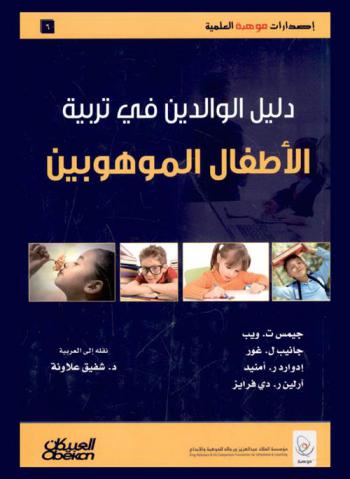
دليل الوالدين في تربية الأطفال الموهوبين
كتاب دليـل الوالدين حيث تتوافر لدى أسر الأطفال الموهوبين مصادر قليلة ذات معلومات موثوقة عن التنشئة السليمة للأطفال الموهوبين لذا فإن مؤلفي الكتاب الأربعة ذوو الخبرة المهنية التي تمتد لعقود في التعامل مع الأطفال الموهوبين وعائلاتهم يقدمون دليلا عمليا في مجالات عدة مثل خصائص الأطفال الموهوبين والمثالية وعدم السعادة والأكتئاب والعلاقات بين الأقران والدافعية والتحصيل المنخفض والعثور على المساعدة المهنية المختصة والشدة والسعي للكمال والتوتر والتخطيط التربوي وهموم تربية الأبناء.
BOOK

Epidermal photonic devices for quantitative imaging of temperature and thermal transport characteristics of the skin
Characterization of temperature and thermal transport properties of the skin can yield important information of relevance to both clinical medicine and basic research in skin physiology. Here we introduce an ultrathin, compliant skin-like, or ‘epidermal’, photonic device that combines colorimetric temperature indicators with wireless stretchable electronics for thermal measurements when softly laminated on the skin surface. The sensors exploit thermochromic liquid crystals patterned into large-scale, pixelated arrays on thin elastomeric substrates; the electronics provide means for controlled, local heating by radio frequency signals. Algorithms for extracting patterns of colour recorded from these devices with a digital camera and computational tools for relating the results to underlying thermal processes near the skin surface lend quantitative value to the resulting data. Application examples include non-invasive spatial mapping of skin temperature with milli-Kelvin precision (±50 mK) and sub-millimetre spatial resolution. Demonstrations in reactive hyperaemia assessments of blood flow and hydration analysis establish relevance to cardiovascular health and skin care, respectively.
The determination of skin temperature is an important factor to consider in medical and physiological research. Here, the authors fabricate a thermochromic liquid crystal sensor for the determination of skin temperature and thermal properties.
Journal Article

John Galliano for Dior
As testified by the monumental success of the recent Dior retrospective curated by the Musee des Arts Decoratifs in Paris, 'Christian Dior: Designer of Dreams', which attracted over 700,000 visitors over its extended run, John Galliano's creations for the house of Dior have entered fashion history and are widely recognized as some of the most breathtaking and imaginative collections ever created. 0'John Galliano for Dior' is the first publication entirely dedicated to showcasing these unforgettable designs, which have become collectors' items and form a key chapter of the history of the house of Dior - \"the greatest house in the world\", as Galliano stated when he was first placed at its helm. \"I see myself as a guardian of [Christian Dior's] spirit, a keeper of his dreams,\" he added. The book unfolds chronologically, revisiting the most iconic creations and revealing previously unseen behind-the-scenes moments that capture models, hairdressers, stylists, make-up artists and John Galliano himself at their most creative. Robert Fairer's stunning and high-energy photographs convey the drama, glamour and wild imagination that defined Galliano's Dior shows. A treasure trove of inspiration, they make this publication a must-have reference for fashion and photography lovers alike.
Book

Conformal piezoelectric systems for clinical and experimental characterization of soft tissue biomechanics
Mechanical assessment of soft biological tissues and organs has broad relevance in clinical diagnosis and treatment of disease. Existing characterization methods are invasive, lack microscale spatial resolution, and are tailored only for specific regions of the body under quasi-static conditions. Here, we develop conformal and piezoelectric devices that enable
in vivo
measurements of soft tissue viscoelasticity in the near-surface regions of the epidermis. These systems achieve conformal contact with the underlying complex topography and texture of the targeted skin, as well as other organ surfaces, under both quasi-static and dynamic conditions. Experimental and theoretical characterization of the responses of piezoelectric actuator–sensor pairs laminated on a variety of soft biological tissues and organ systems in animal models provide information on the operation of the devices. Studies on human subjects establish the clinical significance of these devices for rapid and non-invasive characterization of skin mechanical properties.
Piezoelectric sensors and actuators are embedded in pliable devices that conform to human skin and organ surfaces. These devices enable rapid characterization of the mechanical properties of soft tissues under various clinical conditions.
Journal Article


A systematic review and meta-analysis of early goal-directed therapy for septic shock: the ARISE, ProCESS and ProMISe Investigators
Purpose
To determine whether early goal-directed therapy (EGDT) reduces mortality compared with other resuscitation strategies for patients presenting to the emergency department (ED) with septic shock.
Methods
Using a search strategy of PubMed, EmBase and CENTRAL, we selected all relevant randomised clinical trials published from January 2000 to January 2015. We translated non-English papers and contacted authors as necessary. Our primary analysis generated a pooled odds ratio (OR) from a fixed-effect model. Sensitivity analyses explored the effect of including non-ED studies, adjusting for study quality, and conducting a random-effects model. Secondary outcomes included organ support and hospital and ICU length of stay.
Results
From 2395 initially eligible abstracts, five randomised clinical trials (
n
= 4735 patients) met all criteria and generally scored high for quality except for lack of blinding. There was no effect on the primary mortality outcome (EGDT: 23.2 % [495/2134] versus control: 22.4 % [582/2601]; pooled OR 1.01 [95 % CI 0.88–1.16],
P
= 0.9, with heterogeneity [
I
2
= 57 %;
P
= 0.055]). The pooled estimate of 90-day mortality from the three recent multicentre studies (
n
= 4063) also showed no difference [pooled OR 0.99 (95 % CI 0.86–1.15),
P
= 0.93] with no heterogeneity (
I
2
= 0.0 %;
P
= 0.97). EGDT increased vasopressor use (OR 1.25 [95 % CI 1.10–1.41];
P
< 0.001) and ICU admission [OR 2.19 (95 % CI 1.82–2.65);
P
< 0.001]. Including six non-ED randomised trials increased heterogeneity (
I
2
= 71 %;
P
< 0.001) but did not change overall results [pooled OR 0.94 (95 % CI 0.82 to 1.07);
P
= 0.33].
Conclusion
EGDT is not superior to usual care for ED patients with septic shock but is associated with increased utilisation of ICU resources.
Journal Article
Continuous dynamic adjustment of the plant circadian oscillator
The clockwork of plant circadian oscillators has been resolved through investigations in
Arabidopsis thaliana
. The circadian oscillator is an important regulator of much of plant physiology, though many of the mechanisms are unclear. New findings demonstrate that the oscillator adjusts phase and period in response to abiotic and biotic signals, providing insight in to how the plant circadian oscillator integrates with the biology of the cell and entrains to light, dark and temperature cycles. We propose that the plant circadian oscillator is dynamically plastic, in constant adjustment, rather than being an isolated clock impervious to cellular events.
Biological circadian rhythms maintain a period close to 24 h in coordination with the Earth’s fixed rotational period. Here Webb et al. discuss how external cues continuously adjust phase and period, viewing the oscillator as a dynamically-adjusted plastic system rather than tightly-coupled cogs in a mechanical clock.
Journal Article

Continuous Infusion of Beta-Lactam Antibiotics in Severe Sepsis: A Multicenter Double-Blind, Randomized Controlled Trial
Background. Beta-lactam antibiotics are a commonly used treatment for severe sepsis, with intermittent bolus dosing standard therapy, despite a strong theoretical rationale for continuous administration. The aim of this trial was to determine the clinical and pharmacokinetic differences between continuous and intermittent dosing in patients with severe sepsis. Methods. This was a prospective, double-blind, randomized controlled trial of continuous infusion versus intermittent bolus dosing of piperacillin-tazobactam, meropenem, and ticarcillin-clavulanate conducted in 5 intensive care units across Australia and Hong Kong. The primary pharmacokinetic outcome on treatment analysis was plasma antibiotic concentration above the minimum inhibitory concentration (MIC) on days 3 and 4. The assessed clinical outcomes were clinical response 7–14 days after study drug cessation, ICU-free days at day 28 and hospital survival. Results. Sixty patients were enrolled with 30 patients each allocated to the intervention and control groups. Plasma antibiotic concentrations exceeded the MIC in 82% of patients (18 of 22) in the continuous arm versus 29% (6 of 21) in the intermittent arm (P = .001). Clinical cure was higher in the continuous group (70% vs 43%; P = .037), but ICU-free days (19.5 vs 17 days; P = .14) did not significantly differ between groups. Survival to hospital discharge was 90% in the continuous group versus 80% in the intermittent group (P = .47). Conclusions. Continuous administration of beta-lactam antibiotics achieved higher plasma antibiotic concentrations than intermittent administration with improvement in clinical cure. This study provides a strong rationale for further multicenter trials with sufficient power to identify differences in patient-centered endpoints.
Journal Article