
Catalogue Search | MBRL


Are you sure you want to remove the book from the shelf?

{{itemTitle}}
34,887
result(s) for
"Wei, Dong"
Sort by:
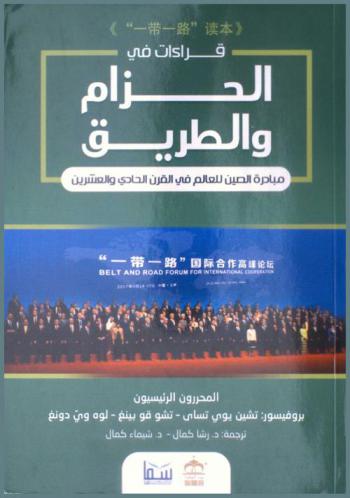
قراءات في الحزام والطريق : مبادرة الصين للعالم في القرن الحادي والعشرين
في العاشر من سبتمبر عام 2013، أعلن الرئيس الصيني شي جين بينغ خلال زيارته لآسيا الوسطى ومنطقة جنوب شرق آسيا، عن المبادرة الكبرى الحزام والطريق \"الحزام الاقتصادي لطريق الحرير وطريق الحرير البحري للقرن الحادي والعشرين\"، لتحظى المبادرة باهتمام كبير على الصعيد الدولي، حيث تعد سياسة استراتيجية دولية كبرى للصين، وقد وضعت بناء على التخطيط الشامل للمشهدين الدولي والمحلي، وتتسم المبادرة باهمية كبيرة، ومغزى بعيد المدى فيما يتعلق بإنشاء آلية اقتصادية ذات طبيعة منفتحة، وتشكيل نمط جديد للانفتاح نحو الخارج بكل الاتجاهات، وفي هذا الكتاب الذي أعده مجموعة من باحثو \"مركز الابتكار التعاوني لمبادرة الحزام والطريق بجامعة تشيجيانغ\"، ليشكفوا عن كل الأسرار المتعلقة بالمبادرة الصينية الكبرى التي قدمتها للعالم في قرنه الحادي والعشرين، وذلك عملا على تعميق معرفة القاريء \"بالحزام والطريق\"، والنشر على مستوى عالمي للمحتوى الثري والمغزى العميق لهذه المبادرة، ويركز أسلوب هذا الكتاب على الشرح والتحليل والمقارنة، فيتطرق إلى الاطر الاستراتيجية للبمادرة وتنافسية الدول الكبرى ومزايا مناطق الصين وربوعها و ثمار التعاون الدولي وغيرها بالتحليل الدقيق، انطلاقا من الموضوعات التي تهم كل مهتم في العالم بمستقبل الصين، وما ستقدمه للعالم.
BOOK

The roles of the gut microbiota–miRNA interaction in the host pathophysiology
The gut microbiota regulates the biological processes of organisms acting like ‘another’ genome, affecting the health and disease of the host. MicroRNAs, as important physiological regulators, have been found to be involved in health and disease. Recently, the gut microbiota has been reported to affect host health by regulating host miRNAs. For example,
Fusobacterium nucleatum
could aggravate chemoresistance of colorectal cancer by decreasing the expression of miR-18a* and miR-4802. What’s more, miRNAs can shape the gut microbiota composition, ultimately affecting the host's physiology and disease. miR-515-5p and miR-1226-5p could promote the growth of
Fusobacterium nucleatum
(
Fn
) and
Escherichia coli
(
E.coli
), which have been reported to drive colorectal cancer. Here, we will review current findings of the interactions between the gut microbiota and microRNAs and discuss how the gut microbiota–microRNA interactions affect host pathophysiology including intestinal, neurological, cardiovascular, and immune health and diseases.
Journal Article
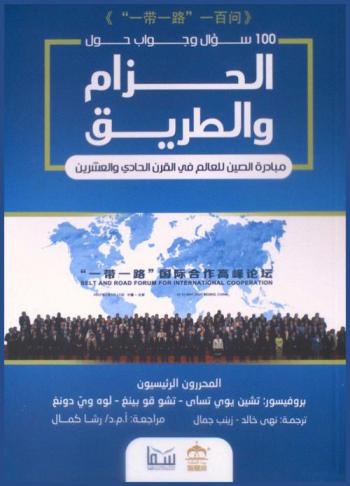
مائة سؤال وجواب حول الحزام والطريق : مبادرة الصين للعالم في القرن الحادي والعشرين
في العاشر من سبتمبر عام 2013، أعلن الرئيس الصيني شي جين بينغ خلال زيارته لآسيا الوسطى ومنطقة جنوب شرق آسيا، عن المبادرة الكبرى الحزام والطريق \"الحزام الاقتصادي لطريق الحرير وطريق الحرير البحري للقرن الحادي والعشرين\"، لتحظى المبادرة باهتمام كبير على الصعيد الدولي، حيث تعد سياسة استراتيجية دولية كبرى للصين، وقد وضعت بناء على التخطيط الشامل للمشهدين الدولي والمحلي، وتتسم المبادرة باهمية كبيرة، ومغزى بعيد المدى فيما يتعلق بإنشاء آلية اقتصادية ذات طبيعة منفتحة، وتشكيل نمط جديد للانفتاح نحو الخارج بكل الاتجاهات، وفي هذا الكتاب الذي أعده مجموعة من باحثو \"مركز الابتكار التعاوني لمبادرة الحزام والطريق بجامعة تشيجيانغ\"، ليشكفوا عن كل الأسرار المتعلقة بالمبادرة الصينية الكبرى التي قدمتها للعالم في قرنه الحادي والعشرين، وذلك عملا على تعميق معرفة القاريء \"بالحزام والطريق\"، والنشر على مستوى عالمي للمحتوى الثري والمغزى العميق لهذه المبادرة، ويعتمد أسلوب هذا الكتاب على السؤال والجواب، انطلاقا من الموضوعات التي تهم كل مهتم في العالم بمستقبل الصين، وما ستقدمه للعالم.
BOOK

PROTAC: An Effective Targeted Protein Degradation Strategy for Cancer Therapy
Proteolysis targeting chimeric (PROTAC) technology is an effective endogenous protein degradation tool developed in recent years that can ubiquitinate the target proteins through the ubiquitin-proteasome system (UPS) to achieve an effect on tumor growth. A number of literature studies on PROTAC technology have proved an insight into the feasibility of PROTAC technology to degrade target proteins. Additionally, the first oral PROTACs (ARV-110 and ARV-471) have shown encouraging results in clinical trials for prostate and breast cancer treatment, which inspires a greater enthusiasm for PROTAC research. Here we focus on the structures and mechanisms of PROTACs and describe several classes of effective PROTAC degraders based on E3 ligases.
Journal Article


Consumption of coffee and tea and risk of developing stroke, dementia, and poststroke dementia: A cohort study in the UK Biobank
Previous studies have revealed the involvement of coffee and tea in the development of stroke and dementia. However, little is known about the association between the combination of coffee and tea and the risk of stroke, dementia, and poststroke dementia. Therefore, we aimed to investigate the associations of coffee and tea separately and in combination with the risk of developing stroke and dementia.
This prospective cohort study included 365,682 participants (50 to 74 years old) from the UK Biobank. Participants joined the study from 2006 to 2010 and were followed up until 2020. We used Cox proportional hazards models to estimate the associations between coffee/tea consumption and incident stroke and dementia, adjusting for sex, age, ethnicity, qualification, income, body mass index (BMI), physical activity, alcohol status, smoking status, diet pattern, consumption of sugar-sweetened beverages, high-density lipoprotein (HDL), low-density lipoprotein (LDL), history of cancer, history of diabetes, history of cardiovascular arterial disease (CAD), and hypertension. Coffee and tea consumption was assessed at baseline. During a median follow-up of 11.4 years for new onset disease, 5,079 participants developed dementia, and 10,053 participants developed stroke. The associations of coffee and tea with stroke and dementia were nonlinear (P for nonlinear <0.01), and coffee intake of 2 to 3 cups/d or tea intake of 3 to 5 cups/d or their combination intake of 4 to 6 cups/d were linked with the lowest hazard ratio (HR) of incident stroke and dementia. Compared with those who did not drink tea and coffee, drinking 2 to 3 cups of coffee and 2 to 3 cups of tea per day was associated with a 32% (HR 0.68, 95% CI, 0.59 to 0.79; P < 0.001) lower risk of stroke and a 28% (HR, 0.72, 95% CI, 0.59 to 0.89; P = 0.002) lower risk of dementia. Moreover, the combination of coffee and tea consumption was associated with lower risk of ischemic stroke and vascular dementia. Additionally, the combination of tea and coffee was associated with a lower risk of poststroke dementia, with the lowest risk of incident poststroke dementia at a daily consumption level of 3 to 6 cups of coffee and tea (HR, 0.52, 95% CI, 0.32 to 0.83; P = 0.007). The main limitations were that coffee and tea intake was self-reported at baseline and may not reflect long-term consumption patterns, unmeasured confounders in observational studies may result in biased effect estimates, and UK Biobank participants are not representative of the whole United Kingdom population.
We found that drinking coffee and tea separately or in combination were associated with lower risk of stroke and dementia. Intake of coffee alone or in combination with tea was associated with lower risk of poststroke dementia.
Journal Article

HGF/c-Met: A Key Promoter in Liver Regeneration
Hepatocyte growth factor (HGF) is a peptide-containing multifunctional cytokine that acts on various epithelial cells to regulate cell growth, movement and morphogenesis, and tissue regeneration of injured organs. HGF is sequestered by heparin-like protein in its inactive form and is widespread in the extracellular matrix of most tissues. When the liver loses its average mass, volume, or physiological and biochemical functions due to various reasons, HGF binds to its specific receptor c-Met (cellular mesenchymal-epithelial transition) and transmits the signals into the cells, and triggers the intrinsic kinase activity of c-Met. The downstream cascades of HGF/c-Met include JAK/STAT3, PI3K/Akt/NF-κB, and Ras/Raf pathways, affecting cell proliferation, growth, and survival. HGF has important clinical significance for liver fibrosis, hepatocyte regeneration after inflammation, and liver regeneration after transplantation. And the development of HGF as a biological drug for regenerative therapy of diseases, that is, using recombinant human HGF protein to treat disorders in clinical trials, is underway. This review summarizes the recent findings of the HGF/c-Met signaling functions in liver regeneration.
Journal Article
DAF-16/FOXO Transcription Factor in Aging and Longevity
Aging is associated with age-related diseases and an increase susceptibility of cancer. Dissecting the molecular mechanisms that underlie aging and longevity would contribute to implications for preventing and treating the age-dependent diseases or cancers. Multiple signaling pathways such as the insulin/IGF-1 signaling pathway, TOR signaling, AMPK pathway, JNK pathway and germline signaling have been found to be involved in aging and longevity. And DAF-16/FOXO, as a key transcription factor, could integrate different signals from these pathways to modulate aging, and longevity via shuttling from cytoplasm to nucleus. Hence, understanding how DAF-16/FOXO functions will be pivotal to illustrate the processes of aging and longevity. Here, we summarized how DAF-16/FOXO receives signals from these pathways to affect aging and longevity. We also briefly discussed the transcriptional regulation and posttranslational modifications of DAF-16/FOXO, its co-factors as well as its potential downstream targets participating in lifespan according to the published data in
and in mammals, and in most cases, we may focus on the studies in
which has been considered to be a very good animal model for longevity research.
Journal Article

STAT3 as a potential therapeutic target in triple negative breast cancer: a systematic review
Triple negative breast cancer (TNBC), which is typically lack of expression of estrogen receptor (ER), progesterone receptor (PR), and human epidermal growth factor receptor 2 (HER2), represents the most aggressive and mortal subtype of breast cancer. Currently, only a few treatment options are available for TNBC due to the absence of molecular targets, which underscores the need for developing novel therapeutic and preventive approaches for this disease. Recent evidence from clinical trials and preclinical studies has demonstrated a pivotal role of signal transducer and activator of transcription 3 (STAT3) in the initiation, progression, metastasis, and immune evasion of TNBC. STAT3 is overexpressed and constitutively activated in TNBC cells and contributes to cell survival, proliferation, cell cycle progression, anti-apoptosis, migration, invasion, angiogenesis, chemoresistance, immunosuppression, and stem cells self-renewal and differentiation by regulating the expression of its downstream target genes. STAT3 small molecule inhibitors have been developed and shown excellent anticancer activities in in vitro and in vivo models of TNBC. This review discusses the recent advances in the understanding of STAT3, with a focus on STAT3’s oncogenic role in TNBC. The current targeting strategies and representative small molecule inhibitors of STAT3 are highlighted. We also propose potential strategies that can be further examined for developing more specific and effective inhibitors for TNBC prevention and therapy.
Journal Article