
Catalogue Search | MBRL


Are you sure you want to remove the book from the shelf?

{{itemTitle}}
168
result(s) for
"Weiner, Robert G"
Sort by:


The Joker : a serious study of The Clown Prince of Crime
Along with Batman, Spider-Man, and Superman, the Joker stands out as one of the most recognizable comics characters in popular culture. While there has been a great deal of scholarly attention on superheroes, very little has been done to understand supervillains. This is the first academic work to provide a comprehensive study of this villain, illustrating why the Joker appears so relevant to audiences today. Batman's foe has cropped up in thousands of comics, numerous animated series, and three major blockbuster feature films since 1966. Actually, the Joker debuted in DC comics Batman 1 (1940) as the typical gangster, but the character evolved steadily into one of the most ominous in the history of sequential art. Batman and the Joker almost seemed to define each other as opposites, hero and nemesis, in a kind of psychological duality. Scholars from a wide array of disciplines look at the Joker through the lens of feature films, video games, comics, politics, magic and mysticism, psychology, animation, television, performance studies, and philosophy. As the first volume that examines the Joker as complex cultural and cross-media phenomenon, this collection adds to our understanding of the role comic book and cinematic villains play in the world and the ways various media affect their interpretation. Connecting the Clown Prince of Crime to bodies of thought as divergent as Karl Marx and Friedrich Nietzsche, contributors demonstrate the frightening ways in which we get the monsters we need.
eBook

Drawn to the stacks : essays on libraries, librarians and archives in comics and graphic novels
\"This is the first academic volume to examine the librarian and archival professional through the lens of sequential art. The portrayal of libraries/librarians in sequential art has a long history from the Golden Age to the present day. Libraries and archives in comics historically are seen as places of important knowledge and information. This volume takes a deep dive into a multitude of source material to show how librarians/archivists and libraries/archives are used within the comic medium to address multiculturalism, LGBTQ issues, archival practice, and even the concept of librarians as \"baddies\" or stewards of information unwilling to share with others. The wide breadth of material examined here includes Miyazaki's Nausicaa, Speigleman's Maus, Bechdel's Queer Dykes to Watch Out For, Marvel's Black Panther, Nono's Yoake No Toshokan, DC's Batgirl, Buffy the Vampire Slayer comics, Gaiman's The Sandman, webcomics, Marvel's America Chavez character, Schultz's Xenozoic Tales and much more\"-- Provided by publisher.
BOOK

Marvel Graphic Novels and Related Publications
This work provides an extensive guide for students, fans, and collectors of Marvel Comics.Focusing on Marvel's mainstream comics, the author provides a detailed description of each comic along with a bibliographic citation listing the publication's title, writers/artists, publisher, ISBN (if available), and a plot synopsis.
eBook

James Bond in world and popular culture : the films are not enough
James Bond in World and Popular Culture: The Films are Not Enough provides the most comprehensive study of the James Bond phenomena ever published. The 40 original essays provide new insights, scholarship, and understanding to the world of James Bond. Topics include the Bond girl, Bond related video games, Ian Flemings relationship with the notorious Aleister Crowley and CIA director Alan Dulles. Other articles include Fleming as a character in modern fiction, Bond Jr. comics, the post Flemi.
eBook
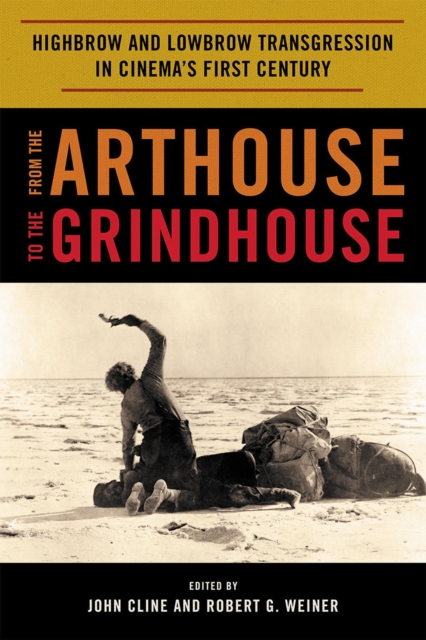
From the arthouse to the grindhouse
While there are numerous books on art and exploitation cinema, very few attempt to examine both. Covering the first 100 years of cinematic transgressions, From the Arthouse to the Grindhouse is a collection of numerous essays representing key contributions to overlooked, forgotten, or under-analyzed parts of film history. From cult favorites like Arch Hall Jr. to revered but under-documented marquee names like Lon Chaney, filmmakers both major and minor are covered here. Starting with a section that pairs exploitation pioneers like Dwain Esper alongside cutting edge auteurs like Erich Von Stroheim, the volume documents the bleeding edge of the high/low cultural divide. Other essays examine the sexual melodramas of Weimer German cinema, explore the concept of Borat as a model for the new standardized cult film, and discuss the films of directors Tod Browning, Pier Pasolini, and Peter Watkins. This volume also contains a section devoted to the idea of \"reality\" inside and outside the documentary sphere, emphasizing audiences' desire to believe that \"this is really happening,\" whether they're horrified or titillated. Addressing many aspects of \"transgression\" in cinema, these essays suggest that the distance between the venues and the audiences may not be quite as wide as viewers might imagine.
eBook

Cinema inferno
Cinema Inferno: Celluloid Explosions from the Cultural Margins addresses significant areas (and eras) of \"transgressive\" filmmaking, including many subgenres and styles that have not yet received much critical attention. This collection of essays covers both contemporary films and those produced in the last 50 years to provide a theoretical framework for looking at transgressive cinema and what that means. This volume begins with a number of essays that examine the aesthetic of \"realism,\" tracing it through the late Italian Neo-Realism of Pasolini, the early films of Melvin Van Peebles, and Canadian filmmaker Guy Maddin. Another section focuses on '70s Italian horror and thrillers, including a substantially different examination of filmmaker Dario Argento, as well as essays on critically underrepresented directors Lucio Fulci and Sergio Martino. A section on New York looks at both radical independents like Troma and Andy Milligan, as well as the social context from which a view of the metropolis-in-decay emerged. Sections also cover the experimental work of the Vienna Action Group and controversial filmmaker Michael Haneke, as well as films and genres too idiosyncratic and disturbing to fit anywhere else, including analyses of Nazi propaganda films, fundamentalist Christian \"scare\" movies, and postwar Japanese youth films. The final essays try to come to terms with a mainstream flirtation with \"transgressive\" film and Grindhouse aesthetics.
eBook

Marvel Comics and the Golem Legend
The Jewish legend of the golem is often considered the prototype as the “original” superhero (influencing the creation of Superman and other characters). During the 1970s Marvel Comics used the golem legend to create their own unique brand of “monster” superhero. This essay describes the various ways Marvel has used the golem motif in its sequential art stories. First appearing in the pages ofStrange Tales, this golem differed from the original stories of Rabbi Loew's supernatural savior. The character really did not resonate with the comic book-buying public, lasting only three issues and one guest appearance. Yet the concept of the golem was too powerful a metaphor to be discarded. Marvel Comics brought back another type of golem for their Invaders World War II series. The creators (specifically writer Roy Thomas) tried to answer the question, what if a golem had been there to protect Jews during the Holocaust? This golem was a man/clay hybrid who was also a Rabbi.
Journal Article

Selling James Bond
The character of James Bond for many people is intrinsically linked in their minds with particular brands - Aston Martin, Bollinger, Omega, Smirnoff vodka, and so on. This direct association between character and brand highlights the intrinsic role of pro.
eBook
