
Catalogue Search | MBRL


Are you sure you want to remove the book from the shelf?

{{itemTitle}}
2
result(s) for
"Weinstein, Jeremy M author"
Sort by:
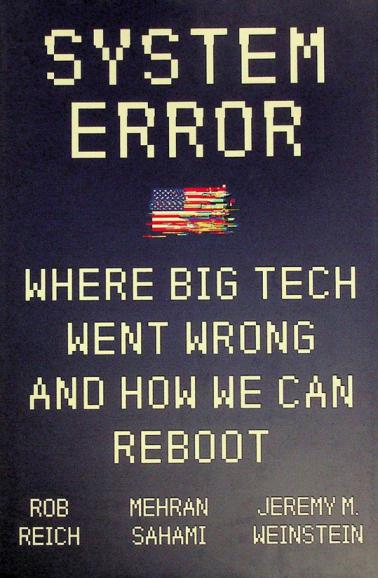
System error : where big tech went wrong and how we can reboot
A forward-thinking manifesto from three Stanford professors--experts who have worked at ground zero of the tech revolution for decades--which reveals how big tech's obsession with optimization and efficiency has sacrificed fundamental human values and outlines steps we can take to change course, renew our democracy, and save ourselves.
Book

Inside Rebellion
Some rebel groups abuse noncombatant populations, while others exhibit restraint. Insurgent leaders in some countries transform local structures of government, while others simply extract resources for their own benefit. In some contexts, groups kill their victims selectively, while in other environments violence appears indiscriminate, even random. This book presents a theory that accounts for the different strategies pursued by rebel groups in civil war, explaining why patterns of insurgent violence vary so much across conflicts. It does so by examining the membership, structure, and behavior of four insurgent movements in Uganda, Mozambique, and Peru. Drawing on interviews with nearly two hundred combatants and civilians who experienced violence firsthand, it shows that rebels' strategies depend in important ways on how difficult it is to launch a rebellion. The book thus demonstrates how characteristics of the environment in which rebellions emerge constrain rebel organization and shape the patterns of violence that civilians experience.
eBook