
Catalogue Search | MBRL


Are you sure you want to remove the book from the shelf?

{{itemTitle}}
72,194
result(s) for
"Weir, A"
Sort by:
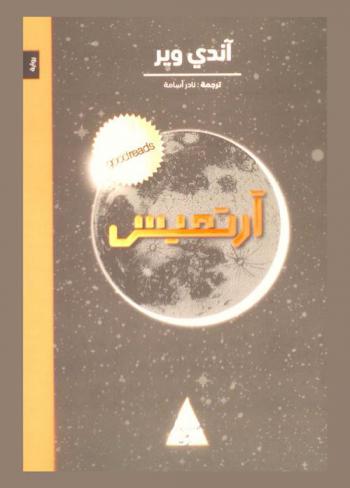
آرتميس
هذه الرواية بها خلطة لا تقاوم من العلوم والتشويق والفكاهة ترويها \"ياسمين\" البطلة الذكية الساخرة وتدور حوادثها في مدينة مذهلة التصور ومألوفة جدا في الوقت نفسه ورواية مليئة بمكائد وحلول ذكية للمشكلات حاكها ببراعة عالية \"آندي وير المؤلف وياسمين بشارة الفتاة الذكية التي تعيش في مدينة على سطح القمر صادفتها فرصة أن تصبح ثرية ولو عن طريق مهمة خطرة فلم تستطع أن تقاوم الفرصة لكنها وقعت في ورطة كبيرة بسبب فشل مهمتها فسعت لتجنيد كل معارفها لتنفيذ خطتها ووجدت ياسمين نفسها في مواجهة مؤامرة للسيطرة على مدينة آرتيميس فكان عليها أن تدبر خطة محكمة لكي تضمن نجاح مهمتها وإنقاذ مدينتها في الوقت نفسه.
BOOK

The Warwick Agreement on femoroacetabular impingement syndrome (FAI syndrome): an international consensus statement
The 2016 Warwick Agreement on femoroacetabular impingement (FAI) syndrome was convened to build an international, multidisciplinary consensus on the diagnosis and management of patients with FAI syndrome. 22 panel members and 1 patient from 9 countries and 5 different specialties participated in a 1-day consensus meeting on 29 June 2016. Prior to the meeting, 6 questions were agreed on, and recent relevant systematic reviews and seminal literature were circulated. Panel members gave presentations on the topics of the agreed questions at Sports Hip 2016, an open meeting held in the UK on 27–29 June. Presentations were followed by open discussion. At the 1-day consensus meeting, panel members developed statements in response to each question through open discussion; members then scored their level of agreement with each response on a scale of 0–10. Substantial agreement (range 9.5–10) was reached for each of the 6 consensus questions, and the associated terminology was agreed on. The term ‘femoroacetabular impingement syndrome’ was introduced to reflect the central role of patients' symptoms in the disorder. To reach a diagnosis, patients should have appropriate symptoms, positive clinical signs and imaging findings. Suitable treatments are conservative care, rehabilitation, and arthroscopic or open surgery. Current understanding of prognosis and topics for future research were discussed. The 2016 Warwick Agreement on FAI syndrome is an international multidisciplinary agreement on the diagnosis, treatment principles and key terminology relating to FAI syndrome.The Warwick Agreement on femoroacetabular impingement syndrome has been endorsed by the following 25 clinical societies: American Medical Society for Sports Medicine (AMSSM), Association of Chartered Physiotherapists in Sports and Exercise Medicine (ACPSEM), Australasian College of Sports and Exercise Physicians (ACSEP), Austian Sports Physiotherapists, British Association of Sports and Exercise Medicine (BASEM), British Association of Sport Rehabilitators and Trainers (BASRaT), Canadian Academy of Sport and Exercise Medicine (CASEM), Danish Society of Sports Physical Therapy (DSSF), European College of Sports and Exercise Physicians (ECOSEP), European Society of Sports Traumatology, Knee Surgery and Arthroscopy (ESSKA), Finnish Sports Physiotherapist Association (SUFT), German-Austrian-Swiss Society for Orthopaedic Traumatologic Sports Medicine (GOTS), International Federation of Sports Physical Therapy (IFSPT), International Society for Hip Arthroscopy (ISHA), Groupo di Interesse Specialistico dell’A.I.F.I., Norwegian Association of Sports Medicine and Physical Activity (NIMF), Norwegian Sports Physiotherapy Association (FFI), Society of Sports Therapists (SST), South African Sports Medicine Association (SASMA), Sports Medicine Australia (SMA), Sports Doctors Australia (SDrA), Sports Physiotherapy New Zealand (SPNZ), Swedish Society of Exercise and Sports Medicine (SFAIM), Swiss Society of Sports Medicine (SGMS/SGSM), Swiss Sports Physiotherapy Association (SSPA).
Journal Article

سجين المريخ
منذ ستة أيام، أصبح رائد الفضاء مارك واتني أحد أوائل الأشخاص الذين يسيرون على سطح المريخ. وقد أصبح متأكدا الآن أنه سيكون أول شخص يموت هناك. فبعد أن أجبرت عاصفة رملية زملاءه على إخلاء الكوكب بينما كانوا يظنون أنه قد توفي، وجد مارك نفسه وحيدا على سطح المريخ، من دون أي وسيلة لإبلاغ الأرض أنه حي. وحتى لو استطاع إيصال الخبر إليهم، فستنفذ المؤن لديه قبل عدة سنوات من وصول أي إمدادات إليه. لكن المرجح أنه لن يتسنى الوقت لمارك لكي يتضور جوعا حتى الموت. فالأجهزة المعطلة أو البيئة التي لا ترحم أو أي \"خطأ بشري\" عادي سيتسبب بقتله قبل ذلك بكثير.
BOOK

Loss of ATRX, Genome Instability, and an Altered DNA Damage Response Are Hallmarks of the Alternative Lengthening of Telomeres Pathway
The Alternative Lengthening of Telomeres (ALT) pathway is a telomerase-independent pathway for telomere maintenance that is active in a significant subset of human cancers and in vitro immortalized cell lines. ALT is thought to involve templated extension of telomeres through homologous recombination, but the genetic or epigenetic changes that unleash ALT are not known. Recently, mutations in the ATRX/DAXX chromatin remodeling complex and histone H3.3 were found to correlate with features of ALT in pancreatic neuroendocrine cancers, pediatric glioblastomas, and other tumors of the central nervous system, suggesting that these mutations might contribute to the activation of the ALT pathway in these cancers. We have taken a comprehensive approach to deciphering ALT by applying genomic, molecular biological, and cell biological approaches to a panel of 22 ALT cell lines, including cell lines derived in vitro. Here we show that loss of ATRX protein and mutations in the ATRX gene are hallmarks of ALT-immortalized cell lines. In addition, ALT is associated with extensive genome rearrangements, marked micronucleation, defects in the G2/M checkpoint, and altered double-strand break (DSB) repair. These attributes will facilitate the diagnosis and treatment of ALT positive human cancers.
Journal Article

New Mutants : back to school, the complete collection
\"Dani Moonstar, Karma and Wolfsbane -- the former X-Men-in-training who helped define a generation -- are back to pass their wisdom on to the next one! But how will the New Mutants react to Professor X's up-and-coming students, who think of them as \"Old Mutants\"? Find out as a new class debuts at the Xavier School -- including Prodigy, Wallflower, Wither, Surge, Elixir, Wind Dancer and more! They may be the future of their species -- if they can survive threats like the Reavers and the hate group Purity! As the latest squad comes into its own, the originals settle into new roles as mentors -- but will Wolfsbane's desire to regain her powers cause her to cross a line?\"--Back cover.
BOOK

Computational correction of copy number effect improves specificity of CRISPR–Cas9 essentiality screens in cancer cells
CERES is a new computational method to estimate gene-dependency levels from CRISPR–Cas9 essentiality screens while accounting for copy number effects and variable sgRNA activity. Applying CERES to new genome-scale CRISPR–Cas9 essentiality screen data from 342 cancer cell lines and other published data sets shows that CERES decreases false-positive results and provides consistent estimates of sgRNA activity.
The CRISPR–Cas9 system has revolutionized gene editing both at single genes and in multiplexed loss-of-function screens, thus enabling precise genome-scale identification of genes essential for proliferation and survival of cancer cells
1
,
2
. However, previous studies have reported that a gene-independent antiproliferative effect of Cas9-mediated DNA cleavage confounds such measurement of genetic dependency, thereby leading to false-positive results in copy number–amplified regions
3
,
4
. We developed CERES, a computational method to estimate gene-dependency levels from CRISPR–Cas9 essentiality screens while accounting for the copy number–specific effect. In our efforts to define a cancer dependency map, we performed genome-scale CRISPR–Cas9 essentiality screens across 342 cancer cell lines and applied CERES to this data set. We found that CERES decreased false-positive results and estimated sgRNA activity for both this data set and previously published screens performed with different sgRNA libraries. We further demonstrate the utility of this collection of screens, after CERES correction, for identifying cancer-type-specific vulnerabilities.
Journal Article

If Dung Beetles (Scarabaeidae: Scarabaeinae) Arose in Association with Dinosaurs, Did They Also Suffer a Mass Co-Extinction at the K-Pg Boundary?
The evolutionary success of beetles and numerous other terrestrial insects is generally attributed to co-radiation with flowering plants but most studies have focused on herbivorous or pollinating insects. Non-herbivores represent a significant proportion of beetle diversity yet potential factors that influence their diversification have been largely unexamined. In the present study, we examine the factors driving diversification within the Scarabaeidae, a speciose beetle family with a range of both herbivorous and non-herbivorous ecologies. In particular, it has been long debated whether the key event in the evolution of dung beetles (Scarabaeidae: Scarabaeinae) was an adaptation to feeding on dinosaur or mammalian dung. Here we present molecular evidence to show that the origin of dung beetles occurred in the middle of the Cretaceous, likely in association with dinosaur dung, but more surprisingly the timing is consistent with the rise of the angiosperms. We hypothesize that the switch in dinosaur diet to incorporate more nutritious and less fibrous angiosperm foliage provided a palatable dung source that ultimately created a new niche for diversification. Given the well-accepted mass extinction of non-avian dinosaurs at the Cretaceous-Paleogene boundary, we examine a potential co-extinction of dung beetles due to the loss of an important evolutionary resource, i.e., dinosaur dung. The biogeography of dung beetles is also examined to explore the previously proposed \"out of Africa\" hypothesis. Given the inferred age of Scarabaeinae as originating in the Lower Cretaceous, the major radiation of dung feeders prior to the Cenomanian, and the early divergence of both African and Gondwanan lineages, we hypothesise that that faunal exchange between Africa and Gondwanaland occurred during the earliest evolution of the Scarabaeinae. Therefore we propose that both Gondwanan vicariance and dispersal of African lineages is responsible for present day distribution of scarabaeine dung beetles and provide examples.
Journal Article

Absolute quantification of somatic DNA alterations in human cancer
Tumors vary in their ratio of normal to cancerous cells and in their genomic copy number. Carter
et al
. describe an analytic method for inferring the purity and ploidy of a tumor sample, enabling longitudinal studies of subclonal mutations and tumor evolution.
We describe a computational method that infers tumor purity and malignant cell ploidy directly from analysis of somatic DNA alterations. The method, named ABSOLUTE, can detect subclonal heterogeneity and somatic homozygosity, and it can calculate statistical sensitivity for detection of specific aberrations. We used ABSOLUTE to analyze exome sequencing data from 214 ovarian carcinoma tumor-normal pairs. This analysis identified both pervasive subclonal somatic point-mutations and a small subset of predominantly clonal and homozygous mutations, which were overrepresented in the tumor suppressor genes
TP53
and
NF1
and in a candidate tumor suppressor gene
CDK12
. We also used ABSOLUTE to infer absolute allelic copy-number profiles from 3,155 diverse cancer specimens, revealing that genome-doubling events are common in human cancer, likely occur in cells that are already aneuploid, and influence pathways of tumor progression (for example, with recessive inactivation of
NF1
being less common after genome doubling). ABSOLUTE will facilitate the design of clinical sequencing studies and studies of cancer genome evolution and intra-tumor heterogeneity.
Journal Article

Comparison of standard and accelerated initiation of renal replacement therapy in acute kidney injury
In patients with severe acute kidney injury (AKI) but no urgent indication for renal replacement therapy (RRT), the optimal time to initiate RRT remains controversial. While starting RRT preemptively may have benefits, this may expose patients to unnecessary RRT. To study this, we conducted a 12-center open-label pilot trial of critically ill adults with volume replete severe AKI. Patients were randomized to accelerated (12 h or less from eligibility) or standard RRT initiation. Outcomes were adherence to protocol-defined time windows for RRT initiation (primary), proportion of eligible patients enrolled, follow-up to 90 days, and safety in 101 fully eligible patients (57 with sepsis) with a mean age of 63 years. Median serum creatinine and urine output at enrollment were 268 micromoles/l and 356 ml per 24 h, respectively. In the accelerated arm, all patients commenced RRT and 45/48 did so within 12 h from eligibility (median 7.4 h). In the standard arm, 33 patients started RRT at a median of 31.6 h from eligibility, of which 19 did not receive RRT (6 died and 13 recovered kidney function). Clinical outcomes were available for all patients at 90 days following enrollment, with mortality 38% in the accelerated and 37% in the standard arm. Two surviving patients, both randomized to standard RRT initiation, were still RRT dependent at day 90. No safety signal was evident in either arm. Our findings can inform the design of a large-scale effectiveness randomized control trial.
Journal Article

Improving occupancy estimation when two types of observational error occur: non-detection and species misidentification
Efforts to draw inferences about species occurrence frequently account for false negatives, the common situation when individuals of a species are not detected even when a site is occupied. However, recent studies suggest the need to also deal with false positives, which occur when species are misidentified so that a species is recorded as detected when a site is unoccupied. Bias in estimators of occupancy, colonization, and extinction can be severe when false positives occur. Accordingly, we propose models that simultaneously account for both types of error. Our approach can be used to improve estimates of occupancy for study designs where a subset of detections is of a type or method for which false positives can be assumed to not occur. We illustrate properties of the estimators with simulations and data for three species of frogs. We show that models that account for possible misidentification have greater support (lower AIC for two species) and can yield substantially different occupancy estimates than those that do not. When the potential for misidentification exists, researchers should consider analytical techniques that can account for this source of error, such as those presented here.
Journal Article