
Catalogue Search | MBRL


Are you sure you want to remove the book from the shelf?

{{itemTitle}}
321
result(s) for
"Weitz, Eric"
Sort by:


Self-Determination: How a German Enlightenment Idea Became the Slogan of National Liberation and a Human Right
Weitz notes that self-determination was an Enlightenment concept relating to individuals. From the late eighteenth century to World War I, it evolved from a primarily individualist into a collectivist doctrine. Weitz tracks this dramatic, often unnoticed transformation, untangling the diverse meanings of self-determination to examine the dilemmas intrinsic to the history of human rights, notably the tension between individual and collective rights. He provides an account of the different meanings of self-determination to the socialist movement of the nineteenth century, beginning with its major Enlightenment proponent, Johann Gottlieb Fichte, as well as to its many advocates in the twentieth. As self-determination became a doctrine related to national or racial belonging, it lost much of its Enlightenment meaning as a concept fundamental to individual self-constitution and emancipation. Self-determination's twentieth-century proponents argued that individual rights flowed naturally and smoothly from national liberation, but the same doctrine that underpinned the emancipation of the national or racial elect could justify the brutal exclusion of others.
Journal Article

From the Vienna to the Paris System: International Politics and the Entangled Histories of Human Rights, Forced Deportations, and Civilizing Missions
Weitz argues for a fundamental shift in political conceptions in the last third of the nineteenth century: from traditional diplomacy to population politics, from mere territorial adjustments to the handling of entire population groups defined in terms of ethnicity, nationality, or race--in short, from the Vienna to the Paris system. He examines two transnational regions, the borderlands of Eastern Europe and Africa, as the main sites of this transition. The history he recounts shows that the origins of new standards of human rights were more problematic than one normally assumes, for thinking about populations in terms of protecting threatened groups and their rights also entailed the very same kinds of thinking that enabled and indeed promoted forced deportations. He concludes that while post-World War II human rights have largely been individualistic in orientation, the widely touted notion of self-determination, based on the concept of population homogeneity, points to the aftereffects of the Paris system continuing into the twenty-first century.
Journal Article

A century of genocide : utopias of race and nation
\"In a blend of gripping narrative and trenchant analysis, Eric Weitz investigates four of the twentieth century's major eruptions of genocide: the Soviet Union under Stalin, Nazi Germany, Cambodia under the Khmer Rouge, and the former Yugoslavia. Drawing on historical sources as well as trial records, memoirs, novels, and poems, Weitz explains the prevalence of genocide in the twentieth century-- and shows how and why it became so systematic and deadly\"--Back cover.
Book
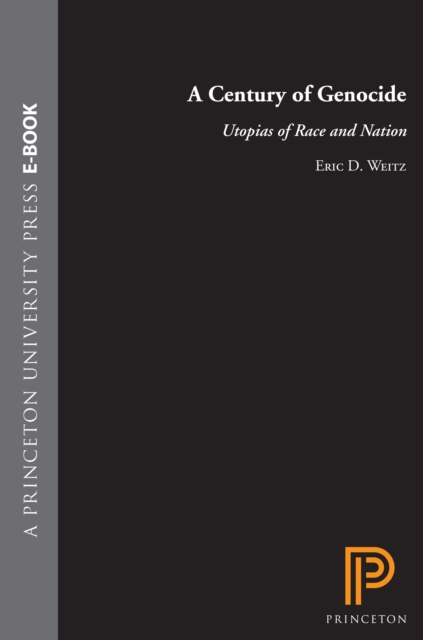
A century of genocide : utopias of race and nation
Why did the twentieth century witness unprecedented organized genocide? Can we learn why genocide is perpetrated by comparing different cases of genocide? Is the Holocaust unique, or does it share causes and features with other cases of state-sponsored mass murder? Can genocide be prevented? Blending gripping narrative with trenchant analysis, Eric Weitz investigates four of the twentieth century's major eruptions of genocide: the Soviet Union under Stalin, Nazi Germany, Cambodia under the Khmer Rouge, and the former Yugoslavia. Drawing on historical sources as well as trial records, memoirs, novels, and poems, Weitz explains the prevalence of genocide in the twentieth century--and shows how and why it became so systematic and deadly. Weitz depicts the searing brutality of each genocide and traces its origins back to those most powerful categories of the modern world: race and nation. He demonstrates how, in each of the cases, a strong state pursuing utopia promoted a particular mix of extreme national and racial ideologies. In moments of intense crisis, these states targeted certain national and racial groups, believing that only the annihilation of these \"enemies\" would enable the dominant group to flourish. And in each instance, large segments of the population were enticed to join in the often ritualistic actions that destroyed their neighbors. This book offers some of the most absorbing accounts ever written of the population purges forever associated with the names Stalin, Hitler, Pol Pot, and Milosevic. A controversial and richly textured comparison of these four modern cases, it identifies the social and political forces that produce genocide.
eBook

A novel CO2 utilization technology for the synergistic co-production of multi-walled carbon nanotubes and syngas
Dry reforming of methane (DRM) is a well-known process in which CH
4
and CO
2
catalytically react to produce syngas. Solid carbon is a well-known byproduct of the DRM but is undesirable as it leads to catalyst deactivation. However, converting CO
2
and CH
4
into solid carbon serves as a promising carbon capture and sequestration technique that has been demonstrated in this study by two patented processes. In the first process, known as CARGEN technology (CARbon GENerator), a novel concept of two reactors in series is developed that separately convert the greenhouse gases (GHGs) into multi-walled carbon nanotubes (MWCNTs) and syngas. CARGEN enables at least a 50% reduction in energy requirement with at least 65% CO
2
conversion compared to the DRM process. The second process presents an alternative pathway for the regeneration/reactivation of the spent DRM/CARGEN catalyst using CO
2
. Provided herein is the first report on an experimental demonstration of a 'switching' technology in which CO
2
is utilized in both the operation and the regeneration cycles and thus, finally contributing to the overall goal of CO
2
fixation. The following studies support all the results in this work: physisorption, chemisorption, XRD, XPS, SEM, TEM, TGA, ICP, and Raman analysis.
Journal Article

Probing Water and CO2 Interactions at the Surface of Collapsed Titania Nanotubes Using IR Spectroscopy
Collapsed titania nanotubes (cTiNT) were synthesized by the calcination of titania nanotubes (TiNT) at 650 °C, which leads to a collapse of their tubular morphology, a substantial reduction in surface area, and a partial transformation of anatase to the rutile phase. There are no significant changes in the position of the XPS responses for Ti and O on oxidation or reduction of the cTiNTs, but the responses are more symmetric than those observed for TiNTs, indicating fewer surface defects and no change in the oxidation state of titanium on oxidative and/or reductive pretreatment. The interaction of H2O and CO2 with the cTiNT surface was studied. The region corresponding to OH stretching absorptions extends below 3000 cm−1, and thus is broader than is typically observed for absorptions of the OH stretches of water. The exchange of protons for deuterons on exposure to D2O leads to a depletion of this extended absorption and the appearance of new absorptions, which are compatible with deuterium exchange. We discuss the source of this extended low frequency OH stretching region and conclude that it is likely due to the hydrogen-bonded OH stretches. Interaction of the reduced cTiNTs with CO2 leads to a similar but smaller set of adsorbed carbonates and bicarbonates as reported for reduced TiNTs before collapse. Implications of these observations and the presence of proton sources leading to hydrogen bonding are discussed relative to potential chemical and photochemical activity of the TiNTs. These results point to the critical influence of defect structure on CO2 photoconversion.
Journal Article

A Century of Genocide
Why did the twentieth century witness unprecedented organized genocide? Can we learn why genocide is perpetrated by comparing different cases of genocide? Is the Holocaust unique, or does it share causes and features with other cases of state-sponsored mass murder? Can genocide be prevented?
Blending gripping narrative with trenchant analysis, Eric Weitz investigates four of the twentieth century's major eruptions of genocide: the Soviet Union under Stalin, Nazi Germany, Cambodia under the Khmer Rouge, and the former Yugoslavia. Drawing on historical sources as well as trial records, memoirs, novels, and poems, Weitz explains the prevalence of genocide in the twentieth century--and shows how and why it became so systematic and deadly.
Weitz depicts the searing brutality of each genocide and traces its origins back to those most powerful categories of the modern world: race and nation. He demonstrates how, in each of the cases, a strong state pursuing utopia promoted a particular mix of extreme national and racial ideologies. In moments of intense crisis, these states targeted certain national and racial groups, believing that only the annihilation of these \"enemies\" would enable the dominant group to flourish. And in each instance, large segments of the population were enticed to join in the often ritualistic actions that destroyed their neighbors.
This book offers some of the most absorbing accounts ever written of the population purges forever associated with the names Stalin, Hitler, Pol Pot, and Milosevic. A controversial and richly textured comparison of these four modern cases, it identifies the social and political forces that produce genocide.
eBook

Viewing RNA-seq data on the entire human genome version 1; peer review: 3 approved
RNA-Seq Viewer is a web application that enables users to visualize genome-wide expression data from NCBI's Sequence Read Archive (SRA) and Gene Expression Omnibus (GEO) databases. The application prototype was created by a small team during a three-day hackathon facilitated by NCBI at Brandeis University. The backend data pipeline was developed and deployed on a shared AWS EC2 instance. Source code is available at
https://github.com/NCBI-Hackathons/rnaseqview.
Journal Article