
Catalogue Search | MBRL


Are you sure you want to remove the book from the shelf?

{{itemTitle}}
36,286
result(s) for
"Wen, Wei"
Sort by:

مجمع بيبا السكني
((مجمع بيبا السكني)) رواية تتخذ من موضوع التخفيف من حدة الفقر موضوعا لها، وتركز على \"الأقوياء\" الذين لا يقهرون في تجربة مكافحة الفقر. وتتخذ من مجمع بيبا السكني في إحدى القرى الجبلية الفقيرة في المنطقة السوفيتية المركزية بجيانغشي مسرحا لأحداث الرواية، ومن خلال الماضي والحاضر لأحد المجمعات السكنية وبأسلوب فني تعيد تجسيد معجزة التخفيف من حدة الفقر في تلك المنطقة القديمة بخصائص ومشاعر فريدة. في هذا المجمع السكني الفقير المليء بطابع الهاكا ودفء المشاعر الإنسانية، تستخدم الكاتبة القلم النسائي الدقيق والموهوب والحساس لتنسج للقاريء لوحة فنية لمجموعة من الشخصيات المحبوبة المحترمة، ومن بينهم خه جين هوا وجين تساي فنغ وغيرهم من كوادر مساعدة الفقراء، وشي هاو تساي وشيوي شيو تشن وغيرهم من المستهدفين للتخفيف من حدة الفقر، بالإضافة إلى عم أخرس وعجوز جيوي تسي اللذين يمثلان الجيش الأحمر القديم وأهالى العسكريين.
Book

Research on the Technological Progress of CZT Array Detectors
CdZnTe (CZT) is a new type of compound semiconductor that has emerged in recent years. Compared to other semiconductor materials, it possesses an ideal bandgap, high density, and high electron mobility, rendering it an excellent room-temperature composite semiconductor material for X-ray and γ-ray detectors. Due to the exceptional performance of CZT material, detectors manufactured using it exhibit high energy resolution, spatial resolution, and detection efficiency. They also have the advantage of operating at room temperature. CZT array detectors, furthermore, demonstrate outstanding spatial detection and three-dimensional imaging capabilities. Researchers worldwide have conducted extensive studies on this subject. This paper, building upon this foundation, provides a comprehensive analysis of CZT crystals and CZT array detectors and summarizes existing research to offer valuable insights for envisioning new detector methodologies.
Journal Article
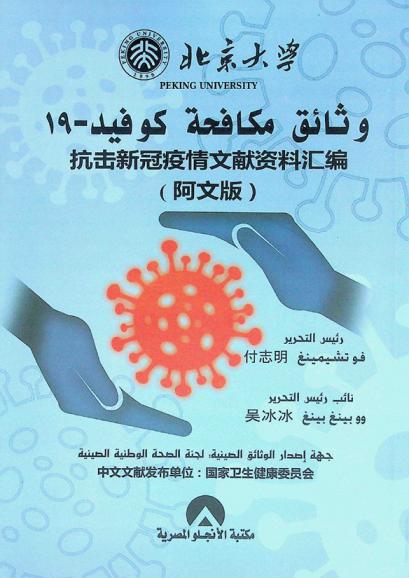
وثائق مكافحة كوفيد-19
بين يدي القارئ كتاب يجمع بين دفتيه الترجمة العربية لوثائق مكافحة كوفيد 19- التي أصدرتها لجنة الصحة الوطنية الصينية، ومـن بـين هذه الوثائق النسخ الست مـن آليات الوقاية مـن الالتهاب الرئوي الناجم عـن فيروس كـورونا المستجد ومكافحته، والنسخة التجريبية السابعة لآليات تـشخيص الالتـِهاب الـرئوي الناجِم عـن فـيروس كـورونا المستجد وعلاجه وغـيرها مـن الـمرفقات. وعـمل على ترجمة النـسخة الـعربية لوثائق مكافحة كـوفيد 19- الصينية فريـق ترجمة به أكـثر من عشريـن أستاذا وطالبا مـن قسم اللغة العربية بكلية اللغات الأجنبية بجامعة بكين بـالتعاون مع كلية الآداب في جامعة القاهرة والمعهد العالي للغات بتونس في جامعة قرطاج، في الفترة مـن مارس وحتى مايو 2020، قام خلالها فـريق الترجمة بترجمة قرابة 100 ألـف رمز صيني.
BOOK

CRISPR-Cas9-Mediated Genome Editing in Leishmania donovani
The prokaryotic CRISPR (clustered regularly interspaced short palindromic repeat)-Cas9, an RNA-guided endonuclease, has been shown to mediate efficient genome editing in a wide variety of organisms. In the present study, the CRISPR-Cas9 system has been adapted to Leishmania donovani , a protozoan parasite that causes fatal human visceral leishmaniasis. We introduced the Cas9 nuclease into L. donovani and generated guide RNA (gRNA) expression vectors by using the L. donovani rRNA promoter and the hepatitis delta virus (HDV) ribozyme. It is demonstrated within that L. donovani mainly used homology-directed repair (HDR) and microhomology-mediated end joining (MMEJ) to repair the Cas9 nuclease-created double-strand DNA break (DSB). The nonhomologous end-joining (NHEJ) pathway appears to be absent in L. donovani . With this CRISPR-Cas9 system, it was possible to generate knockouts without selection by insertion of an oligonucleotide donor with stop codons and 25-nucleotide homology arms into the Cas9 cleavage site. Likewise, we disrupted and precisely tagged endogenous genes by inserting a bleomycin drug selection marker and GFP gene into the Cas9 cleavage site. With the use of Hammerhead and HDV ribozymes, a double-gRNA expression vector that further improved gene-targeting efficiency was developed, and it was used to make precise deletion of the 3-kb miltefosine transporter gene ( LdMT ). In addition, this study identified a novel single point mutation caused by CRISPR-Cas9 in LdMT (M381T) that led to miltefosine resistance, a concern for the only available oral antileishmanial drug. Together, these results demonstrate that the CRISPR-Cas9 system represents an effective genome engineering tool for L. donovani. IMPORTANCE Leishmania donovani is the causative agent of fatal visceral leishmaniasis. To understand Leishmania infection and pathogenesis and identify new drug targets for control of leishmaniasis, more-efficient ways to manipulate this parasite genome are required. In this study, we have implemented CRISPR-Cas9 genome-editing technology in L. donovani . Both single- and dual-gRNA expression vectors were developed using a strong RNA polymerase I promoter and ribozymes. With this system, it was possible to generate loss-of-function insertion and deletion mutations and introduce drug selection markers and the GFP sequence precisely into the L. donovani genome. These methods greatly improved the ability to manipulate this parasite genome and will help pave the way for high-throughput functional analysis of Leishmania genes. This study further revealed that double-stranded DNA breaks created by CRISPR-Cas9 were repaired by the homology-directed repair (HDR) pathway and microhomology-mediated end joining (MMEJ) in Leishmania . Leishmania donovani is the causative agent of fatal visceral leishmaniasis. To understand Leishmania infection and pathogenesis and identify new drug targets for control of leishmaniasis, more-efficient ways to manipulate this parasite genome are required. In this study, we have implemented CRISPR-Cas9 genome-editing technology in L. donovani . Both single- and dual-gRNA expression vectors were developed using a strong RNA polymerase I promoter and ribozymes. With this system, it was possible to generate loss-of-function insertion and deletion mutations and introduce drug selection markers and the GFP sequence precisely into the L. donovani genome. These methods greatly improved the ability to manipulate this parasite genome and will help pave the way for high-throughput functional analysis of Leishmania genes. This study further revealed that double-stranded DNA breaks created by CRISPR-Cas9 were repaired by the homology-directed repair (HDR) pathway and microhomology-mediated end joining (MMEJ) in Leishmania .
Journal Article

Evidence for gene essentiality in Leishmania using CRISPR
The ability to determine the essentiality of a gene in the protozoan parasite Leishmania is important to identify potential targets for intervention and understanding the parasite biology. CRISPR gene editing technology has significantly improved gene targeting efficiency in Leishmania . There are two commonly used CRISPR gene targeting methods in Leishmania ; the stable expression of the gRNA and Cas9 using a plasmid containing a Leishmania ribosomal RNA gene promoter (rRNA-P stable protocol) and the T7 RNA polymerase based transient gRNA expression system in promastigotes stably expressing Cas9 (T7 transient protocol). There are distinct advantages with both systems. The T7 transient protocol is excellent for high throughput gene deletions and has been used to successfully delete hundreds of Leishmania genes to study mutant phenotypes and several research labs are now using this protocol to target all the genes in L . mexicana genome. The rRNA-P stable protocol stably expresses the plasmid derived gRNA and has been used to delete or disrupt single and multicopy Leishmania genes, perform single nucleotide changes and provide evidence for gene essentiality by directly observing null mutant promastigotes dying in culture. In this study, the rRNA-P stable protocol was used to target 22 Leishmania genes in which null mutants were not generated using the T7 transient protocol. Notably, the rRNA-P stable protocol was able to generate alive null mutants for 8 of the 22 genes. These results demonstrate the rRNA-P stable protocol could be used alone or in combination with the T7 transient protocol to investigate gene essentiality in Leishmania .
Journal Article

Endoscopic surgery compared with intensity-modulated radiotherapy in resectable locally recurrent nasopharyngeal carcinoma: a multicentre, open-label, randomised, controlled, phase 3 trial
The role of surgery compared with reirradiation in the primary treatment of patients with resectable, locally recurrent nasopharyngeal carcinoma (NPC) who have previously received radiotherapy is a matter of debate. In this trial, we compared the efficacy and safety outcomes of salvage endoscopic surgery versus intensity-modulated radiotherapy (IMRT) in patients with resectable locally recurrent NPC.
This multicentre, open-label, randomised, controlled, phase 3 trial was done in three hospitals in southern China. We included patients aged 18–70 years with a Karnofsky Performance Status score of at least 70 who were histopathologically diagnosed with undifferentiated or differentiated, non-keratinising, locally recurrent NPC with tumours confined to the nasopharyngeal cavity, the post-naris or nasal septum, the superficial parapharyngeal space, or the base wall of the sphenoid sinus. Eligible patients were randomly assigned (1:1) to receive either endoscopic nasopharyngectomy (ENPG group) or IMRT (IMRT group). Randomisation was done manually using a computer-generated random number code and patients were stratified by treatment centre. Treatment group assignment was not masked. The primary endpoint was overall survival, compared between the groups at 3 years. Efficacy analyses were done by intention to treat. Safety analysis was done in patients who received treatment according to the treatment they actually received. This trial was prospectively registered at the Chinese Clinical Trial Registry, ChiCTR-TRC-11001573, and is currently in follow-up.
Between Sept 30, 2011, and Jan 16, 2017, 200 eligible patients were randomly assigned to receive either ENPG (n=100) or IMRT (n=100). At a median follow-up of 56·0 months (IQR 42·0–69·0), 74 patients had died (29 [29%] of 100 patients in the ENPG group and 45 [45%] of 100 patients in the IMRT group). The 3-year overall survival was 85·8% (95% CI 78·9–92·7) in the ENPG group and 68·0% (58·6–77·4) in the IMRT group (hazard ratio 0·47, 95% CI 0·29–0·76; p=0·0015). The most common grade 3 or worse radiation-related late adverse event was pharyngeal mucositis (in five [5%] of 99 patients who underwent ENPG and 26 [26%] of 101 patients who underwent IMRT). Five [5%] of the 99 patients who underwent ENPG and 20 [20%] of the 101 patients who underwent IMRT died due to late toxic effects specific to radiotherapy; attribution to previous radiotherapy or trial radiotherapy is unclear due to the long-term nature of radiation-related toxicity.
Endoscopic surgery significantly improved overall survival compared with IMRT in patients with resectable locally recurrent NPC. These results suggest that ENPG could be considered as the standard treatment option for this patient population, although long-term follow-up is needed to further determine the efficacy and toxicity of this strategy.
Sun Yat-sen University Clinical Research 5010 Program
Journal Article

Nanoconfinement steers nonradical pathway transition in single atom fenton-like catalysis for improving oxidant utilization
The introduction of single-atom catalysts (SACs) into Fenton-like oxidation promises ultrafast water pollutant elimination, but the limited access to pollutants and oxidant by surface catalytic sites and the intensive oxidant consumption still severely restrict the decontamination performance. While nanoconfinement of SACs allows drastically enhanced decontamination reaction kinetics, the detailed regulatory mechanisms remain elusive. Here, we unveil that, apart from local enrichment of reactants, the catalytic pathway shift is also an important cause for the reactivity enhancement of nanoconfined SACs. The surface electronic structure of cobalt site is altered by confining it within the nanopores of mesostructured silica particles, which triggers a fundamental transition from singlet oxygen to electron transfer pathway for 4-chlorophenol oxidation. The changed pathway and accelerated interfacial mass transfer render the nanoconfined system up to 34.7-fold higher pollutant degradation rate and drastically raised peroxymonosulfate utilization efficiency (from 61.8% to 96.6%) relative to the unconfined control. It also demonstrates superior reactivity for the degradation of other electron-rich phenolic compounds, good environment robustness, and high stability for treating real lake water. Our findings deepen the knowledge of nanoconfined catalysis and may inspire innovations in low-carbon water purification technologies and other heterogeneous catalytic applications.
Nanoconfining single metal atom catalysts leads to faster decontamination, primarily due to improved interfacial mass transfer. This study identifies a change in the catalytic pathway as an additional significant factor contributing to the enhanced performance.
Journal Article
Discovery of a potent HMG-CoA reductase degrader that eliminates statin-induced reductase accumulation and lowers cholesterol
Statins are inhibitors of HMG-CoA reductase, the rate-limiting enzyme of cholesterol biosynthesis, and have been clinically used to treat cardiovascular disease. However, a paradoxical increase of reductase protein following statin treatment may attenuate the effect and increase the side effects. Here we present a previously unexplored strategy to alleviate statin-induced reductase accumulation by inducing its degradation. Inspired by the observations that cholesterol intermediates trigger reductase degradation, we identify a potent degrader, namely Cmpd 81, through structure–activity relationship analysis of sterol analogs. Cmpd 81 stimulates ubiquitination and degradation of reductase in an Insig-dependent manner, thus dramatically reducing protein accumulation induced by various statins. Cmpd 81 can act alone or synergistically with statin to lower cholesterol and reduce atherosclerotic plaques in mice. Collectively, our work suggests that inducing reductase degradation by Cmpd 81 or similar chemicals alone or in combination with statin therapy can be a promising strategy for treating cardiovascular disease.
Accumulated HMG-CoA reductase (HMGCR) limits the cholesterol-lowering effect of statins via a feedback loop. Here the authors developed a compound that degrades HMGCR, thus decreasing cholesterol levels and reducing atherosclerotic plaques.
Journal Article
Simultaneous nanocatalytic surface activation of pollutants and oxidants for highly efficient water decontamination
Removal of organic micropollutants from water through advanced oxidation processes (AOPs) is hampered by the excessive input of energy and/or chemicals as well as the large amounts of residuals resulting from incomplete mineralization. Herein, we report a new water purification paradigm, the direct oxidative transfer process (DOTP), which enables complete, highly efficient decontamination at very low dosage of oxidants. DOTP differs fundamentally from AOPs and adsorption in its pollutant removal behavior and mechanisms. In DOTP, the nanocatalyst can interact with persulfate to activate the pollutants by lowering their reductive potential energy, which triggers a non-decomposing oxidative transfer of pollutants from the bulk solution to the nanocatalyst surface. By leveraging the activation, stabilization, and accumulation functions of the heterogeneous catalyst, the DOTP can occur spontaneously on the nanocatalyst surface to enable complete removal of pollutants. The process is found to occur for diverse pollutants, oxidants, and nanocatalysts, including various low-cost catalysts. Significantly, DOTP requires no external energy input, has low oxidant consumption, produces no residual byproducts, and performs robustly in real environmental matrices. These favorable features render DOTP an extremely promising nanotechnology platform for water purification.
Removal of organic micropollutants from water through advanced oxidation processes is hampered by the excessive input of energy and/or chemicals as well as the large amounts of residuals resulting from incomplete mineralization. Here the authors present a new alternative water purification technology to adsorption and advanced oxidation.
Journal Article

5-methylcytosine promotes pathogenesis of bladder cancer through stabilizing mRNAs
Although 5-methylcytosine (m
5
C) is a widespread modification in RNAs, its regulation and biological role in pathological conditions (such as cancer) remain unknown. Here, we provide the single-nucleotide resolution landscape of messenger RNA m
5
C modifications in human urothelial carcinoma of the bladder (UCB). We identify numerous oncogene RNAs with hypermethylated m
5
C sites causally linked to their upregulation in UCBs and further demonstrate YBX1 as an m
5
C ‘reader’ recognizing m
5
C-modified mRNAs through the indole ring of W65 in its cold-shock domain. YBX1 maintains the stability of its target mRNA by recruiting ELAVL1. Moreover, NSUN2 and YBX1 are demonstrated to drive UCB pathogenesis by targeting the m
5
C methylation site in the
HDGF
3′ untranslated region. Clinically, a high coexpression of NUSN2, YBX1 and HDGF predicts the poorest survival. Our findings reveal an unprecedented mechanism of RNA m
5
C-regulated oncogene activation, providing a potential therapeutic strategy for UCB.
Chen et al. provide an m
5
C landscape in bladder cancer and show m
5
C enrichment at oncogene mRNAs that promotes tumour progression. They identify YBX1 as the m
5
C ‘reader’ that recruits ELAVL1 to stabilize mRNAs.
Journal Article