
Catalogue Search | MBRL


Are you sure you want to remove the book from the shelf?

{{itemTitle}}
89
result(s) for
"Wessel, Martin Schulze"
Sort by:
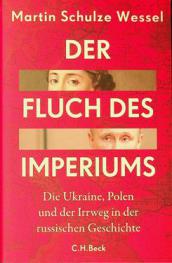

Osteuropäische Geschichte in der „Zeitenwende
The Russian invasion of Ukraine calls for reflection on concepts and institutions in the field of Eastern European history. I argue in my essay that it is necessary to rethink the concepts of empire and nation. There appears to be a tendency to see the political order of empire as highly complex, while the political order of the nation is assumed to have a propensity to destroy complexity. This bias often has a distorting effect when it comes to the study of Ukrainian history. The second part of my essay addresses certain problems of bilateral institutional academic cooperation between Germany and Russia and between Germany and Ukraine. In both cases, politicisation can be observed, but it takes very different forms. Bilateral cooperation with Ukraine is promising because there is a mutual interest in exchange and because Ukraine has a policy of open archives.
Journal Article

Politics and legitimacy in post-Soviet Eurasia
\"Political legitimacy has become a scarce resource in Russia and other post-Soviet states in Eurasia. Their capacity to deliver prosperity has suffered from economic crisis, the conflict in Ukraine and the ensuing confrontation with the West. Will nationalism and repression enable political regimes to survive? This book investigates the politics of legitimation in post-Soviet countries, focusing on how political and intellectual elites exploit different modes of legitimation. Combining cross-national comparisons and country case studies, it addresses state-economy relations, pro-presidential parties, courts, ideas of nationhood, historical and literary narratives. Weak economic performance, evidence of electoral fraud, unresponsive governments and the waning authority of presidents continue to jeopardize institutional legitimacy. Whilst incumbent elites have been able to shift between legitimation modes, this collection argues that shifts towards nationalism, artificial charisma and traditionalism will not be sufficient in the long term to keep elites in power\"-- Provided by publisher.
BOOK

Konvergenzen und Divergenzen in der europäischen Geschichte vom Prager Frühling bis heute
In the 1960s and 1970s, political debates in East Central Europe and Western Europe were influenced by the idea of convergence between the capitalist and the socialist systems that dominated Europe. After 1989, the idea of convergence was replaced by ideas that revolved around the one-sided adaptation of \"Europeanization\" and \"transformation\". Despite the great political and economic success of the transformation process, the concept of an \"ever closer European Union\" has lost its attractiveness in East Central Europe. Drawing on current political and cultural debates in East Central Europe, the paper argues that it is the asymmetrical nature of the transformation and the process of Europeanization that is causing new divergences in Europe today.
Journal Article

Die Tschechoslowakei
Der Gründung der Tschechoslowakei im Jahr 1918 lagen zwei Ziele zugrunde: die Schaffung einer slawischen Mehrheitsnation im ethnisch gemischten Mitteleuropa und eines gegen den Revisionismus der Kriegsverlierer gerüsteten Staates. Die Vertreibung der Deutschen in den Jahren 1945/1946 und die fundamentale Transformation des internationalen Systems nach dem Zweiten Weltkrieg, insbesondere das gewandelte Selbstverständnis Deutschlands, entzogen dem gemeinsamen Staat von Tschechen und Slowaken die Grundlage. Nach der Samtenen Revolution 1989 folgte unter demokratischen Verhältnissen rasch eine samtene Trennung. Obwohl die Bilanz der Tschechoslowakei in Sachen Sicherheit, Wohlfahrt und Rechtsstaatlichkeit keineswegs eindeutig negativ ausfällt, hatte dieser Staat seine zentrale Aufgabe verloren.
The founding of Czechoslovakia in 1918 was based on two objectives: the creation of a nation with a Slavic majority in ethnically mixed Central Europe and the establishment of a state armed against revisionism on the part of those who lost the First World War. The expulsion of the Germans in 1945-1946 and the fundamental transformation of the international system after the Second World War, in particular changes in Germany’s understanding of itself, deprived the common state of Czechs and Slovaks of its basis to exist. After the Velvet Revolution in 1989, a swift velvet separation followed under democratic conditions. Although Czechoslovakia’s balance sheet in matters of security, welfare, and the rule of law is by no means unambiguously negative, this state had lost its central function.
Journal Article
Der Krieg in der Ukraine und das Fach Osteuropäische Geschichte
With this discussion forum, the yearbooks take up the discussion about the status of Eastern European history, which is also conducted elsewhere.
Journal Article
Texturen von Loyalität: Überlegungen zu einem analytischen Begriff
How can we analyze the (dis)integration of supranational orders and societies? Studying loyalty offers a research perspective that has the potential to address the societal sustainability of emotion, disposition, and agency. However, a sufficient theory of loyalty remains to be developed. The article discusses the analytical potential of the concept ofloyalty in relation to other concepts like trust, fidelity, identity and solidarity. It provides a short introduction to historical research that has mainly focused on loyalty as a question of patriotism, citizenship, nationalism, and religion within nation states and empires. Drawing on questions of loyalty within the European Union, the paper concludes by discussing the institutional aspects of loyalty in order to offer a better explanation of the conditions of societal and supranational coherence.
Journal Article
Osteuropäische Geschichte in der „Zeitenwende
The Russian invasion of Ukraine calls for reflection on concepts and institutions in the field of Eastern European history. I argue in my essay that it is necessary to rethink the concepts of empire and nation. There appears to be a tendency to see the political order of empire as highly complex, while the political order of the nation is assumed to have a propensity to destroy complexity. This bias often has a distorting effect when it comes to the study of Ukrainian history. The second part of my essay addresses certain problems of bilateral institutional academic cooperation between Germany and Russia and between Germany and Ukraine. In both cases, politicisation can be observed, but it takes very different forms. Bilateral cooperation with Ukraine is promising because there is a mutual interest in exchange and because Ukraine has a policy of open archives.
Journal Article
Verfassungsbruch und Vertrauenskrise
Abstract
In the first wave of the pandemic, the performance of the East Central European
governments in the field of health policy was better than in many other European
countries. Nevertheless, the COVID-19 pandemic has deepened the political crises in
East Central Europe. If one compares the four Eastern Central European cases, the
constitutional distortions in Hungary and Poland are certainly the most serious nonepidemiological
consequences of COVID-19 in the region. Government measures in
the Czech Republic and Slovakia also triggered fears that the political leadership
would use the pandemic to restructure the political system.
Journal Article
Verfassungsbruch und Vertrauenskrise
In the first wave of the pandemic, the performance of the East Central European governments in the field of health policy was better than in many other European countries. Nevertheless, the COVID-19 pandemic has deepened the political crises in East Central Europe. If one compares the four Eastern Central European cases, the constitutional distortions in Hungary and Poland are certainly the most serious non-epidemiological consequences of COVID-19 in the region. Government measures in the Czech Republic and Slovakia also triggered fears that the political leadership would use the pandemic to restructure the political system.
Journal Article