
Catalogue Search | MBRL


Are you sure you want to remove the book from the shelf?

{{itemTitle}}
13
result(s) for
"Westheider, Ortrud"
Sort by:

Baroque pathways : the National Galleries Barberini Corsini in Rome : a publication series
In the 18th century Frederick II of Prussia modeled the Palais Barberini in Potsdam, Germany, after the Barberini Palace in Rome. In January 2017 the newly founded Museum Barberini moved into the recently reconstructed Palais Barberini in Potsdam. This book accompanies an exhibition in Potsdam of splendid 17th century works from the National Galleries Barberini Corsini in Rome. It provides not only a fitting background to Museum Barberini's fascinating architectural history but also highlights the important role of the Barberini family and Pope Urban VIII as patrons and art collectors. Exhibition: Barberini Museum, Potsdam, Germany ( 13.07. - 06.10.2019).
Book

A “Small Sensation” in Hamburg
Discusses the trilogy of exhibitions on show at the Bucerius Kunst Forum in Hamburg, Germany, exploring American art before 1950 within an international context. The author notes the exhibitions as 'New world: creating an American art' (2007) exploring early landscape painting, 'High society: American portraits of the Gilded Age' (2008) focusing on portrait painting, and 'Modern life: Edward Hopper and his time' (scheduled for 2009) examining the relationship between the city and countryside, states that American art developed along socially relevant lines, and concludes by highlighting the role of the Bucerius Kunst Forum in bringing lesser known periods of American art to German audiences and contributing to the debate and interpretation of American art in Europe.
Journal Article

Behind the mask : artists in the GDR
\"Behind the Mask: Artists in the GDR focuses on the wide variety of artistic self-staging in the GDR, between public and private, prescribed collectivism and creative individuality. The intention of the GDR's official state art was to exert political influence and this resulted in ideological entanglements that have been examined in numerous publications and exhibitions in recent years. Yet how did artists in the GDR critically scrutinize themselves and their own art when their prescribed role was to represent the interests of the state? The pertinent essays and outstanding reproductions in this volume draw a comprehensive picture of art in the GDR from a new and knowledge-enhancing perspective.\"-- Publisher's website.
Book


Turner in his element
In an extraordinary way, it appears that [Turner] (and presumably other artists) were eavesdropping on the [William Herschel] lectures. The impact on Turner was quite extraordinary, since, within two years of hearing of the sun's ridged surfaces, Turner was creating the same effect in paintings. He called his sketches \"colour beginnings\" and the constant preoccupation with fire, earth, air and water, the four elements if you like, led in time to some of the world's most glorious masterpieces, including Turner's atmospheric The Burning of the House of Lords and Commons, which was painted in 1834 and where a roaring inferno - terrifying in its intensity - surges up into the night sky - a devastation of orange and red burning horribly and, once again, rather like Herschel's view of the sun. Sections of this sumptuous book demand that you return to them again and again. The watercolour, Storm on Margate Sands, is extraordinary. For this reviewer, it twins with Turner's watercolour sketch (made 40 years after the Herschel lectures), which shows the sun, not as a tight ball in the sky, but as a disintegrated force. These two images are a high point in the book - at least for me. But there is much here to stimulate and excite those who love glorious colour and find stimulation in the achievements of a recognised genius.
Newspaper Article
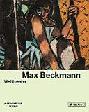
Max Beckmann : the world as a stage
\"Many paintings by Max Beckmann (1884-1950) depict the world of the theater, circus, and variety shows. Driven by an urge toward showmanship and display, the painter turned the pictorial frame into his stage. This publication is the first to pursue the question of how Beckmann's art fits in with the concept of world theater in the history of ideas. It opens up a new way of looking at the work of this exceptional artist of the twentieth century.\"-- back cover.
Book

A new art : photography and impressionism
\"In the 19th century, numerous photographers chose the same motifs as Impressionist painters: the forest of Fontainebleau, the cliffs of Étretat or the modern metropolis of Paris. They, too, studied the changing light, seasons and weather conditions. From its inception, photographers pursued artistic ambitions, as evidenced by their experimentation with composition and perspective, by means of various technical procedures. Until the First World War, the relationship between photography and painting was characterized both by competition and mutual influence. The exhibition and catalogue examine these interactions and illuminate the development of the new medium from the 1850s to its establishment as an autonomous art form around 1900\"-- Provided by publisher.
Book

Claude Monet : the truth of nature
\"Capturing fleeting natural impressions played a central role in the art of Claude Monet. He deeply engaged with the landscape and light of different places, from the metropolis of Paris to the Seine villages of Argenteuil and Giverny. This lavishly illustrated volume explores the development of Monet's art from the 1850s to the 1920s, focusing on the places, both at home and on his frequent travel, from which he drew inspiration for his painting. In addition, the book traces the critical shift in Monet's art that occurred when he began to focus on series of the same subjects such as haystacks, poplars, and the water lilies and pond at his meticulously designed garden in Giverny. Insightful and revealing, the book deepens our appreciation of Monet's art and allows us to experience anew his gift for bringing the natural world to life\"-- Provided by publisher.
Book
