
Catalogue Search | MBRL


Are you sure you want to remove the book from the shelf?

{{itemTitle}}
5
result(s) for
"Wetmore, Kevin J., 1969- author"
Sort by:


Eaters of the Dead
Spanning myth, history, and contemporary culture, a terrifying and illuminating excavation of the meaning of cannibalism. Every culture has monsters that eat us, and every culture repels in horror when we eat ourselves. From Grendel to medieval Scottish cannibal Sawney Bean, and from the Ghuls of ancient Persia to The Texas Chainsaw Massacre, tales of being consumed are both universal and universally terrifying. In this book, Kevin J. Wetmore Jr. explores the full range of monsters that eat the dead: ghouls, cannibals, wendigos, and other beings that feast on human flesh. Moving from myth through history to contemporary popular culture, Wetmore considers everything from ancient Greek myths of feeding humans to the gods, through sky burial in Tibet and Zoroastrianism, to actual cases of cannibalism in modern societies. By examining these seemingly inhuman acts, Eaters of the Dead reveals that those who consume corpses can teach us a great deal about human nature—and our deepest human fears.
eBook

Disability Theatre and Modern Drama
Bertolt Brecht’s silent Kattrin in Mother Courage, or the disability performance lessons of his Peachum in The Threepenny Opera; Tennessee Williams’ limping Laura Wingfield in The Glass Menagerie and hard-of-hearing Bodey in A Lovely Sunday for Creve Coeur; Samuel Beckett’s blind Hamm and his physically disabled parents Nagg and Nell in Endgame – these and many further examples attest to disability’s critical place in modern drama. This Companion explores how disability performance studies and theatre practice provoke new debate about the place of disability in these works. The book traces the local and international processes and tensions at play in disability theatre, and offers a critical investigation of the challenges its aesthetics pose to mainstream and traditional practice. The book’s first part surveys disability theatre’s primary principles, critical terms, internal debates and key challenges to theatre practice. Examining specific disability theatre productions of modern drama, it also suggests how disability has been re-envisaged and embodied on stage. In the book’s second part, leading disability studies scholars and disability theatre practitioners analyse and creatively re-imagine modern drama, demonstrating how disability aesthetics press practitioners and scholars to rethink these works in generative, valuable and timely ways.
eBook
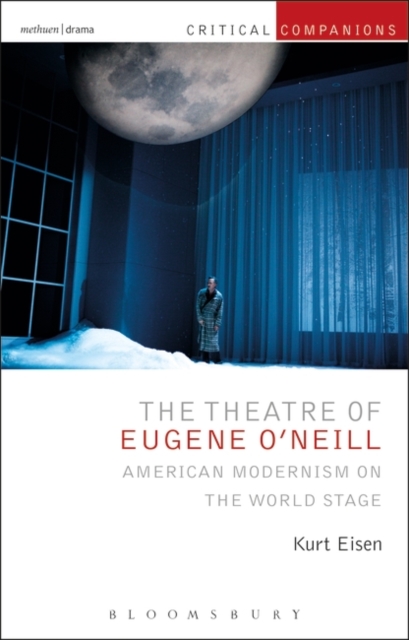
The theatre of Eugene O'Neill : American modernism on the world stage
The Theatre of Eugene O'Neill offers a new comprehensive overview of O'Neill's career and plays in the context of the American theatre. Organised thematically, it considers his modernist intervention in the theatre, offers readers detailed analysis of the plays, and assesses the recent resurgence in his reputation and new approaches to staging his work. It includes a study of all his major plays - The Emperor Jones, The Hairy Ape, The Iceman Cometh, Long Day's Journey Into Night, A Moon for the Misbegotten and Desire Under the Elms - besides numerous other full length and one act dramas. Eugene O'Neill is generally credited with inventing modern American drama, in a time of cultural ferment and lively artistic and intellectual change. Yet O'Neill's theatrical instincts were always shaped by American stage traditions that were inextricable from his sense of himself and his own national culture. This study shows that his theatrical modernism represents not so much a break from these traditions as a reinvention of their scope and significance in the context of international stage modernism, offering an image of national culture and character that opens new possibilities for the stage while remaining rooted in its past. Kurt Eisen traces O'Neill's modernism throughout the dramatists's work: his attempts to break from the themes, plots, and moral conventions of the traditional melodramatic theatre; his experiments in stagecraft and theme, and their connection to traditional theatre and his European modernist contemporaries; the turn toward direct and indirect self-representation; and his critique of the family and of American 'pipe dreams' and the allure of success. The volume additionally features four contributed essays providing further critical perspectives on O'Neill's work, alongside a chronology of the writer's life and times.
eBook
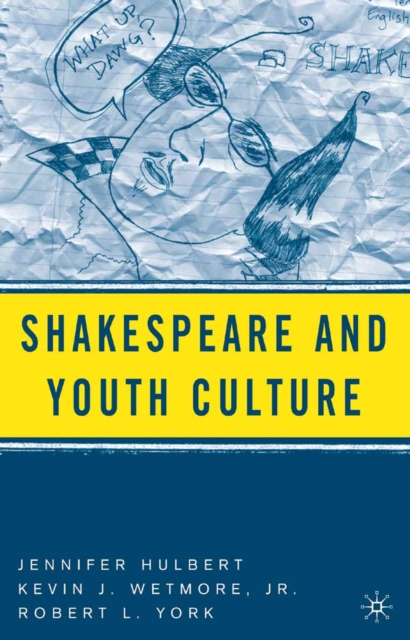
Shakespeare and youth culture
This book explores the appropriation of Shakespeare by youth culture and the expropriation of youth culture in the manufacture and marketing of 'Shakespeare'.Considering the reduction, translation and referencing of the plays and the man, the volume examines the confluence between Shakepop and rock, rap, graphic novels, teen films and pop.
eBook