
Catalogue Search | MBRL


Are you sure you want to remove the book from the shelf?

{{itemTitle}}
2
result(s) for
"Whitacre, Paula, author"
Sort by:

The inclusion of women in STEM in Kuwait and the United States : proceedings of a workshop
Women in the United States and Kuwait have made advances as researchers and leaders in science, engineering, and medical disciplines, yet challenges and barriers remain to enter and advance in these fields in both countries. Building on recent collaborations, the National Academies of Sciences, Engineering, and Medicine and the Kuwait Foundation for the Advancement of Sciences agreed on convening two workshops to identify evidence-based practices and resources for improving the inclusion of women as full participants in science, technology, engineering, and mathematics.This publication summarizes the presentations and discussion from the first workshop, held October 28-29, 2019, in Washington, D.C.
Book
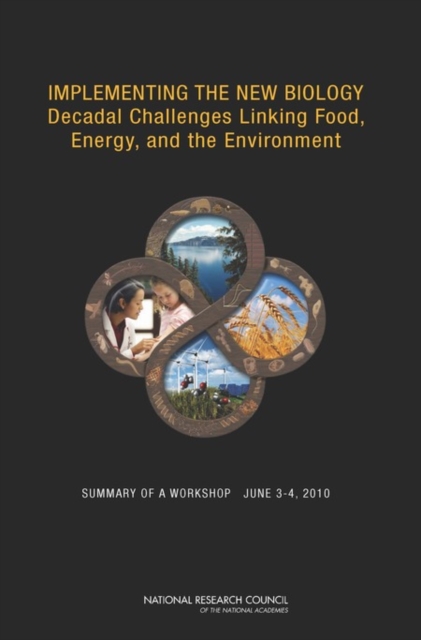
Implementing the New Biology
As the second decade of the 21st century begins, the challenge of how to feed a growing world population and provide sustainable, affordable energy to fulfill daily needs, while also improving human health and protecting the environment, is clear and urgent. Increasing demand for food and energy is projected at the same time as the supply of land and other resources decrease. Increasing levels of greenhouse gasses alter climate, which, in turn, has life-changing implications for a broad range of plant and animal species.
But promising developments are on the horizon-scientific discoveries and technologies that have the potential to contribute practical solutions to these seemingly intractable problems. As described in the 2009 National Research Council book, A New Biology for the 21st Century , biological research has experienced extraordinary scientific and technological advances in recent years that have allowed biologists to collect and make sense of ever more detailed observations at ever smaller time intervals. With these advances have come increasingly fruitful collaborations of biologists with scientists and engineers from other disciplines.
A New Biology for the 21st Century called for a series of workshops to provide concrete examples of what New Biology research programs could look like. The present volume summarizes the first of those workshops, Implementing the New Biology: Decadal Challenges Linking Food, Energy, and the Environment .
eBook