
Catalogue Search | MBRL


Are you sure you want to remove the book from the shelf?

{{itemTitle}}
203
result(s) for
"Whitaker, Beth"
Sort by:

Study Guide
Written to accompany the third edition of Todd Whitaker's bestselling title, What Great Teachers Do Differently, this study guide can be used by facilitators and participants in workshops, webinars, book study groups, or other professional development events. The guide features a variety of strategies and activities that will help teachers apply the book's concepts to their own classroom situation, so they can get the most out of the book and increase their impact in the classroom. Each chapter includes:
Key Concepts
Discussion Questions
Journal Prompts
Group Activities
Application Strategies
With this study guide, teachers will have a fun, collaborative, meaningful tool to assist with professional growth.
eBook

Study Guide: What Great Principals Do Differently
Written to accompany the third edition of Todd Whitaker’s bestselling title, What Great Principals Do Differently, this study guide can be used by facilitators and participants in workshops, webinars, book study groups, or other professional development events. The guide features a variety of strategies and activities that will help principals apply the book’s concepts to their own situation, so they can get the most out of the book, increase their professional growth, and have a greater impact as school leaders. Each chapter includes:
Key Concepts
Discussion Questions
Journal Prompts
Group Activities
Application Strategies
With this study guide, you can gain a deeper understanding of Whitaker’s acclaimed book and learn how to apply his concepts and ideas in daily practices.
eBook

Study Guide
Written to accompany the third edition of Todd Whitaker's bestselling title, What Great Teachers Do Differently, this study guide can be used by facilitators and participants in workshops, webinars, book study groups, or other professional development events.
eBook
Study Guide
Written to accompany the third edition of Todd Whitaker's bestselling title, What Great Principals Do Differently, this study guide can be used by facilitators and participants in workshops, webinars, book study groups, or other professional development events.
eBook

Rebel Natural Resource Exploitation and Conflict Duration
How does natural resource wealth influence the duration of civil conflicts? We theorize that the exploitation of natural resources can strengthen rebels’ “power to resist” the government, but this depends on how rebels earn funding from those resources. Distinguishing between the extortion and smuggling of natural resources, we posit that smuggling in particular is more likely to give rebels the flexibility and mobility needed to effectively resist government repression. We then test this proposition empirically using new data that identify not only whether rebels profit from resources but also how they do so. We find that only when rebels smuggle natural resources do civil conflicts last significantly longer. In contrast, conflicts in which rebel groups earn money from extorting natural resource production are not significantly more likely to endure. This finding is of special interest because past work has largely ignored how rebels earn income from natural resources and the implication this distinction might have on conflict processes.
Journal Article
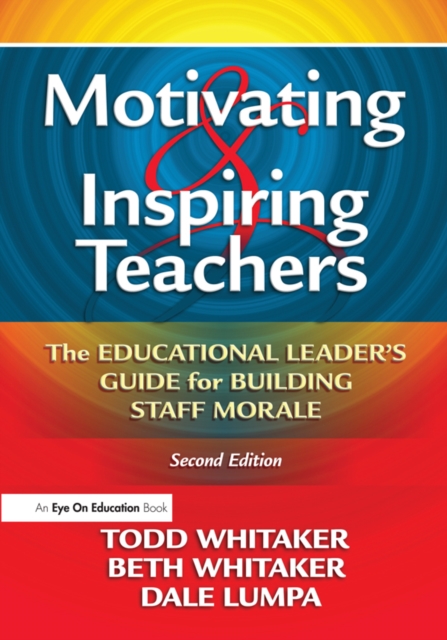
Motivating & Inspiring Teachers
Like the best-selling first edition, this book is filled with strategies to motivate your staff and maintain a high level of energy at your school. This guide will help all educators approach work every day in an enthusiastic, focused, and positive state of mind. This book will help you: -Motivate your faculty with the Friday Focus--a staff memo that works! -Understand the power of praise and how to best utilize it every day -Make sure staff meetings, teacher evaluation, and daily activities raise the energy level in your school -Maximize the holidays, open house nights, and other special events the make your staff feel special
About the Authors Preface Introduction Introduction to the Second Edition Part 1 The Role of the Leader 1 Why It All Works 2 Understanding Staff Dynamics 3 Teacher Leaders 4 Raise the Praise, Minimize the Criticize 5 One for All and All for One—Building A Shared Vision Part 2 Communication—It's What You Say and How You Say It 6 Perception—It's What You Say and How They Took It 7 The Friday Focus—A Staff Memo That Works! 8 Sharpening Your Focus 9 Making a Difference Each Day 10 Showing Off Your School Part 3 Supervision, Evaluation, and Morale Improvement? 11 Leadership by Walking Around 12 The Evaluation Process—Turning Painful into Positive Part 4 Meetings, Meetings, Meetings...You Mean These Can be Fun? 13 The Monthly Staff Meeting: From Drab to Dynamite 14 Small-Group Meetings 15 Opportunities for Renewal Part 5 Special Is as Special Does 16 Building and Enhancing Your Morale 17 Feeling Better Through Fitness and Wellness: Opportunities for Improvement! 18 Making Everybody Feel Like Somebody 19 New Is Not Just Different, It Should Be Better! Part 6 Focusing Outside the Staff to Affect Staff Morale 20 Feeling at Home While at Work: Enhancing the Physical Plant 21 The Student-Teacher Link Parting Thoughts References
eBook


Refugees, Foreign Nationals, and Wageni
Host governments have responded to the migration of Somali refugees throughout Africa in recent decades in different ways. Kenyan policymakers have treated Somalis primarily as a security threat, imposing restrictions on them that especially target this group. In South Africa, where economic and political competition fuel xenophobia, Somalis are part of a larger foreign national population that is seen as having disproportionate economic influence. However, Somali Bantus have been welcomed in Tanzania, which granted them citizenship even as it limited the mobility and activities of other refugees. A comparative analysis suggests that the relative balance among security, economic, political, and normative considerations shapes the extent and scope of host government policies.
les gouvernements hôtes ont réagi de différentes manières à la migration des réfugiés somaliens à travers L’Afrique au cours des dernières décennies. Les dirigeants kényans ont traité les Somaliens principalement comme une menace à la sécurité, imposant des restrictions les visant tout particulièrement. En Afrique du Sud, où la concurrence économique et politique alimente la xénophobie, les Somaliens font partie d’une population nationale étrangère plus importante et considérée comme exerçant une influence économique disproportionnée. Cependant, les Bantous somaliens ont été accueillis en Tanzanie, ce qui leur a octroyé la citoyenneté, même si cela a limité la mobilité et les activités d’autres réfugiés. Une analyse comparative suggère que l’équilibre relatif entre les considérations de sécurité, économiques, politiques et normatives conditionne l’étendue et la portée des politiques du gouvernement hôte.
Nas últimas décadas, a atitude dos governos africanos em relação às migrações de refugiados somalis tem assumido expressões variadas. No Quénia, os decisores políticos encaram os somalis sobretudo como uma ameaça à segurança, impondo restrições que afetam especificamente este grupo. Na África do Sul, onde a concorrência económica e política alimenta a xenofobia, os somalis integram a população de origem estrangeira que é vista como detendo uma influência económica desproporcionada. Todavia, os bantu da Somália são bem-vindos na Tanzânia, que lhes concedeu cidadania, mesmo quando impôs restrições à mobilidade e às atividades de outros refugiados. Uma análise comparativa sugere que a dimensão e a abrangência das políticas dos governos de acolhimento são determinadas por um equilíbrio relativo entre a segurança e considerandos de natureza económica, política e jurídica.
Journal Article

Funding rebellion
We introduce a new dataset measuring if and how rebel groups earn income from the exploitation of natural resources or criminal activities. The Rebel Contraband Dataset makes three contributions to data in this area. First, it covers a wide range of natural resources and types of crime. Second, it measures rebel engagement in these activities over time. Third, it distinguishes among different strategies that rebel groups employ, such as extortion and smuggling. Theory suggests that reliance on natural resource wealth should lead rebels to mistreat civilians, but cross-group research using existing data does not find support for this relationship. We replicate an earlier study using data from the Rebel Contraband Dataset and conclude that there is a consistent relationship between natural resource exploitation and civilian victimization. Future research can use the dataset to explore questions about the onset, location, severity, and outcomes of civil conflicts.
Journal Article