
Catalogue Search | MBRL


Are you sure you want to remove the book from the shelf?

{{itemTitle}}
4
result(s) for
"Whitaker, Keith, author"
Sort by:

Complete family wealth
\"Complete Family Wealth is a comprehensive resource for growing, maintaining, and managing wealth across generations. A successor to the classic Family Wealth, now in its 20th year, this book provides updated and expanded guidance to change the way you think about your wealth and legacy. This team of expert authors--who brought the field not only Family Wealth but also Family the Compact, The Cycle of the Gift, The Voice of the Rising Generation, and Family Trusts--ground Complete Family Wealth in a clear account of the \"five capitals\": human, intellectual, social, spiritual, and financial. The discussion covers the \"what,\" \"who,\" and \"how\" of family wealth management in clearly-delineated chapters that allow you to dip in as needed, from the principles of family enterprise to family governance, philanthropy, and more. Each family member plays a distinct role, and by exploring each member's responsibilities in terms of the family enterprise, this book provides insights and ideas for real-world families struggling with all-too-common challenges\"--Provided by publisher.
Book
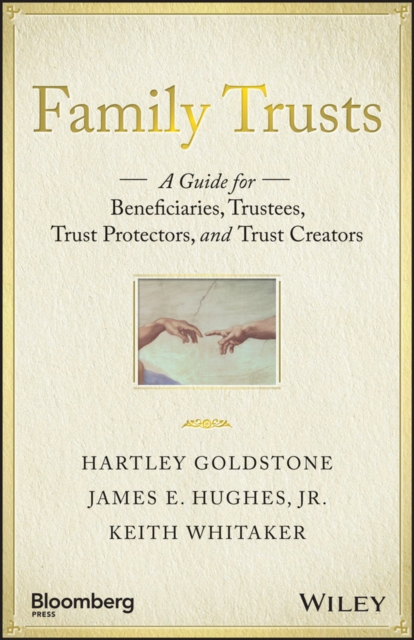
Family Trusts
An insightful and practical guide to family trusts
Family Trusts is a step-by-step guide for anyone involved in family trusts: trust creators, trustees, beneficiaries, and advisors. It will help families create and administer a culture that recognizes trusts as a gift of love.
Marrying the practical and emotional aspects of family wealth, this book provides a hands-on primer that focuses on fostering positive relationships, and structuring the trust appropriately for the situation and the people involved. It tackles difficult topics with frank and honest discussion, from the first beneficiary meeting to working with addictions, and more. Written by a team of experts in family wealth, this information is becoming increasingly crucial to the successful execution of a trust; you'll learn what type of person makes the best trustee, how to be an excellent beneficiary, and the technical aspects that help you build a better trust from the very beginning.
There's been a staggering increase in trustee/beneficiary litigation and hostility, but that doesn't mean it's inevitable. Plenty of trusts are running smoothly, with positive experiences on all sides. This book shows you how to set up your trust to succeed from the start, with step-by-step guidance and expert insight.
* Express clear and thoughtful intent for the trust
* Create a healthy and supportive culture
* Select the right trustee, trust protector, and trust advisor
* Take the time to prepare before initially meeting the beneficiary
* Conduct a productive first meeting to set a tone for the relationship
Historically, there has been little consideration given to the culture of trusts, and this oversight may be a key driver of the behavior that's becoming more prevalent. Family Trusts explores the nature of these relationships, and shows you how to build a trust that retains the nature and spirit with which it was intended.
eBook

The voice of the rising generation
Avoid \"Shirtsleeves to Shirtsleeves\" by Finding Your Voice
Growing up in a family with significant wealth or a family business can often feel like an exercise in silence. What should you ask? Whom should you ask? When? Is it ever right to talk about such things?
The Voice of the Rising Generation speaks directly to those who find themselves living in that silence, the so-called \"next generation.\" Great wealth or a family business can act like a \"black hole, \" sapping the dreams and aspirations of future generations who feel that they can never measure up to the fortune's founder. This book, written by a psychologist, an educator, and a wise counselor who single-handedly changed the landscape of family wealth, diagnoses with economy and precision the cause of entitlement and dependency. It is not too much money or too few chores. It is the failure of rising generations to individuate, that is, to pursue their dreams, develop their resilience, and find their voice.
Many books are addressed to parents and grandparents who worry about the effects of wealth on their descendants. Almost alone in the field, this book speaks directly to 20-, 30- and 40-somethings, encouraging them—literally, giving them courage—to meet the challenge of integrating wealth's power into their lives, rather than disappearing into the black hole. Readers will:
* Come to understand the true causes of entitlement and dependency
* Identify the psychological characteristics of the rising generation and the challenges proper to its development
* Clarify their own dreams, work, and vocation
* Navigate personal relationships and communication within the context of wealth
* Recognize the special challenges faced when rising is delayed until mid-life.
If you are a young person who is starting your life's journey and wondering about the effects of parental gifts, trusts, or a family business, this book will offer you questions, reflections, and lessons-learned to help you find your own way. If you are a parent, grandparent, elder, or mentor, The Voice of the Rising Generation can serve the young people in your life as a gift more precious than gold.
eBook

Wealth and the Will of God
Wealth and the Will of God looks at some of the spiritual resources of the Christian tradition that can aid serious reflection on wealth and giving. Beginning with Aristotle-who is crucial for understanding later Christian thought-the book discusses Aquinas, Ignatius, Luther, Calvin, and Jonathan Edwards. Though the ideas vary greatly, the chapters are organized to facilitate comparisons among these thinkers on issues of ultimate purposes or aspirations of human life; on the penultimate purposes of love, charity, friendship, and care; on the resources available to human beings in this life; and finally on ways to connect and implement in practice our identified resources with our ultimate ends.
eBook