
Catalogue Search | MBRL


Are you sure you want to remove the book from the shelf?

{{itemTitle}}
561
result(s) for
"White, G. Edward"
Sort by:

American legal history : a very short introduction
\"\"Law,\" in this book, includes basic common law subjects (such as property, torts, and contracts), as well as statutory and constitutional issues, including issues associated with gender, race, and domestic relations. The domain of law also includes foundational issues of American political and social theory, such as sovereignty, liberty, equality, and criminal justice. It includes the evolving status and roles of members of the legal profession as influential figures in American culture. Understanding the importance of law in American society begins with recognition of the multiple dimensions of \"legal\" activity. Law, over the course of American history, has reflected the changing cultural settings in which legal decisions have been made, and has helped shape those settings. The Constitution of the United States was drafted in response to a set of political, economic, social, and intellectual concerns held by some late eighteenth-century Americans. Those concerns centered on the structural and functional efficacy of the form of federal government created by the Articles of Confederation in 1781, and were a product of a particular set of historical experiences. But once the Constitution was drafted and ratified, an authoritative legal document had recast the form and structure of American government, providing a framework into which future political, economic, social, and intellectual issues would be set. As the example suggests, law has not been only a cultural artifact in the history of American civilization, but also a causal agent in the unfolding of that history\"-- Provided by publisher.
Book
Tort law and the construction of change : studies in the inevitability of history
Tort Law and the Construction of Change studies the interaction of law and social change in American history. Tort law—civil law made by judges, not legislators—is traditionally thought to arise out of legal precedent. But Kenneth S. Abraham and G. Edward White show that American judges over the course of the previous two centuries also paid close attention to changing societal contexts in which lawsuits for civil injuries arose. They argue that two versions of history–one grounded in the application of previous legal rules and the other responsive to larger societal changes—must be considered in tandem to grasp fully how American civil law has evolved over time.
In five fascinating chapters, they cover understudied areas of tort law, such as liability for nonphysical harm—including lawsuits for defamation, privacy, emotional distress, sexual harassment, and the hacking of confidential information—and aspects of tort litigation that have now disappeared, such as the prohibition against \"interested\" parties testifying in civil actions or the intentional infliction of temporal damage without justification. What emerges is a picture of the complicated legal dance American judges performed to cloak their decisions to make at times radical changes in tort law in response to social transformations. When confronting established tort doctrines under pressure from emerging social changes, they found ways to preserve at least the appearance of doctrinal continuity.
eBook

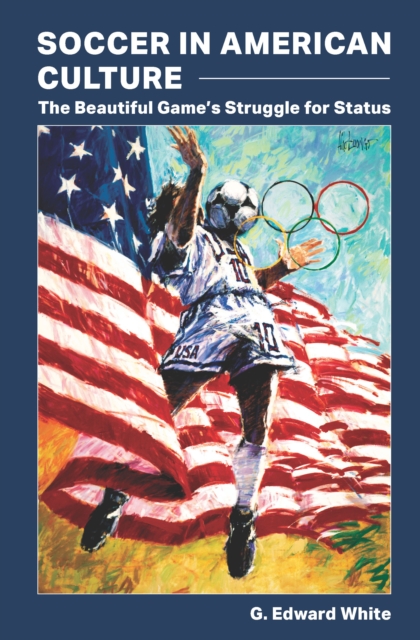
Soccer in American culture : the beautiful game's struggle for status
2022 Choice Outstanding Academic Title In Soccer in American Culture: The Beautiful Game's Struggle for Status , G.Edward White seeks to answer two questions.The first is why the sport of soccer failed to take root in the United States when it spread from England around much of the rest of the world in the late nineteenth and twentieth.
eBook

The Offensiveness Torts
Three established torts require the defendant’s behavior to be “offensive” or “highly offensive” in order to be actionable: offensive battery, public disclosure of true private facts, and intrusion on seclusion. Although what links these “offensiveness” torts together has not been recognized before, this Article demonstrates that they occupy a sub-category of tort liability that is coherent, insight-generating, and useful. The torts developed at different times and in a sense for different reasons, but all three rest on the same principle: the idea that individual autonomy involves not only inviolable bodily space, but also inviolable private and informational space. What counts as actionable wrongdoing for these torts depends on the cultural context, because what is considered offensive conduct may vary, as cultural conditions change. The typical victim (or observer) of one of these torts must plausibly have the reaction “How dare you?” for the offensiveness element of the tort to be satisfied. That is what links these three superficially disparate torts together, and warrants understanding them together, as protections against invasions of the different forms of inviolable space that are a core feature of every individual’s autonomy.
Journal Article

The political economy of the original constitution
[...] the approach, which rests on an \"interest group\" analysis of politics and economics fashionable for a time among twentieth-century historians, is anachronistic because it projects later conceptions of the organization of American political and economic life back on to the framing period. [...] how might one describe the political economy of the original Constitution? I. THE \"ECONOMIC\" PROVISIONS OF THE ORIGINAL CONSTITUTION A. The Central Concerns of the Constitution's Supporters The movement to alter the form of national government in the United States arose out of two sets of concerns that surfaced among creole elites8 between the mid-1770s and the mid-1780s as Americans fought the Revolutionary War and gained experience with state governments and the federal government of the Articles of Confederation.9 One set of concerns centered on the Articles of Confederation government's dependence on the States.10 Although the Continental Congress directed and financed the Revolutionary War effort, it had been largely dependent on the States in doing so because the Articles government needed the support of nine states to exercise any of its principal powers.11 Consequently, the Articles government never found an effective way to raise money throughout the War.
Journal Article

RETHINKING THE DEVELOPMENT OF MODERN TORT LIABILITY
The standard story of the development of modern tort liability is straightforward, but it turns out to be seriously misleading. The story is that in the second half of the nineteenth century, negligence liability replaced the premodern forms of action as the principal basis for the imposition of liability for accidental bodily injury and property damage. Suits for negligence arose, and insurance against liability for negligence was introduced. Both the tort system and the liability insurance system that emerged to accompany it were then quiescent for the next half century. Around 1970, tort liability began to expand substantially. For several decades, there have been contentions that at that point there was an \"explosion \" of tort liability. The problem with this story is that it trades on a misleading caricature of what was occurring in the tort system before 1970. Tort law doctrine was indeed largely quiescent during the middle four or five decades of the twentieth century, just as the story suggests, until the well-known doctrinal expansions of 1965 to 1985 began. But tort liability was not quiescent at all. The magnitude of payments made to tort victims increased exponentially between 1920 and 1970-by some measures, at a much greater rate than after 1970-and the magnitude of premiums paid for liability insurance increased in the same exponential manner. In addition, after liability insurance was introduced late in the nineteenth century, it did not simply become a behind-the-scenes source of financing for tort defendants, the way a passive guarantor stands behind a debtor. Rather, between 1920 and 1970, the courts confirmed, created, and extended liability insurers ' duty to defend their policyholders in tort suits and their duty to accept reasonable offers to settle tort suits against their policyholders. Liability insurers' active performance of those duties created an unrecognized dynamic cycle that intensified the growth of tort liability, bringing it to where it stood in 1970. This Article rethinks the conventional story by examining the important developments in tort liability and liability insurance that preceded the \"explosion\" of tort liability and offers historical, political, and intellectual reasons as to why the misleading conventional story took root.
Journal Article

First Amendment Imperialism and the Constitutionalization of Tort Liability
To what extent does the First Amendment impose limits on the permissible scope of tort liability? Until recently, the clear answer would have been, \"only under very limited circumstances. \" During the last few decades, however, the First Amendment has been so greatly expanding its empire that giving this answer is no longer possible. \"All bets are off\" would be a more accurate answer because the forms of speech to which the Supreme Court has extended First Amendment protection have become impressively broad. Although existing First Amendment restrictions on the permissible scope of tort liability currently are limited, the very existence of those restrictions confirms that many torts involving speech potentially are subject to First Amendment protection. And many torts do involve speech-the duty to warn about the dangers of prescription drugs, fraud, and even some forms of simple negligence are just a few examples. If the First Amendment of the future limited all or even many of these different constitutionally unprotectedforms of tort liability, then its scope would be pervasive. We contend, however, that neither existing First Amendment doctrine nor sensible constitutional policy supports extending free speech protection to torts that are accomplished through speech, except in extremely narrow circumstances. Extending First Amendment protection to such torts would aggravate what we argue are two of the principal risks posed by First Amendment imperialism: the erosion of the cultural distinction between truth and falsity, and devaluation of the status of speech about matters of public concern. Our contention is that most of the forms of speech involved in torts that are accomplished through speech currently are, and should remain, excluded from First Amendment protection. To support this contention, we examine the First Amendment's extension to previously unprotectedforms of speech over the last three-quarters of a century, compare the new First Amendment protections to the doctrinal elements of a series of torts that always or often are accomplished through speech, and argue that it would make little sense, as a matter of tort or constitutional law, to restrict liability for those torts on First Amendment grounds.
Journal Article

Alger Hiss's looking-glass wars : the covert life of a Soviet spy
For decades, a great number of Americans saw Alger Hiss as an innocent victim of McCarthyism--a distinguished diplomat railroaded by an ambitious Richard Nixon. And even as the case against Hiss grew over time, his dignified demeanor helped create an aura of innocence that outshone the facts in many minds. Now G. Edward White deftly draws together the countless details of Hiss's life--from his upper middle-class childhood in Baltimore and his brilliant success at Harvard to his later career as a self-made martyr to McCarthyism--to paint a fascinating portrait of a man whose life was devoted to perpetuating a lie. White catalogs the evidence that proved Hiss's guilt, from Whittaker Chambers's famous testimony, to copies of State Department documents typed on Hiss's typewriter, to Allen Weinstein's groundbreaking investigation in the 1970s. The author then explores the central conundrums of Hiss's life: Why did this talented lawyer become a Communist and a Soviet spy? Why did he devote so much of his life to an extensive public campaign to deny his espionage? And how, without producing any new evidence, did he convince many people that he was innocent? White offers a compelling analysis of Hiss's behavior in the face of growing evidence of his guilt, revealing how this behavior fit into an ongoing pattern of denial and duplicity in his life. The story of Alger Hiss is in part a reflection of Cold War America--a time of ideological passions, partisan battles, and secret lives. It is also a story that transcends a particular historical era--a story about individuals who choose to engage in espionage for foreign powers and the secret worlds they choose to conceal. In White's skilled hands, the life of Alger Hiss comes to illuminate both of those themes.
eBook