
Catalogue Search | MBRL


Are you sure you want to remove the book from the shelf?

{{itemTitle}}
422
result(s) for
"White, Hayden"
Sort by:


The Ethics of Narrative
The second volume of The Ethics of Narrative completes the project of bringing together nearly all of Hayden White's uncollected essays from the last two decades of his life, including articles, essays, and previously unpublished lectures. As in the first volume, volume 2 features White's trenchant articulations of his influential theories, as well as his explorations of a wide range of ideas and authors at the frontiers of critical theory, literature, and historical studies. These include the concept of utopia in history, modernism and postmodernism, constructivism, the conceptualization of historical periods such as \"the Sixties\" and \"the Enlightenment,\" the representation of the Holocaust in scholarly and literary writing, as well as essays on Frank Kermode, Saul Friedländer, and Krzysztof Pomian.
eBook
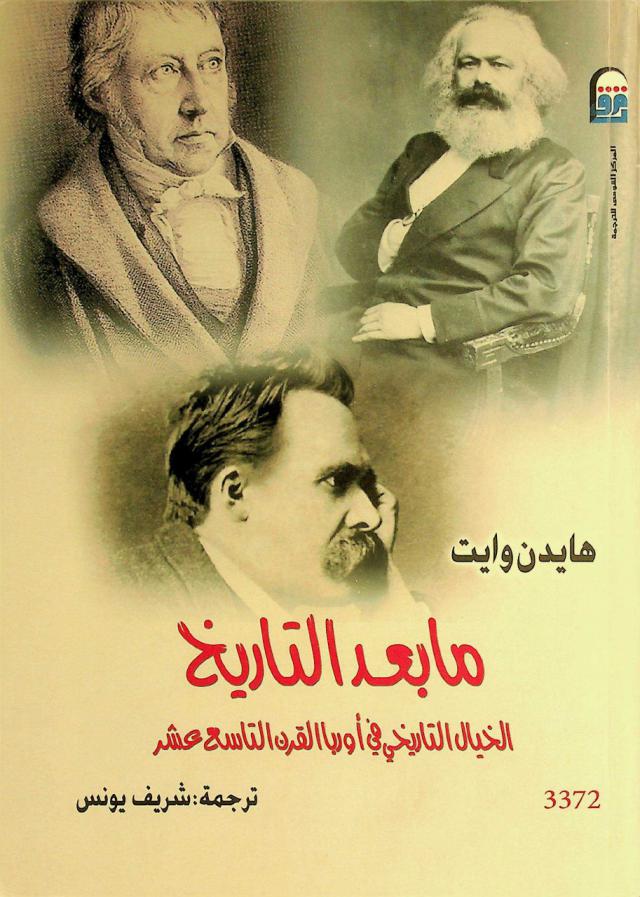
ما بعد التاريخ : الخيال التاريخي في أوربا القرن التاسع عشر
هذا الكتاب شكل ثورة في رؤيتنا للدراسات التاريخية، بأن قدم رؤية عن الكتابة التاريخية تنفي عنها إمكانية تقديم الماضي بشكل موضوعي، وتدرج الكتابات التاريخية في باب الأدب لا في باب العلم. بهذه الرؤية تحدى الكتاب وما زال مهنة التاريخ. ويرى وايت أن المؤرخ يصنع من الماضي سرديات ذات معنى. ولأنها سرديات فإن بنيتها لغوية وبلاغية. تنصب هذه الرؤية على الكتابة الحديثة للتاريخ، فهي لا تتناول كتابة التاريخ في العصور الوسطى بطريقة الحوليات، لكن بالطريقة التي نعرفها الآن، وهي كتابة بحث تاريخي عن موضوع معين، ليكن مثلا انهيار الإمبراطورية الرومانية أو تطور الزراعة في العصور الوسطى أو نشأة فكرة التقدم في العصر الحديث.
Book

The Ethics of Narrative
Hayden White is widely considered to be the most influential historical theorist of the twentieth century. The Ethics of Narrative brings together nearly all of White's uncollected essays from the last two decades of his life, revealing a lesser-known side of White: that of the public intellectual. From modern patriotism and European identity to Hannah Arendt's writings on totalitarianism, from the idea of the historical museum and the theme of melancholy in art history to trenchant readings of Leo Tolstoy and Primo Levi, the first volume of The Ethics of Narrative shows White at his most engaging, topical, and capacious.
Expertly introduced by editor Robert Doran, who lucidly explains the major themes, sources, and frames of reference of White's thought, this volume features five previously unpublished lectures, as well as more complete versions of several published essays, thereby giving the reader unique access to White's late thought. In addition to historical theorists and intellectual historians, The Ethics of Narrative will appeal to students and scholars across the humanities in such fields as literary and cultural studies, art history and visual studies, and media studies.
eBook
محتوى الشكل : الخطاب السردي والتمثيل التاريخي
تدور حول تأويل النصوص وسرد التاريخ. يحاول هادين وايت من خلال كتاباته وأفكاره التقريب بين مفهومي الأدب والتاريخ، إيمانًا بفكرة مفادها أن السردية في شرح التاريخ تضفي على النص بعدا بلاغيا أخاذا وجانبا غير هامشي من التشويق، دون أن يفقد صفة المطابقة بين ما هو مدون وما قد حدث فعلا في زمن ما. يضم هذا الكتاب ثمان مقالات اختارها المؤلف المهتم بالنصوص ذات البعد التاريخي ليضع أمام القارئ تفاصيل وحقائق مهمة جاءت بصبغة سردية تعالج الأحداث بطريقة غير اعتيادية عقب عليها وايت ليثبت موقفه في التصدي لمن يعتقد بأن النصوص التاريخية محكومة بنسق جامد ورتيب. الفصل الأول بعنوان قيمة السردية في تمثيل الواقع والفصل الثاني جاء بعنوان مسألة السرد في النظرية التاريخية المعاصرة.
Book

Applications of transcranial Doppler in the ICU: a review
Transcranial Doppler (TCD) ultrasonography is a technique that uses a hand-held Doppler transducer (placed on the surface of the cranial skin) to measure the velocity and pulsatility of blood flow within the intracranial and the extracranial arteries. This review critically evaluates the evidence for the use of TCD in the critical care population.
TCD has been frequently employed for the clinical evaluation of cerebral vasospasm following subarachnoid haemorrhage (SAH). To a lesser degree, TCD has also been used to evaluate cerebral autoregulatory capacity, monitor cerebral circulation during cardiopulmonary bypass and carotid endarterectomies and to diagnose brain death. Technological advances such as M mode, colour Doppler and three-dimensional power Doppler ultrasonography have extended the scope of TCD to include other non-critical care applications including assessment of cerebral emboli, functional TCD and the management of sickle cell disease.
Despite publications suggesting concordance between TCD velocity measurements and cerebral blood flow there are few randomized controlled studies demonstrating an improved outcome with the use of TCD monitoring in neurocritical care. Newer developments in this technology include venous Doppler, functional Doppler and use of ultrasound contrast agents.
Journal Article
Modernism and the sense of history
Modernism in the arts and literature is conventionally thought of as anti-traditional and therefore as anti-historical, in spite of the insistence by Eliot, Greenberg, Pound, and others of their of their interest in both archaic traditions and the redemption of what was best in ‘the past.’ Modern historiographical theory distinguishes between ‘the past’ and that ‘history’ which is only a part of it. This essay exploits this distinction by seeking to identify the extent to which the first generation of modernist writers rejected ‘history’ as an impediment to a knowledge of ‘a past’ on which to base a reformation of a Western culture grown stagnant and desiccated as a result of ‘modernization.’
Journal Article

Effectiveness of the ABCDEF bundle on delirium, functional outcomes and quality of life in intensive care patients: a study protocol for a randomised controlled trial with embedded process evaluation
IntroductionHospital mortality for critically ill patients has decreased significantly throughout the developed world over the past two decades, attributable to improvements in the quality of intensive care, advances in critical care medicine and technologies that provide long-term multiorgan support. However, the long-term outcomes of intensive care unit (ICU) survivors is emerging as a real issue. Cognitive and physical impairments suffered by ICU survivors are common including profound weakness, pain and delirium which are inextricably linked. This study aims to determine the effectiveness of the Assess, prevent and manage pain; Both spontaneous awakening and spontaneous breathing trials; Choice of sedation and analgesia; Delirium: assess, prevent and manage; Early mobility and exercise; Family engagement and empowerment (ABCDEF) bundle in reducing ICU-related short-term and long-term consequences of critical illness through a randomised controlled trial (RCT).Methods and analysisThe study will be a single-centre, prospective RCT. A total of 150 participants will be recruited and randomised to either receive the ABCDEF bundle protocol or non-protocolised standard care for the duration of the participant’s admission in the ICU. The primary outcome is delirium status measured using the Confusion Assessment Measure for ICU (CAM-ICU). Secondary outcomes include physical function measured by the Functional Independence Measure and quality of life measured by the European Quality of Life five dimensions, five-level questionnaire. A mixed-method process evaluation will contribute to understanding the experience of health teams who implement the ABCDEF bundle into practice.Ethics and disseminationEthics approval was provided by the Metro South Health Human Research Ethics Committee (HREC) (EC00167) and the Griffith University’s HREC prior to study commencement.Study results will be disseminated by presentations at conferences and via publications to peer-review journals.Trial registration numberACTRN12620000736943; Pre-results.
Journal Article

A Systematic Review of Intravenous β-Hydroxybutyrate Use in Humans – A Promising Future Therapy?
Therapeutic ketosis is traditionally induced with dietary modification. However, owing to the time delay involved, this is not a practical approach for treatment of acute conditions such as traumatic brain injury. Intravenous administration of ketones would obviate this problem by rapidly inducing ketosis. This has been confirmed in a number of small animal and human studies. Currently no such commercially available product exists. The aim of this systematic review is to review the safety and efficacy of intravenous beta-hydroxybutyrate. The Web of Science, PubMed and EMBASE databases were searched, and a systematic review undertaken. Thirty-five studies were included. The total beta-hydroxybutyrate dose ranged from 30 to 101 g administered over multiple doses as a short infusion, with most studies using the racemic form. Such dosing achieves a beta-hydroxybutyrate concentration >1 mmol/L within 15 min. Infusions were well tolerated with few adverse events. Blood glucose concentrations occasionally were reduced but remained within the normal reference range for all study participants. Few studies have examined the effect of intravenous beta-hydroxybutyrate in disease states. In patients with heart failure, intravenous beta-hydroxybutyrate increased cardiac output by up to 40%. No studies were conducted in patients with neurological disease. Intravenous beta-hydroxybutyrate has been shown to increase cerebral blood flow and reduce cerebral glucose oxidation. Moreover, beta-hydroxybutyrate reduces protein catabolism and attenuates the production of counter-regulatory hormones during induced hypoglycemia. An intravenous beta-hydroxybutyrate formulation is well tolerated and may provide an alternative treatment option worthy of further research in disease states.
Journal Article
