
Catalogue Search | MBRL


Are you sure you want to remove the book from the shelf?

{{itemTitle}}
3
result(s) for
"White, Lisa J. author"
Sort by:

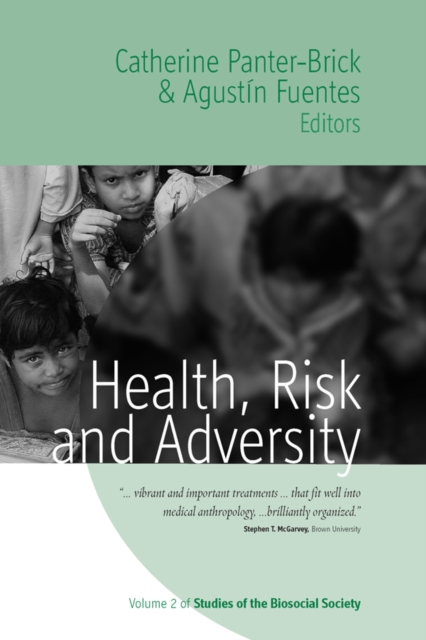
Health, risk, and adversity
Research on health involves evaluating the disparities that are systematically associated with the experience of risk, including genetic and physiological variation, environmental exposure to poor nutrition and disease, and social marginalization. This volume provides a unique perspective - a comparative approach to the analysis of health disparities and human adaptability - and specifically focuses on the pathways that lead to unequal health outcomes. From an explicitly anthropological perspective situated in the practice and theory of biosocial studies, this book combines theoretical rigor with more applied and practice-oriented approaches and critically examines infectious and chronic diseases, reproduction, and nutrition.
eBook

Social dimensions of climate change
Climate change is arguably the most profound challenge facing the international community in the 21st century. It is as much a challenge for poverty reduction, growth and development as it is a global environmental issue. It could undermine or reverse progress in reducing poverty and attaining the Millenium Development Goals, thereby unraveling many of the development gains of recent decades. It already threatens the livelihoods, health and well-being of millions of people worldwide, and of the poorest and most vulnerable groups in particular. And it has potentially far-reaching implications for international relations and for personal, national and regional security. While significant uncertainties still remain, tremendous strides have been made over recent years in improving scientific understanding of the human processes driving global climate change and the likely impacts on world ecosystems. What is much less well understood is how these dynamics in the physical environment will interact with those of socio-economic systems, what the consequences will be for society, and how best to address them. In order to focus attention on these previously neglected and poorly understood social dimensions of climate change, the World Bank convened an international workshop in March, 2008, with the participation of community activists, former heads of state, leaders of Indigenous Peoples, representatives of non-governmental organizations, international researchers, and staff of the World Bank and other international development agencies. This edited volume brings together revised versions of many of the papers presented during that workshop, as an initial step in taking stock of existing knowledge on the social dimensions of climate change. Several new papers were also commissioned for this volume.
eBook