
Catalogue Search | MBRL


Are you sure you want to remove the book from the shelf?

{{itemTitle}}
4
result(s) for
"White, Nigel D., 1961- author"
Sort by:

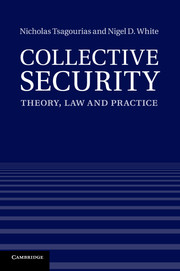
Collective Security
This analysis of collective security covers its institutional, operational and legal parameters along with the United Nations system, presenting it as a global public order institution for maintaining peace. The authors study its constitutional premises as they are shaped by the forces of law and politics. After an historical account of initiatives and projects for global peace, the authors explain the morphology of collective security as a global public order institution and outline its triggers, institutions, actors, components and tools. They go on to analyse its legal properties and the processes of political, legal and criminal accountability. The analysis and assessment are informed throughout by practice drawn from examples including Korea, Iraq and Libya, and by a wealth of cases from national and international jurisdictions.
eBook

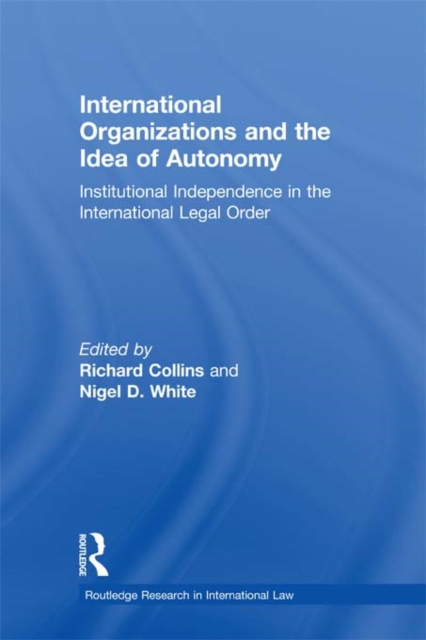
International Organizations and the Idea of Autonomy
International Organizations and the Idea of Autonomy is an exploratory text looking at the idea of intergovernmental organizations as autonomous international actors. In the context of concerns over the accountability of powerful international actors exercising increasing levels of legal and political authority, in areas as diverse as education, health, financial markets and international security, the book comes at a crucial time. Including contributions from leading scholars in the fields of international law, politics and governance, it addresses themes of institutional autonomy in international law and governance from a range of theoretical and subject-specific contexts. The collection looks internally at aspects of the institutional law of international organizations and the workings of specific regimes and institutions, as well as externally at the proliferation of autonomous organizations in the international legal order as a whole. Although primarily a legal text, the book takes a broad, thematic and inter-disciplinary approach. In this respect, International Organizations and the Idea of Autonomy offers an excellent resource for both practitioners and students undertaking courses of advanced study in international law, the law of international organizations, global governance, as well as aspects of international relations and organization.
eBook