
Catalogue Search | MBRL


Are you sure you want to remove the book from the shelf?

{{itemTitle}}
3
result(s) for
"Wiesner, Merry E., 1952- author"
Sort by:

Early modern Europe, 1450-1789
\"The title of this book, and perhaps also of the course for which you are reading it, is Early Modern Europe. The dates in the title inform you about the chronological span covered (1450-1789), but they do not explain the designation \"early modern.\" That term was developed by historians seeking to refine an intellectual model first devised during this very period, when scholars divided European history into three parts: ancient (to the end of the Roman Empire in the west in the fifth century), medieval (from the fifth century to the fifteenth), and modern (from the fifteenth century to their own time). In this model, the break between the Middle Ages and the modern era was marked by the first voyage of Columbus (1492) and the beginning of the Protestant Reformation (1517), though some scholars, especially those who focused on Italy, set the break somewhat earlier with the Italian Renaissance. This three-part periodization became extremely influential, and as the modern era grew longer and longer, historians began to divide it into \"early modern\" - from the Renaissance or Columbus to the French Revolution in 1789 - and what we might call \"truly modern\" - from the French Revolution to whenever they happened to be writing\"-- Provided by publisher.
Book
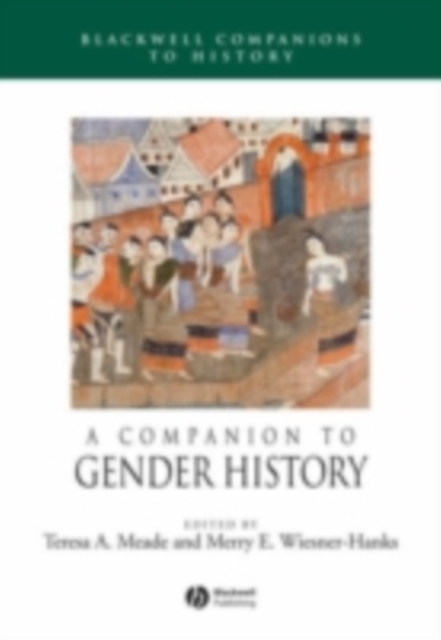
A companion to gender history
A Companion to Gender History surveys the history of women around the world, studies their interaction with men in gendered societies, and looks at the role of gender in shaping human behavior over thousands of years. An extensive survey of the history of women around the world, their interaction with men, and the role of gender in shaping human behavior over thousands of years. Discusses family history, the history of the body and sexuality, and cultural history alongside women's history and gender history. Considers the importance of class, region, ethnicity, race and religion to the formation of gendered societies. Contains both thematic essays and chronological-geographic essays. Gives due weight to pre-history and the pre-modern era as well as to the modern era. Written by scholars from across the English-speaking world and scholars for whom English is not their first language.
eBook
