
Catalogue Search | MBRL


Are you sure you want to remove the book from the shelf?

{{itemTitle}}
9
result(s) for
"Wilkinson, Darrell"
Sort by:

Deliberate vocabulary learning from word cards
While word cards are a widely supported method of deliberately studying foreign language vocabulary, there is a surprising lack of research-based evidence supporting them. This paper first reviews some of the key literature on word cards and then briefly describes two experiments concerning word card methodology. The first experiment described in this paper examined the learning outcomes of making word cards while the second experiment compared the use of self-made word cards with premade cards. The results of the first study indicated that the simple process of making word cards results in significant shortterm vocabulary learning, but this new knowledge is sensitive to attrition if no further study is carried out soon after making the cards. The results of the second experiment indicated that while both methods are effective in the short and long-term, learners may be better studying from premade cards. Taken together, the results offer support for the use of word cards for foreign language vocabulary learning.
Journal Article

Effects of Word Card Methodology and Testing on Vocabulary Knowledge and Motivation
This research explores the efficacy of word cards as a deliberate vocabulary learning technique and investigates the effects of testing on motivation for deliberate vocabulary study. While word cards are a widely supported method of deliberately studying target foreign language vocabulary, there is a surprising lack of research-based evidence supporting them, and very few researchers have asked students how they feel about word card learning. In addition, it is well known that testing can increase extrinsic motivation, but the motivational effects of regular vocabulary testing has so far been largely overlooked. The first two experiments in this study investigated the learning outcomes associated with making and studying from word cards. Experiment 1 is unique in that it is the first known study to isolate the learning outcomes of making word cards. The results indicated that the process of making word cards results in significant initial vocabulary learning, but a substantial amount of this new knowledge is lost in a relatively short period of time if no further study is carried out. The second experiment compared the use of self-made word cards with premade cards. The results indicated that although both methods are effective in the short and long-term, learners might be better studying from premade cards. However, the results of the third experiment led to the conclusion that premade cards are best suited to motivated learners. Qualitative data analysis revealed that learners generally have positive views of word card learning and understand the benefits it offers over other methods such as learning from lists or notebooks. The final experiment in this study examined the motivational effects of regular student-generated vocabulary testing and investigated whether learners can act as reliable raters of their peers’ vocabulary development. Results indicated that peer-to-peer vocabulary testing increases motivation for deliberate vocabulary learning even if test scores do not affect the students’ grades. Surprisingly, the student-generated and administered tests were more intrinsically motivating than extrinsically so. Taken together, the results of the various experiments offer support for the use of word cards for foreign language vocabulary learning and indicate that motivation for such types of learning can be increased by through peer testing.
Dissertation

Educational Reforms and Development in Japan: Language and Culture Education for Global Competitiveness
Due to an increase in globalization, international business, and the Tokyo Olympics being held in 2020, Japan faces a growing need to develop a population with the English language skills and cultural awareness needed for global success. The need to address these goals has been noted by the Ministry of Education, Culture, Sports, Science and Technology (MEXT) who is spending large amounts of money on various initiatives in schools, universities, and businesses across Japan. This papers outlines some of the key policy changes and educational initiatives that are being spearheaded by MEXT in order to develop the Japanese populous' English language proficiency and to create a more international higher education system in order for Japan to remain competitive on the global arena. These initiatives will then be framed within the concept of English as a Lingua Franca (ELF) or English as an international language (EIL). Finally, this paper specifically describes a number of programs, all of which have received considerable funding from MEXT, that have been developed at one university in Tokyo to develop globally minded bilingual individuals capable of performing in international academic or business contexts. Results of some of these programs are described in terms of language gains, study abroad placement, and post-graduation employment statistics.
Journal Article

Comprehensive genomic characterization defines human glioblastoma genes and core pathways
Human cancer cells typically harbour multiple chromosomal aberrations, nucleotide substitutions and epigenetic modifications that drive malignant transformation. The Cancer Genome Atlas (TCGA) pilot project aims to assess the value of large-scale multi-dimensional analysis of these molecular characteristics in human cancer and to provide the data rapidly to the research community. Here we report the interim integrative analysis of DNA copy number, gene expression and DNA methylation aberrations in 206 glioblastomas—the most common type of adult brain cancer—and nucleotide sequence aberrations in 91 of the 206 glioblastomas. This analysis provides new insights into the roles of
ERBB2
,
NF1
and
TP53
, uncovers frequent mutations of the phosphatidylinositol-3-OH kinase regulatory subunit gene
PIK3R1
, and provides a network view of the pathways altered in the development of glioblastoma. Furthermore, integration of mutation, DNA methylation and clinical treatment data reveals a link between
MGMT
promoter methylation and a hypermutator phenotype consequent to mismatch repair deficiency in treated glioblastomas, an observation with potential clinical implications. Together, these findings establish the feasibility and power of TCGA, demonstrating that it can rapidly expand knowledge of the molecular basis of cancer.
Glioblastoma: large-scale genomics and a lab model
The Cancer Genome Atlas, a large-scale genomics project to catalogue cancer-linked mutations, is starting to produce results. Glioblastoma, the most common brain cancer, was the first target for the project and the initial results, published AOP on 4 September, are now in print. Genes newly implicated in glioblastoma include tumour suppressors (
NF1
,
RB1
,
ATM
and
APC
) and several tyrosine kinase genes. Glioblastoma is extremely resistant to therapy, hence the potential importance of the development of a possible model system. Zheng
et al
. report that mice lacking the tumour suppressors
p53
and
Pten
develop tumours resembling human glioblastomas, associated with increased Myc protein levels. As well as offering a potential system for testing therapeutics, this points to c-Myc as a possible drug target.
With a comprehensive analysis of sequencing data, DNA copy number, gene expression and DNA methylation in a large number of human glioblastomas, The Cancer Genome Atlas project initiative provides a broad overview of the genes and pathways that are altered in this cancer type.
Journal Article

High-level production of animal-free recombinant transferrin from Saccharomyces cerevisiae
Background
Animal-free recombinant proteins provide a safe and effective alternative to tissue or serum-derived products for both therapeutic and biomanufacturing applications. While recombinant insulin and albumin already exist to replace their human counterparts in cell culture media, until recently there has been no equivalent for serum transferrin.
Results
The first microbial system for the high-level secretion of a recombinant transferrin (rTf) has been developed from
Saccharomyces cerevisiae
strains originally engineered for the commercial production of recombinant human albumin (Novozymes' Recombumin
®
USP-NF) and albumin fusion proteins (Novozymes' albufuse
®
). A full-length non-N-linked glycosylated rTf was secreted at levels around ten-fold higher than from commonly used laboratory strains. Modification of the yeast 2 μm-based expression vector to allow overexpression of the ER chaperone, protein disulphide isomerase, further increased the secretion of rTf approximately twelve-fold in high cell density fermentation. The rTf produced was functionally equivalent to plasma-derived transferrin.
Conclusions
A
Saccharomyces cerevisiae
expression system has enabled the cGMP manufacture of an animal-free rTf for industrial cell culture application without the risk of prion and viral contamination, and provides a high-quality platform for the development of transferrin-based therapeutics.
Journal Article

Supervision and autonomy of ophthalmology residents in the outpatient clinic in the United States II: a survey of senior residents
Background
A balance between autonomy and supervision can be difficult to obtain in medical education. In this study, we sought to determine whether the presence and level of supervision of ophthalmology resident outpatient clinic correlates with metrics of resident success, professionalism and stress.
Methods
A survey was emailed to all US ophthalmology program directors requesting it be forwarded to PGY4 residents. Questions included whether their program provided a resident-hosted outpatient clinic, and if so, whether residents were mandated to discuss every patient with faculty. Residents were assigned to three categories based on this question (0: no clinic, 1: mandated faculty input, 2: discretionary faculty input). Success metrics included numbers of manuscripts submitted, OKAP scores and success in obtaining fellowships. Professionalism metrics included rating comfort obtaining informed consent, breaking bad news, managing time in clinic, and confidence in providing care in various settings. Residents affirming participation in a continuity clinic also provided perceptions of the level of supervision and how the clinic affected stress.
Results
Category 1 residents perceived somewhat too much supervision, while category 2 residents felt that they had somewhat insufficient supervision. The majority of residents in either category did not feel that the continuity clinic affected their overall stress, although those who reported a change in stress usually indicated that the presence of the clinic increased stress. There were no other statistically significant differences between the responses from any category.
Conclusions
The presence of a resident-hosted continuity clinic neither adds nor detracts from the success or sense of professionalism of ophthalmology residents. However, when such a clinic is present, the degree of supervision appears to correlate inversely with resident perception of autonomy. These results suggest that the decision of a training program to offer a clinic hosted by residents offering comprehensive continuity care can be informed primarily by faculty and trainee philosophy and personal preferences without comprising education quality, clinical efficiency, residents’ perception of stress or their success in fellowship matching.
Journal Article
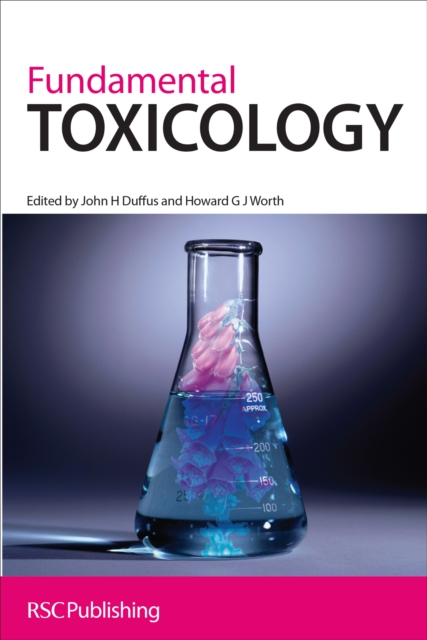
Fundamental Toxicology
Fundamental Toxicology is a concise and comprehensive review of toxicology. It is based on the highly successful Fundamental Toxicology for Chemists and has been enriched and expanded. Every chapter in this new edition has been revised and updated, and four new chapters have been added. With contributions from internationally recognised experts in their field, this broad-based introduction to the topic covers both well-established and rapidly developing areas of toxicology, such as toxicogenomics, reproductive toxicology, behavioural toxicology and ecotoxicology. The book was written and published with the support of the International Union of Pure and Applied Chemistry (IUPAC). The book includes new information on: risk assessment and risk management; toxicogenomics; effects of toxic substances on the human body; environmental distribution of chemicals and ecotoxicology; clinical toxicology; pharmaceutical toxicology; and aspects of laboratory measurement and safe laboratory practice. Fundamental Toxicology is ideal for students and includes extensive pedagogical features, such as an extensive glossary, a bibliography after each chapter and recommended further reading. It is also designed for teachers and lecturers, especially those who may be teaching toxicology for the first time. Included is a suggested curriculum for using the text to teach toxicology to students from various scientific disciplines. Professionals working in toxicology and related fields will find this an invaluable guide.
eBook
St. Jude Cloud—a Pediatric Cancer Genomic Data Sharing Ecosystem
Effective data sharing is key to accelerating research that will improve the precision of diagnoses, efficacy of treatments and long-term survival of pediatric cancer and other childhood catastrophic diseases. We present St. Jude Cloud (https://www.stjude.cloud), a cloud-based data sharing ecosystem developed via collaboration between St. Jude Children’s Research Hospital, DNAnexus, and Microsoft, for accessing, analyzing and visualizing genomic data from >10,000 pediatric cancer patients, long-term survivors of pediatric cancer and >800 pediatric sickle cell patients. Harmonized genomic data totaling 1.25 petabyes on St. Jude Cloud include 12,104 whole genomes, 7,697 whole exomes and 2,202 transcriptomes, which are freely available to researchers worldwide. The resource is expanding rapidly with regular data uploads from St. Jude’s prospective clinical genomics programs, providing public access as soon as possible rather than holding data back until publication. Three interconnected apps within the St. Jude Cloud ecosystem—Genomics Platform, Pediatric Cancer Knowledgebase (PeCan) and Visualization Community—provide a unique experience for simultaneously performing advanced data analysis in the cloud and enhancing the pediatric cancer knowledgebase. We demonstrate the value of the St. Jude Cloud ecosystem through use cases that classify 48 pediatric cancer subtypes by gene expression profiling and map mutational signatures across 35 subtypes of pediatric cancer.
Paper
