
Catalogue Search | MBRL


Are you sure you want to remove the book from the shelf?

{{itemTitle}}
924
result(s) for
"Williams, Christopher B"
Sort by:

Home at last
\"After Lester is adopted from his foster home by Daddy Albert and Daddy Rich, he can't fall asleep in his new bed. What will it take to make Lester feel home at last?\" -- Provided by publisher.
Book

Effects of binder droplet size and powder particle size on binder jetting part properties
Purpose
In binder jetting, the interaction between the liquid binder droplets and the powder particles defines the shape of the printed primitives. The purpose of this study is to explore the interaction of the relative size of powder particles and binder droplets and the subsequent effects on macro-scale part properties.
Design/methodology/approach
The effects of different particle size distribution (5–25 µm and 15–45 µm) of stainless steel 316 L powders and droplet sizes (10 and 30 pL) on part density, shrinkage, mechanical strength, pore morphology and distribution are investigated. Experimental samples were fabricated in two different layer thicknesses (50 and 100 µm).
Findings
While 15–45 µm samples demonstrated higher green density (53.10 ± 0.25%) than 5–25 µm samples (50.31 ± 1.06%), higher sintered densities were achieved in 5–25 µm samples (70.60 ± 6.18%) compared to 15–45 µm samples (65.23 ± 3.24%). Samples of 5–25 µm also demonstrated superior ultimate tensile strength (94.66 ± 25.92 MPa) compared to 15–45 µm samples (39.34 ± 7.33 MPa). Droplet size effects were found to be negligible on both green and sintered densities; however, specimens printed with 10-pL droplets had higher ultimate tensile strength (79.70 ± 42.31 MPa) compared to those made from 30-pL droplets (54.29 ± 23.35 MPa).
Originality/value
To the best of the authors’ knowledge, this paper details the first report of the combined effects of different particle size distribution with different binder droplet sizes on the part macro-scale properties. The results can inform appropriate process parameters to achieve desired final part properties.
Journal Article
Fatigue properties of parts printed by PolyJet material jetting
Purpose
– This paper aims to seek to fill a gap in the literature by characterizing the fatigue life and microstructure of a printed elastomer material, the TangoBlackPlus material.
Design/methodology/approach
– Because the TangoBlackPlus material is marketed as “rubber-like”, the printed elastomer specimens were tested according to the ASTM D4482-11 “Test Method for Rubber Property Extension Cycling Fatigue”. The microstructure of the printed material and multi-material interface was examined by slicing specimens and examining them under an optical microscope.
Findings
– Findings are developed to show the relationship between elongation and expected fatigue life. Findings also indicate that the smoother, non-support encased “glossy” surface finish option for PolyJet parts improve the fatigue life of components and that there are a number of microscopic voids in the TangoBlackPlus material that seem to be concentrated at layer and print head boundaries.
Research limitations/implications
– This paper provides a glimpse into the fatigue properties and microstructure of printed elastomeric parts, a previously unstudied area. This work is limited in that it only looks at specimens created in a single orientation, on a single machine, with a single material. More work is needed to understand the general fatigue properties of printed elastomers and the factors that influence fatigue life in these materials.
Practical implications
– The authors provide several design guidelines based on the findings and previous work that can be used to increase the fatigue life of printed elastomer components.
Originality/value
– As additive manufacturing (AM) technology moves from a prototyping tool to a tool used to create end use products, it is important to examine the expected lifespan of AM components. This work adds to the understanding of the expected product lifecycle of printed elastomer components that will likely be expected to withstand large repeated loading conditions.
Journal Article

Morphological and Computational Analysis of Additively Manufacturable Polyimide Precursors: Implications for Rationally Designing New Polyimide Structures
In this work, photocurable polyimide precursors are additively manufactured via vat photopolymerization and thermally post‐processed into bulk polyimide discs. Two polyimide structural variants were additively manufactured, post‐processed, and characterized: the conventional pyromellitic dianhydride/4,4′‐oxydianiline (PMDA/ODA), and one based on PMDA/4,4’‐diaminodiphenyl sulfone (PMDA/DDS). The morphologies of both variants were studied as a function of post‐processing temperature. Scanning electron microscopy experiments reveal that the bulk morphologies of all printed parts are homogeneous below 350°C. Post‐processing at and above 350°C results in prevalent internal voids, which are more severe in the PMDA/DDS parts. Small/wide‐angle X‐ray scattering experiments reveal that the crystalline domains in PMDA/DDS parts are more loosely organized than the PMDA/ODA parts. Atomistic simulations reveal that the sulfone linkage of PMDA/DDS disrupts pi‐stacking of aromatic rings of neighboring chains, resulting in a profound reduction in interaction strength between adjacent polymer units in PMDA/DDS compared to PMDA/ODA. Ultimately, the reduced thermal stability of PMDA/DDS parts is attributed to disordering of the PMDA/DDS crystallites. This work presents the first in‐depth study of the structure‐morphology relationships of additively manufacturable polyimide precursors throughout post‐processing. These insights will inform future work focused on the development of new polyimides with stable semicrystalline morphologies.
Journal Article
An exploration of binder jetting of copper
Purpose
– The purpose of this paper is to explore the use of binder jetting to fabricate high-purity copper parts. The ability to fabricate geometrically complex copper shapes would have implications on the design and manufacture of components for thermal management systems and structural electronics.
Design/methodology/approach
– To explore the feasibility of processing copper via binder jetting, the authors followed an established material development process that encompasses powder selection and tuning process parameters in printing and thermal cycles. Specifically, the authors varied powder size and sintering cycles to explore their effects on densification.
Findings
– Three differently sized copper powders were successfully printed, followed by sintering in a reducing atmosphere. It was found that a 15-μm-diameter powder with a sintering cycle featuring a 1,080°C maximum temperature provides the most dense (85 per cent) and pure (97 per cent) final copper parts of the parameters tested.
Research limitations/implications
– Due to powder-based additive manufacturing techniques’ inherent limitations in powder packing and particle size diameter, there are difficulties in creating fully dense copper parts. To improve thermal, electrical and mechanical properties, future work will focus on improving densification.
Originality/value
– The paper demonstrates the first use of binder jetting to fabricate copper artifacts. The resulting copper parts are denser than what is typically found in binder jetting of metal powders (without infiltration); significant opportunity remains to further optimize the manufacturing process by introducing novel techniques to tailor the material properties for thermal/electrical applications.
Journal Article
Design and manufacture of a Formula SAE intake system using fused deposition modeling and fiber-reinforced composite materials
Purpose - The purpose of this paper is to discuss the design and manufacture of an intake system for a 600cc Formula Society of Automotive Engineers engine. Owing to the inherent geometric limitations imposed by the existing manufacturing process (bending and welding of aluminum), it is difficult to design and fabricate an intake manifold system in which pressure losses are kept to a minimum and equal charge is provided to each cylinder. The aim is to develop a fabrication process that circumvents these limitations.Design methodology approach - Fused deposition modeling (FDM) is used to create an intake system (consisting of a plenum, plenum elbow, and cylinder runners) that is then later covered in layers of carbon fiber composite fabric through vacuum bagging. FDM allows for geometric design freedom, while the layup of a composite material (and its associated high-temperature resin) provide the strength and heat-resistivity necessary for this application.Findings - As a result of this approach, a functional intake manifold is created that survived the high temperatures and pressures of the turbo-charged engine. The process allowed the geometry of the intake to be redesigned, resulting in reduced weight (due to lower material density and lack of welds, hose clamps, and silicon couples), improved charge distribution, and increased torque through a wide RPM range when compared to its traditionally manufactured aluminum counterpart.Practical implications - The approach described in this paper shows that a functional, end-use intake manifold can be produced by the combination of FDM method and subsequent lamination of a carbon-fiber composite material. The approach enables the geometric freedom to improve manifold design, resulting in improved vehicle performance.Originality value - This case study presents a low-cost manner of directly manufacturing functional parts through the combination of FDM and composite material layup.
Journal Article
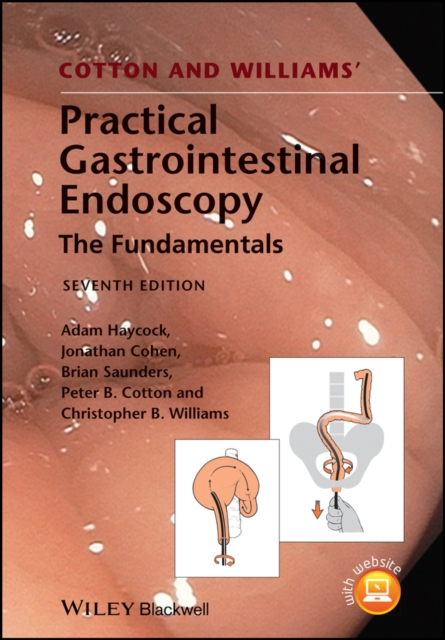
Cotton and Williams' practical gastrointestinal endoscopy
Translated into seven languages, Cotton and Williams' Practical Gastrointestinal Endoscopy has for the last 25 years been the basic primer for endoscopy around the world, providing clear, clinical and practical guidance on the fundamentals of endoscopy practice, from patient positioning and safety, how to perform different endoscopic procedures, and the latest in therapeutic techniques and advances in technology.
It's key strength and reason for its popularity is its step-by-step, practical approach, especially with the use of outstanding colour artwork to illustrate the right and wrong ways to perform endoscopy. Add to this the weight and expertise of its author team, led by Peter Cotton and Christopher Williams, and the final result is an essential tool for all gastroenterologists and endoscopists, particularly trainees looking to improve their endoscopic technique.
Joining Peter Cotton, Christopher Williams and Brian Saunders in the seventh edition are two exciting stars in UK and US endoscopy, Adam Haycock and Jonathan Cohen. New to this edition are:
* Approximately 35 high-quality videos illustrating optimum endoscopy practice, all referenced via \"video eyes\" in the text
* Self-assessment MCQs to test main learning points
* An online clinical photo imagebank to complement the line illustrations, perfect for downloading into scientific presentations
* Key learning points in every chapter
* Much more information on mucosal resection techniques and small bowel endoscopy—for capsule and \"deep\" enteroscopy
* The latest recommendations and guidelines from the ASGE, ASG, UEGW and BSG.
Cotton and Williams' Practical Gastrointestinal Endoscopy, seventh edition is fully modernised, masterful as ever, and once again, the number one endoscopy manual for a whole new generation of gastroenterologists and endoscopists.
eBook
Exploring variability of orientation and aging effects in material properties of multi-material jetting parts
Purpose
Understanding how material jetting process parameters affect material properties can inform design and print orientation when manufacturing end-use components. This study aims to explore the robustness of material properties in material jetted components to variations in processing environment and build orientation.
Design/methodology/approach
The authors characterized the properties of six different material gradients produced from preset “digital material” mixes of polypropylene-like (VeroWhitePlus) and elastomer-like (TangoBlackPlus) materials. Tensile stress, modulus of elasticity and elongation at break were analyzed for each material printed at three different build orientations. In a separate ten-week study, the authors investigated the effects of aging in different lighting conditions on material properties.
Findings
Specimens fabricated with their longest dimension along the direction of the print head travel (X-axis) tended to have the largest tensile strength, but trends in elastic modulus and elongation at break varied between the rigid and flexible photopolymers. The aging study showed that the ultimate tensile stress of VeroWhitePlus parts increased and the elongation decreased over time. Material properties were not significantly altered by lighting conditions.
Research limitations/implications
Many tensile specimens failed at the neck region, especially for the more elastomeric parts. It is hypothesized that this is due to the material jetting process approximating curves with a pixelated droplet arrangement, instead of curved contour as seen in other additive manufacturing processes. A new tensile specimen design that performs more consistently with elastomer-like materials should be considered. The aging component of this study is focused solely on polypropylene-like (VeroWhitePlus) material; additional research into the effects of aging on multiple composite materials is needed.
Originality/value
The study provides the first known description of orientation effects on the mechanical behavior of photopolymers containing varied concentrations of elastomeric (TangoBlackPlus) material. The aging study presents the first findings on how time affects parts made via material jetting.
Journal Article
Exploring the impact of build direction on overhang design constraints for multiaxis material extrusion
Purpose
Material extrusion (MEX) additive manufacturing often requires support structures to enable manufacture of steep overhanging features. Multi-axis deposition (often enabled by a robotic arm) offers novel toolpath planning methods that can significantly reduce or eliminate supports. However, there is currently a lack of established design guidelines for the process.
Design/methodology/approach
This study investigates the relationship between achievable, support-free overhangs and the multi-axis build direction. Although altering build directions mid-print can increase the layer-to-layer overlap of an overhanging feature, the deposition paths on the overhanging surface may be less supported with respect to gravity. To interrogate these effects, a 6-degree-of-freedom robotic arm MEX platform printed test pieces with overhang angles (relative to the build direction) increasing from 0° to 75° at build directions varying from 0° (i.e., XY-planar) to 60° with respect to the global Z-axis.
Findings
Characterization of printed surface quality revealed no statistically significant difference in the fidelity of the overhanging surface as the build direction was changed. These results suggest that the overhang threshold observed in traditional XY-planar printing (typically 45°) remain consistent regardless of build direction (e.g. a build direction of 60° successfully printed a relative overhang of 45°), indicating that deposition quality was not negatively impacted by gravitational forces.
Originality/value
This study provides insight into how tool orientation can be optimized to maximize part accuracy and minimize support material requirements; after quickly screening for the XY-planar overhang threshold, designers can freely select multi-axis build directions throughout part geometries, provided the overhanging surfaces are below that relative threshold.
Journal Article
Impact of material concentration and distribution on composite parts manufactured via multi-material jetting
Purpose
Material jetting approximates composite material properties through deposition of base materials in a dithered pattern. This microscale, voxel-based patterning leads to macroscale property changes, which must be understood to appropriately design for this additive manufacturing (AM) process. This paper aims to identify impacts on these composites’ viscoelastic properties due to changes in base material composition and distribution caused by incomplete dithering in small features.
Design/methodology/approach
Dynamic mechanical analysis (DMA) is used to measure viscoelastic properties of two base PolyJet materials and seven “digital materials”. This establishes the material design space enabled by voxel-by-voxel control. Specimens of decreasing width are tested to explore effects of feature width on dithering’s ability to approximate macroscale material properties; observed changes are correlated to multi-material distribution via an analysis of ingoing layers.
Findings
DMA shows storage and loss moduli of preset composites trending toward the iso-strain boundary as composition changes. An added iso-stress boundary defines the property space achievable with voxel-by-voxel control. Digital materials exhibit statistically significant changes in material properties when specimen width is under 2 mm. A quantified change in same-material droplet groupings in each composite’s voxel pattern shows that dithering requires a certain geometric size to accurately approximate macroscale properties.
Originality/value
This paper offers the first quantification of viscoelastic properties for digital materials with respect to material composition and identification of the composite design space enabled through voxel-by-voxel control. Additionally, it identifies a significant shift in material properties with respect to feature width due to dithering pattern changes. This establishes critical design for AM guidelines for engineers designing with digital materials.
Journal Article