
Catalogue Search | MBRL


Are you sure you want to remove the book from the shelf?

{{itemTitle}}
7,504
result(s) for
"Williams, Ian"
Sort by:

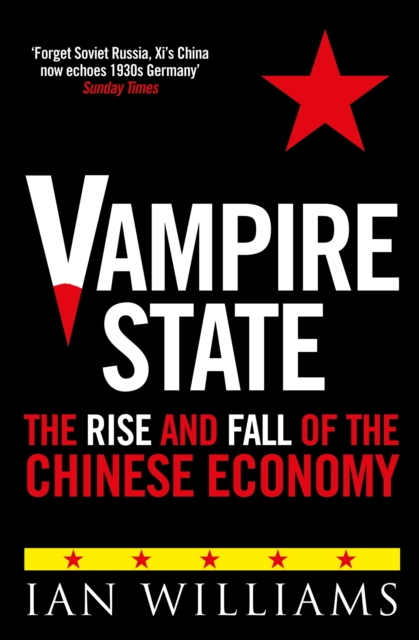
Vampire State
In this book, Ian Williams tells the terrifying story of China's vampire economy and the single-minded and ruthless policy of the Party to bend economics and business to its own will. All this is part of realising President Xi Jinping's ambition of China becoming the world's pre-eminent economic, technological and military power.
eBook


Convectively Induced Secondary Circulations and Wind‐Driven Heat Fluxes in the Surface Energy Balance Over Land
Increased resolution has enabled kilometer‐scale weather and climate models to partially resolve secondary circulations, including horizontal convective rolls (HCRs) and cold pool gust fronts. Although these circulations are ubiquitous in convective boundary layers over land, their impacts on the surface energy balance are largely unknown. Doppler lidar and surface observations were combined with DOE E3SM land model experiments, revealing increased surface winds (5 m/s) and heat fluxes (50 W/m2) in convergent branches of HCRs. Larger wind‐driven flux responses (up to 150 W/m2) were found along gust fronts. Surface energy balance shifts to accommodate wind‐driven fluxes, reducing ground heat conduction and longwave cooling. Our findings from the US Southern Great Plains are broadly relevant to modeling convective boundary layers. In particular, widely used subgrid wind gust parameterizations were found to be physically inconsistent with resolved secondary circulations and could worsen climate prediction biases at kilometer‐scales. Plain Language Summary Earth's surface is heated by solar radiation, and this energy is transferred to the overlying air in the form of sensible and latent heat fluxes. Surface heat fluxes are generated by turbulent motions that are too small to be directly simulated in weather and climate models. Instead, models use mathematical functions, known as parameterizations, to predict surface fluxes from simulated winds and surface‐to‐air differences in moisture and temperature. Observed winds near Earth's surface are known to organize into patterns referred to as secondary circulations, creating frequently observed “cloud streets,” and influencing the soaring patterns of birds. With increasing computational power, weather, and climate models have begun to resolve these circulations in winds simulated at kilometer scales. Although they are widely observed, this study provides new evidence that secondary circulations significantly alter surface heat fluxes and the energy balance of the land surface. It is also shown that current parameterizations of wind‐driven heat fluxes can be made more realistic to improve predictions in weather and climate models that are run at kilometer‐scale spatial resolutions. Key Points Lidar and surface wind measurements provide evidence linking widely observed secondary circulations to surface wind gusts The circulations alter the land surface energy balance and increase surface heat fluxes in convergent branches of circulation updrafts Land model parameterizations are inconsistent with resolved circulations, pointing to needed improvements at kilometer‐scale resolutions
Journal Article

Mechanisms of Projected Changes in Thunderstorm Downburst Environments Across the United States
Responses of downdraft convective available potential energy (DCAPE) to global warming were investigated using the Community Earth System Model (CESM2) under a high‐emission scenario through the year 2100. DCAPE is projected to increase by 5%–12% on average in most areas, independently of wind shear. A diagnostic of downdraft buoyancy is introduced to understand the mechanisms of DCAPE responses. Much of the increase in mean DCAPE is temperature‐driven, with additional contributions from changes in relative humidity and downdraft origin heights. However, extreme values increase at much faster rates than can be explained by local warming. In winter, the latitude of significant DCAPE and CAPE shifts poleward by more than 5° due to larger changes in downburst environments within midlatitude cyclones. The projected increase in cold‐season extremes indicates an interaction between weather events and warming trends that increases the potential for downbursts and straight‐line winds in winter.
Journal Article

Assassin's creed, Reflections
Otso Berg faces a dilemma; one only the past can solve. Using Animus technology to tread the past as some of the Assassin Brotherhood's bravest and brightest, the Master Templar hopes to tip the balance against his adversaries. For is there any better way to learn from one's enemy than to become him?
Book

Secondary through-space interactions facilitated single-molecule white-light emission from clusteroluminogens
Clusteroluminogens refer to some non-conjugated molecules that show visible light and unique electronic properties with through-space interactions due to the formation of aggregates. Although mature and systematic theories of molecular photophysics have been developed to study conventional conjugated chromophores, it is still challenging to endow clusteroluminogens with designed photophysical properties by manipulating through-space interactions. Herein, three clusteroluminogens with non-conjugated donor-acceptor structures and different halide substituents are designed and synthesized. These compounds show multiple emissions and even single-molecule white-light emission in the crystalline state. The intensity ratio of these emissions is easily manipulated by changing the halide atom and excitation wavelength. Experimental and theoretical results successfully disclose the electronic nature of these multiple emissions: through-space conjugation for short-wavelength fluorescence, through-space charge transfer based on secondary through-space interactions for long-wavelength fluorescence, and room-temperature phosphorescence. The introduction of secondary through-space interactions to clusteroluminogens not only enriches their varieties of photophysical properties but also inspires the establishment of novel aggregate photophysics for clusteroluminescence.
Although mature and systematic theories of molecular photophysics have been developed, it is still challenging to endow clusteroluminogens (CLgens) with designed photophysical properties by manipulating through-space interactions. Here, the authors design three CLgens that show multiple emissions and white-light emission in the crystalline state, and emphasize the important role of secondary through-space interactions between the acceptor and non-conjugated donor units.
Journal Article

Pharrell : a fish doesn't know it's wet
\"Following Rizzoli's best-selling \"Pharrell: Places and Spaces I've Been,\" this volume documents the continuing adventures in art and design of one of the most influential figures in contemporary music and popular culture. Lavishly illustrated with 250 photographs and illustrations, this book features Pharrell Williams's prolific and ever-expanding body of work in a graphic language all his own. Straddling art, design, and hip-hop, Pharrell's creative output is without peer or precedent. By playing off different disciplines--music, fashion, and contemporary art--Pharrell has redefined the role of the contemporary artist, blazing a trail for other musicians and cultural figures. Expanding on themes covered in \"Places and Spaces I've Been,\" this book gathers a new group of collaborators. Engaging Pharrell in conversation, talents as diverse as Karl Lagerfeld and Takashi Murakami position Pharrell's work within contemporary visual and material culture. The worldwide success of the song \"Happy\" to his soundtrack and production credit for the Oscar-nominated film Hidden Figures bookend a volume devoted to Pharrell's mastery of artistic collaboration. Featuring work with artists as diverse as JR, Alex Katz, Mr., and Daniel Arsham, the book highlights recent projects and designs for Chanel, Moncler, Moynat, and Adidas. But at the heart is the visual language that Pharrell has built around his Ice Cream/Billionaire Boys Club clothing line, which integrates streetwear into the design of apparel, accessories, limited-edition toys, and skate graphics\"--Provided by publisher.
Book

Law, Language and the Printing Press in the Reign of Charles I
The printing press had the potential to break the common lawyers' monopoly of legal knowledge. Early-modern England witnessed debates about the desirability of wider dissemination of legal learning. Previous scholarship has identified the long-term trend to increased printing of the law in English, focusing on ideological debates between lawyers and other key actors. Only selected texts and types of material were made available to the wider public before the 1620s. From the later 1620s a wider range of material which had hitherto existed only in manuscript was printed in English. Knowledge of the common law became more commonly available. This article identifies this crucial moment and explains the change. Rather than the ideological questions which are discussed in the existing literature, more mundane causes are identified for the legal profession's reduced control over the transmission of legal knowledge: a shift to the use of English by lawyers themselves, and a loss of professional control over manuscripts. The paper therefore demonstrates an important methodological point: understanding and assessing the history of legal printing requires engagement with older methods of transmitting the law.
Journal Article