
Catalogue Search | MBRL


Are you sure you want to remove the book from the shelf?

{{itemTitle}}
7
result(s) for
"Williams, Joanna, author"
Sort by:

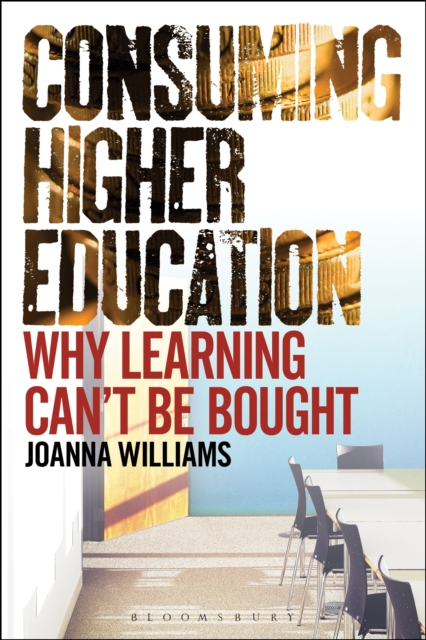
Consuming Higher Education
Consuming Higher Education explores the status of students within the university and society, and the funding and purpose of higher education, drawing on empirical data, UK and USA government policy documents, speeches by policy makers and media representations of students. Joanna Williams moves beyond the debates surrounding fees to consider the impact of the consumption model on universities, learning, knowledge, and student identity. While consumer status initially appears to empower students, Williams argues that it ultimately erodes students' autonomy and reduces learning to an instrumental focus on credit accumulation. At the same time, in giving students consumer status, lecturers are encouraged to avoid intellectually or emotionally challenging content so as not to upset student consumers, which could promote dissatisfaction. Williams draws these themes and arguments together to consider what it means to be a student and to explore alternative conceptions of higher education.
eBook

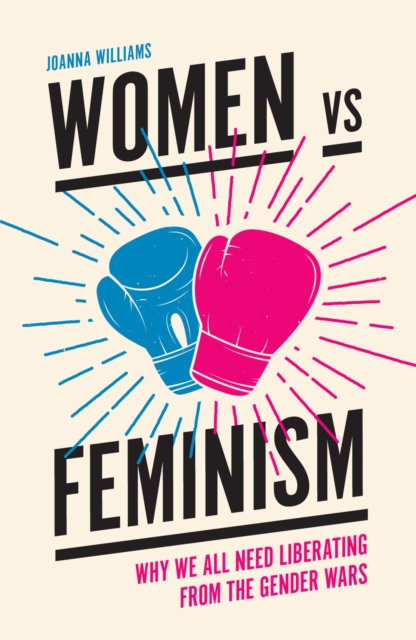
Women vs Feminism
There's never been a better time to be a woman. Thanks to those feminists who fought for liberation, young women today have freedom and opportunities their grandmothers could barely have imagined. Girls do better at school than boys and are more likely to go to university. As a result, women are taking more of the top jobs and the gender pay gap has all but disappeared. Yet rather than encouraging women to seize the new possibilities open to them, contemporary feminism tells them they are still oppressed.
Women vs Feminism: Why We All Need Liberating from the Gender Wars challenges this stance, unpicking the statistics from the horror stories to explore the reality of women's lives. It argues that today's feminism is obsessed with trivial issues – skinny models, badly phrased jokes and misplaced compliments – and focuses on the regulation of male behaviour, rather than female empowerment, pitching men and women against each other in a never-ending gender war that benefits no-one.
Feminism today does women no favours and it's time we were all liberated from the gender wars.
eBook

A Paradigm Lost
The general theory of language of Mikołaj Kruszweski (1851-1887) is, this book argues, a \"lost paradigm\" in the history of linguistics. The concept of 'paradigm' is understood in a broadly construed Kuhnian sense, and its applicability to linguistics as a science is examined. It is argued that Kruszewski's theory was a covert paradigm in that his major work, Ocerk nauki o jazyke ('An Outline of the Science of Language', 1883), had the potential to be seminal in the history of linguistics, i.e. to achieve the status of a 'classical text', or 'exemplar'. This potential was not realized because Kruszewski's influence was hindered by various historical factors, including his early death and the simultaneous consolidation of the Neogrammarian paradigm, with its emphasis on phonology and language change. The book examines the intellectual background of Kruszweski's thought, which was rooted, in part, in the tradition of British empiricism. It also discusses Kruszewski's relationship to his teacher Jean Baudouin de Courtenay (1845-1929), his attitude towards the Neogrammarian movement in linguistics, the ambivalent reception of his theory by his contemporaries, and the influence of his work on the linguistic theory of Roman Jakobson (1896-1982).
eBook
A paradigm lost : the linguistic theory of Mikołaj Kruszewski
The general theory of language of Mikołaj Kruszweski (1851-1887) is, this book argues, a \"lost paradigm\" in the history of linguistics. The concept of 'paradigm' is understood in a broadly construed Kuhnian sense, and its applicability to linguistics as a science is examined. It is argued that Kruszewski's theory was a covert paradigm in that his major work, Ocerk nauki o jazyke ('An Outline of the Science of Language', 1883), had the potential to be seminal in the history of linguistics, i.e. to achieve the status of a 'classical text', or 'exemplar'. This potential was not realized because Kruszewski's influence was hindered by various historical factors, including his early death and the simultaneous consolidation of the Neogrammarian paradigm, with its emphasis on phonology and language change. The book examines the intellectual background of Kruszweski's thought, which was rooted, in part, in the tradition of British empiricism. It also discusses Kruszewski's relationship to his teacher Jean Baudouin de Courtenay (1845-1929), his attitude towards the Neogrammarian movement in linguistics, the ambivalent reception of his theory by his contemporaries, and the influence of his work on the linguistic theory of Roman Jakobson (1896-1982).
eBook

Primary PE : unlocking the potential
This book aims to address some of the aspects of primary physical education about which there is currently a dearth of high quality texts. It arises from several contextual elements that create a need for something a little different from books currently on offer. Most of these offer guidance on content and teaching skills across the activities of the National Curriculum together with supplementary information about key issues and processes, for example, assessing pupils or including those with special needs. This proposal focuses on learning about primary PE and its potential to contribute not only as a discrete curriculum subject but also across the whole curriculum and to some of the many strategies and initiatives that have been set up to enhance primary practice and achievement. Topics have been selected as the focus for the chapters in this book not only for their current significance within strategies and initiatives, but for their potential to contribute to the enhancement of the curriculum in the longer term, and particularly in the context of the recommendations of the Rose review and the imminent revisions to the primary national curriculum.
eBook