
Catalogue Search | MBRL


Are you sure you want to remove the book from the shelf?

{{itemTitle}}
3,230
result(s) for
"Williams, Kate"
Sort by:


Academic resilience from school entry to third grade: Child, parenting, and school factors associated with closing competency gaps
There is substantial evidence confirming that children who begin school with strong developmental skills tend to maintain positive academic trajectories across the elementary school years. Much less is known about children who begin school with poorer developmental competencies yet go on to achieve academically on par with, or above, their initially more competent peers, demonstrating academic resilience. This study used a large population dataset, the Longitudinal Study of Australian Children (n = 2,118) to identify children who demonstrated academic resilience between school entry and third grade, and the child, parenting, and school characteristics associated with this resilience. Findings show that two in five children who were initially identified as academically vulnerable on a school entry measure of language and cognitive skills were classified as academically resilient by Grade 3. In multivariate analysis, higher attentional regulation and receptive vocabulary skills were key factors associated with academic resilience in reading and numeracy, along with paternal consistency (for reading resilience) and fewer sleep problems (for numeracy resilience). Bivariate relations (ANOVAs) showed that resilient children, when compared to children who remained vulnerable, also showed fewer peer problems, fewer behavioral sleep problems, higher levels of parenting consistency and lower levels of parenting anger by mothers and fathers, higher levels of parental engagement in children’s school, and higher levels of teacher self-efficacy. Supporting resilient pathways for children who are identified as vulnerable at school entry should include a particular focus on vocabulary development and attentional regulation, along with social skills and peer relationships, school-based parental engagement, and positive parenting support.
Journal Article
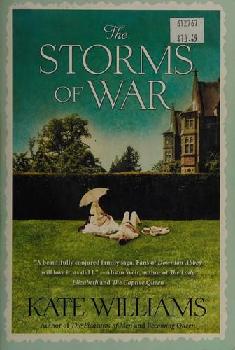
The storms of war
A sweeping and gloriously moving novel of the First World War and its aftermath from a brilliant young storyteller recognized on both sides of the Atlantic as one of the 'queens of contemporary fiction'. Kate Williams' The Storms of War is the first book in a groundbreaking, epic trilogy that tells the story of the de Witt family from 1914 to 1939.\"--Front cover flap.
Book

Moving to the Beat: Using Music, Rhythm, and Movement to Enhance Self-Regulation in Early Childhood Classrooms
Differences in early self-regulation skills contribute to disparities in success in early learning and school transition, as well as in childhood well-being. Self-regulation refers to managing emotional, cognitive, and behavioral processes that are conducive to positive adjustment and social relationships. Researchers have identified that various domains of learning and development are enhanced by musical training, and understanding about the neurological processes responsible for such effects is increasing. This paper argues that coordinated rhythmic movement activities in preschool are an effective approach to support the neurological bases of self-regulation. Evidence and theory related to beat synchronization, cognitive benefits of formal music training, and music therapy for clinical populations are discussed to argue that musical activities could be better leveraged in early childhood education. The paper concludes that preschool activities designed to stimulate beat synchronization and motor coordination skills and embedded in group activities can enhance young children’s motor, auditory, and self-regulatory functioning.
Journal Article

The betrayal of Mary, Queen of Scots : Elizabeth I and her greatest rival
A history of Mary Queen of Scots and Elizabeth I, two women struggling for supremacy in a man's world, describes how their bonds of friendship sustained them until jealousy and antipathy turned them into enemies.
Book

Child Maltreatment and Long-Term Physical and Mental Health Outcomes: An Exploration of Biopsychosocial Determinants and Implications for Prevention
Child maltreatment rates remain unacceptably high and rates are likely to escalate as COVID-related economic problems continue. A comprehensive and evidence-building approach is needed to prevent, detect and intervene where child maltreatment occurs. This review identifies key challenges in definitions, overviews the latest data on prevalence rates, reviews risk and protective factors, and examines common long-term mental health outcomes for children who experience maltreatment. The review takes a systems approach to child maltreatment outcomes through its focus on the overall burden of disease, gene-environment interactions, neurobiological mechanisms and social ecologies linking maltreatment to mental ill-health. Five recommendations relating to the accurate measurement of trends, research on brain structures and processes, improving the reach and impact of teleservices for detecting, preventing and treating child maladjustment, community-based approaches, and building population-focused multidisciplinary alliances and think tanks are presented.
Journal Article

Young Elizabeth : the making of the Queen
\"A lively and poignant biography of the young princess who, at the impressionable age of eleven, found that she was now heiress to the throne\" -- provided by publisher.
BOOK

Bidirectional associations between mothers’ feeding practices and child eating behaviours
Background
This study examined bidirectional relationships between maternal feeding practices and child food responsiveness and satiety responsiveness from 2 to 5 years.
Methods
Mothers (
N
= 207) reported their own feeding practices and child eating behaviours using validated questionnaires at child ages 2, 3.7, and 5 years. Cross-lagged analyses were conducted to test for bidirectional effects, adjusting for child BMI z-score (based on measured weight and height) at 14 months.
Results
Eating behaviours and feeding practices showed strong continuity across the three time points. Maternal feeding practices (higher reward for behaviour [β = 0.12,
p
= 0.025] and lower covert restriction [β = −0.14,
p
= 0.008]) were prospectively associated with higher food responsiveness. Conversely, increased child satiety responsiveness was primarily prospectively associated with mothers’ feeding practices (increased structured meal timing [β = 0.11,
p
= 0.038], overt [β = 0.14,
p
= 0.010] and covert restriction [β = 0.11,
p
= 0.022]). The only exception was family meal setting, which was prospectively negatively associated with satiety responsiveness (β = −0.11,
p
= 0.035).
Conclusion
While maternal feeding practices and child satiety and food responsiveness show strong continuity between child age 2 and 5 years, maternal feeding practices appear to be associated with child food responsiveness over time. Conversely, child satiety responsiveness, but not food responsiveness, may also be associated with maternal feeding practices over time. These results are consistent with interventions that provide feeding advice to parents on how to respond appropriately to individual child eating behaviour phenotype.
Trial registration
ACTRN12608000056392
. Registered 29 January 2008.
Journal Article

Art versus industry? : new perspectives on visual and industrial cultures in nineteenth-century Britain
\"This book is about encounters between art and industry in nineteenth-century Britain. It looks beyond the oppositions established by later interpretations of the work of John Ruskin, William Morris and the Arts and Crafts movement to reveal surprising examples of collaboration - between artists, craftspeople, designers, inventors, curators, engineers and educators - at a crucial period in the formation of the cultural and commercial identity of Britain and its colonies. 'Art versus industry?' explores such diverse subjects as the production of lace, the mechanical translation of sculpture, the display of stained glass, the use of the kaleidoscope in painting and pattern design, the emergence of domestic electric lighting, the politics of ornament and the development of art and design education and international exhibitions in India. Its approach is as varied as its contents, often drawing on little-used primary sources and offering new perspectives on existing literature. This lively and richly illustrated volume operates across disciplines to form an essential source for those studying the histories of art and design, museum studies, the history and philosophy of science and postcolonial studies. It also has much to offer for the general reader interested in the industrial and visual cultures of the Victorian period.\" --back cover.
Book
An effective protocol to isolate and mechanically test silk fibers spun by Osmia lignaria Say (Hymenoptera: Megachilidae) fifth instar larvae
Silk, a remarkable protein-based fiber spun by various arthropod lineages, has been prized for millennia, with the cocoon silk of domesticated silkworms and spiders being the most utilized and extensively studied. There is limited information on how silk can be used to investigate biology, development, and health in other silk-producing species, particularly for solitary bees such as Osmia lignaria Say (Hymenoptera: Megachilidae). Osmia lignaria , an increasingly managed solitary pollinator, produces silk cocoons during the fifth instar larval stage. We have developed a minimally invasive protocol to isolate and mechanically test O. lignaria silk fibers using a 3-D printed well plate system for rearing and two specific isolation techniques. Our protocol allows for collecting individual fibers directly from silk-spinning larvae between silk initiation and cocoon formation without preventing subsequent cocoon development, enabling silk characterization as part of larger rearing and developmental studies. For this study, isolated fibers were mounted on C-cards, facilitating diameter measurement using a microscope and mechanical testing with an MTS Synergie 100 tensile testing instrument. We successfully isolated and tested the mechanical properties of naturally spun silk from O. lignaria , with 20 fibers isolated and mechanically tested from seven larvae. Further examination of isolated silk can reveal physical, molecular, chemical, and morphological characteristics, advancing our understanding of bee silk properties and their role in bee biology, evolution, and nutritional status. This protocol provides a practical tool for researchers to isolate and study silk from silk-producing bee species.
Journal Article